
Unbiased headlines. Facts, not spin.
Unbiased Headlines is an independently owned news organization. We bring you the facts, not opinions, written fresh from 110+ named sources. Sources linked so you can verify it yourself.
 politics
Major Story (7/10)
Event date: November 13, 2026 ·
Democratic Senators Leave Filibuster on the Table as Van Hollen Challenges Schumer for Leader
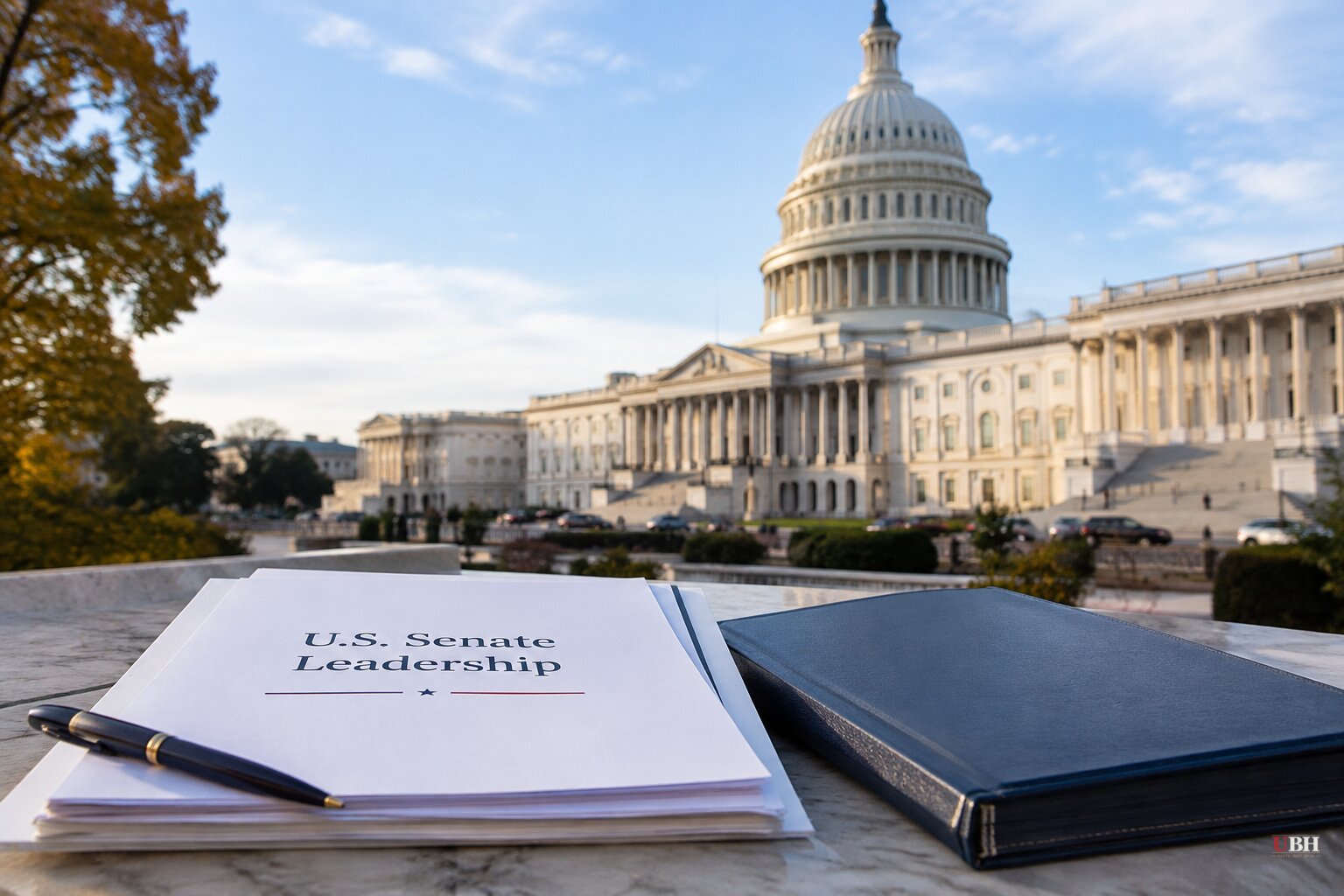
Democrats haven't been sworn in yet, and the first fight over their new Senate majority is about the rules.
After the midterms, Democrats will control the House and the Senate in January. In the Senate they will hold 55 seats, possibly 56. That is well short of the 60 votes needed to break a filibuster.
Markey says it's on the table
Sen. Ed Markey, D-Mass., told Fox News Digital that "the filibuster is something that has to be on the table." He said Democratic senators are discussing a progressive agenda and he is "listening to everyone's views on what is the best strategy."
Sen. Andy Kim, D-N.J., was more cautious. "Some of these things that we see here can be very much a double-edged sword," Kim said. He added that he wasn't trying to deter colleagues from acting, only to make sure "everyone's clear-eyed about what we're doing."
The edge Kim is pointing at is simple. A simple-majority Senate helps whoever holds the majority. Republicans would get the same tool the next time they win it back.
Schumer stays quiet
Senate Minority Leader Chuck Schumer, D-N.Y., has not said whether he would back ending the filibuster if Democrats win the White House in 2028. Fox News Digital asked him and he did not answer. House Democratic Leader Hakeem Jeffries, the presumptive speaker, also sidestepped.
Schumer has spoken in the past about changing the rule. He is now the favorite in the Dec. 1 leadership vote, and he says he is confident he will win.
Sen. Chris Van Hollen, D-Md., announced this week that he will run against him. Van Hollen supports ending the filibuster. "My personal view has been all along that the filibuster is an anti-democratic … provision. It's not in our Constitution," he said. "It was put in there by senators to enhance their power over the power of the people."
Van Hollen argues the election was a rejection of "business as usual" and that the party needs new leadership. Sen. Bernie Sanders, I-Vt., said he will not support Schumer. Sanders made that announcement at a joint Capitol Hill news conference with Sen. Elissa Slotkin, D-Mich.
Republicans handled their own leadership quickly. Majority Leader John Thune was re-elected to head his conference despite the GOP's losses.
The case for killing it
The argument for abolition has a defender in political strategist Adam Jentleson. He told Ezra Klein that the filibuster means Democrats can block bad things but cannot deliver what they promise. Voters then never see the benefit of governing.
Jentleson also argued that a majority-rule Senate would let moderate Democrats break from the party line more often. He pointed to Medicare for All, which has about 17 co-sponsors, as proof that majority rule would not produce a rush to the left. Any bill, he said, would still need a coalition that includes members who are not far to the left.
Klein pushed back on the history. The filibuster, he noted, was used to kill anti-lynching and civil rights bills. Jentleson replied that civil rights was the exception to an otherwise majority-rule Senate until the 1970s and 1980s.
The case for keeping it
J.T. Young, writing for RealClearPolitics, argues Democrats have little reason to act in this Congress. President Trump can veto anything they pass, and Democrats lack the two-thirds needed to override. In Young's words, ending the filibuster now "would merely be a signal of future intent." He says it would also imperil Democrats when another wave sweeps in from the opposite direction.
The veto math is not in dispute. NPR reported that Democrats will not have a large enough majority to override a presidential veto and will likely face Republican filibusters.
Bobby Kogan of the Center for American Progress, a left-leaning think tank, said that "doesn't mean that nothing can happen, but it means there are real obstacles." Matt Bennett of the center-left Third Way warned of voter disappointment. "What Democrats were really promising was: return us to power, we will put a check on Trump for two years, and then when we get the White House in 2028, we can actually make your lives better," he said. "It isn't clear to me that voters heard the entire message."
Trump's own record on the rule
The filibuster has protected both parties recently. Democrats used it to block the SAVE Act, the Republican voter-reform bill. Voter ID and citizenship verification are mainstream positions, and the 60-vote rule is the reason that bill did not pass.
Trump demanded that Senate Republicans abolish the filibuster to pass the SAVE America Act. He warned that Democrats would do it themselves if they won the majority. Senate Republicans did not act, and the 60-vote threshold stayed in place.
The rule has been loosened before. Cloture no longer takes two-thirds, and the filibuster does not apply to presidential nominations or Supreme Court appointments.
The last time Democrats ran the Senate, the filibuster survived only because Sens. Joe Manchin and Kyrsten Sinema would not vote to end it. Neither is a factor now.
What comes next
The Senate Democratic leadership election is scheduled for Dec. 1. Van Hollen backs ending the filibuster. Schumer has not said whether he does.
The new Congress does not convene until January. Whether Democrats change the rules while Trump is in office or hold the option for a 2028 win is a question their own caucus has not answered.
Sources used for this briefing
7 links from 6 independent newsrooms (syndicated copies of the same report count once)
These are the sources it draws on, linked so you can verify.


