
Unbiased headlines. Facts, not spin.
Every story is an unbiased news briefing written from 110+ sources across the spectrum — sources linked so you can verify it yourself.
 health
Major Story (7/10)
June 30, 2026 at 05:28 PM
health
Major Story (7/10)
June 30, 2026 at 05:28 PM
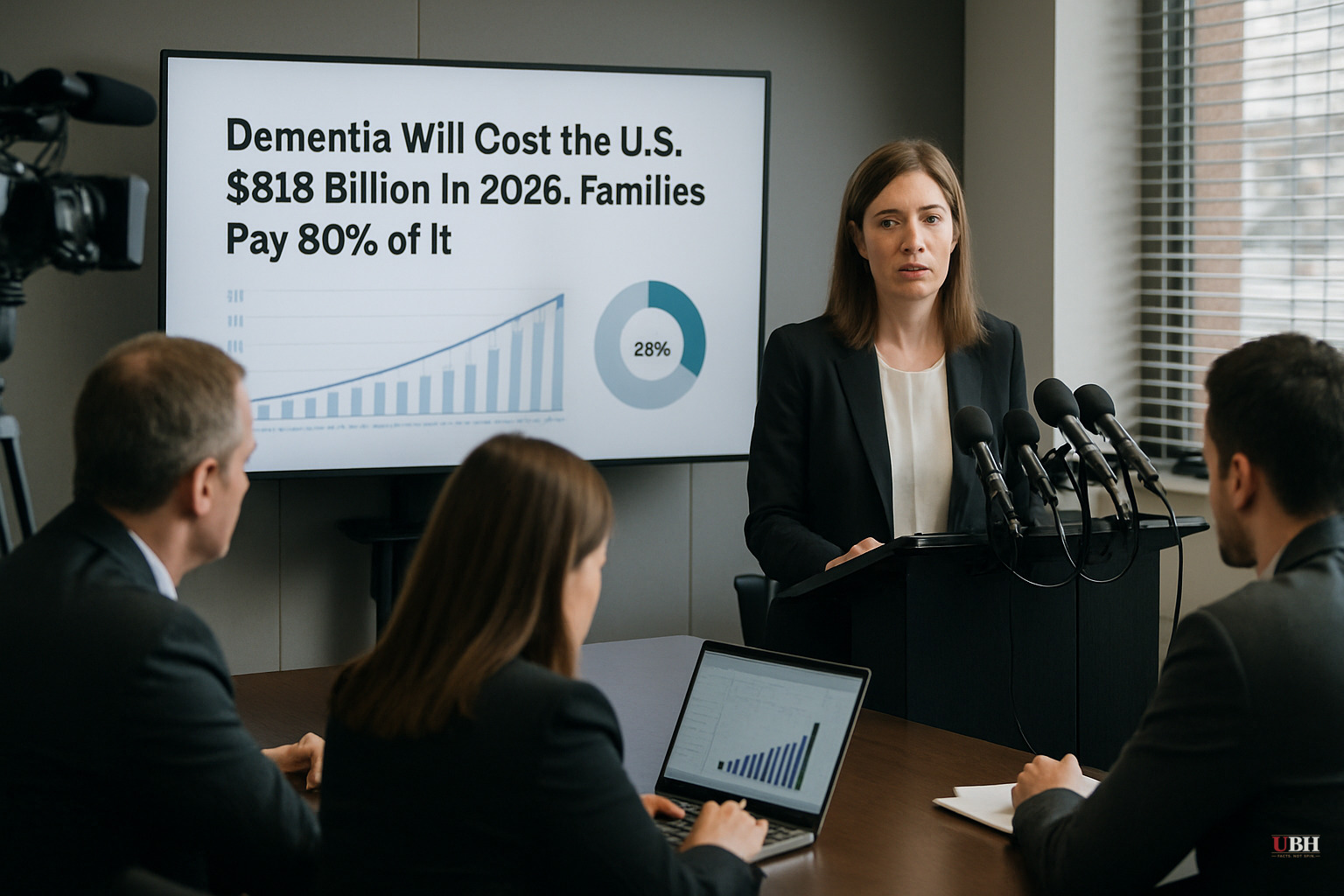
Dementia Will Cost the U.S. $818 Billion in 2026. Families Pay 80% of It.
$818 Billion. Most of It Never Appears on a Bill.
The U.S. Cost of Dementia Project, a multi-year research effort funded by the National Institute on Aging and led by USC professor Julie Zissimopoulos, published its 2026 cost estimate on June 24 in Alzheimer's & Dementia: The Journal of the Alzheimer's Association. The number: $818 billion for this calendar year alone.
That is up from $781 billion reported last year, though Zissimopoulos noted the two figures reflect some methodological differences, not a simple apples-to-apples increase.
For context, Zissimopoulos told MarketWatch: "The big headline number helps society think about where we should be spending our scarce resources. This is a bigger number than cancer and heart disease combined. This is the most expensive disease in a population that is aging, and rates of dementia rise with age."
Where the Money Actually Goes
About 5.7 million Americans aged 51 and older are living with dementia as of 2026, with roughly 5.1 million of them 65 or older, according to the study.
Medical and long-term care totals $222 billion. Medicare and Medicaid together cover approximately $154 billion of that — about 70%. Patients and families still pay roughly $46 billion out of pocket, or about 20%.
But medical costs are not the dominant driver.
The single largest cost category is lost quality of life among people with dementia: $320 billion. That figure represents fading memory, shrinking independence, and declining daily function. Care partners — family and friends providing unpaid help — absorb an additional $15 billion in quality-of-life losses.
About 5.2 million people provide unpaid care to someone with dementia. Together, they log 6.8 billion hours of care annually. Valued at standard pay rates, that labor is worth $237 billion, according to Earth.com's reporting on the study.
Lost earnings add another $23 billion. Roughly $14 billion of that comes from people with dementia reducing or leaving their jobs. The remaining $9 billion reflects what care partners give up when they cut back on work to provide care.
Individuals and families carry more than three times the burden that health systems and government programs do. Roughly 80% of the total cost lands on households, not institutions.
Why These Numbers Kept Getting Underestimated
Previous dementia cost models focused primarily on direct medical spending — hospital stays, physician visits, medications, nursing home fees. The USC team's model pulls in datasets most analyses skip, including the Health and Retirement Study and administrative CMS data, combined with dynamic microsimulation that projects how treatments, care models, and policy changes affect costs over time.
This year's report adds two new elements: forgone earnings for people living with dementia (absent from last year's model) and new peer-reviewed modeling of health-related quality-of-life impacts for care partners. A methods paper was also published to make the data and assumptions publicly auditable.
Cost-of-disease research can be shaped by who funds it and what categories get counted. The USC project is federally funded through the NIA, and its peer-reviewed methods paper gives outside researchers the ability to scrutinize assumptions directly.
The Demographic Pressure Building Behind This
The U.S. Census Bureau projects the population aged 85 and older will more than double by 2050. Age is the strongest single predictor of dementia risk. A 2025 study published in Nature Medicine put the lifetime risk of dementia after age 55 at approximately 42%.
More older Americans means more dementia cases. More dementia cases means higher costs, more unpaid caregivers pulled from the workforce, and greater strain on Medicare and Medicaid — programs already running structural deficits.
No cure exists. Alzheimer's is fatal. FDA-approved blood tests can now detect Alzheimer's before symptoms appear, and new therapies are showing the ability to slow the disease's progression, but "slowing" is not "stopping."
Questions About Quality-of-Life Costs
Some economists and health policy researchers have raised legitimate questions about quality-of-life cost modeling. Assigning a dollar value to cognitive decline requires assumptions about how much a year of good health is worth — a figure that can shift significantly depending on methodology. Critics argue that inflating quality-of-life losses to reach a headline number can distort resource-allocation debates by making one disease appear to dwarf all others in ways that may not fully hold up to comparison.
Zissimopoulos addressed this directly: the published methods paper exists precisely to make those assumptions transparent and contestable. Researchers and policymakers can examine exactly how the $320 billion quality-of-life figure was constructed. That is a more defensible posture than studies that bury their assumptions in appendices or never publish them at all.
What Comes Next
The project's simulation model is designed to answer specific policy questions: How much would a treatment that slows dementia progression by two years save in nursing home costs? How would earlier diagnosis shift the cost curve? Those are the questions that should be driving federal research funding and drug approval timelines.
The U.S. has no universal system to fund long-term care for dementia patients, as Earth.com noted. That gap falls squarely on families — and the $237 billion in unpaid labor they provide each year makes that gap concrete. Whether that changes depends on whether Congress treats an $818 billion annual burden as the fiscal emergency the data suggests it is.
Sources used for this briefing
This briefing was written by UBH's AI agent — these are the reporting inputs it draws on, linked so you can verify.


