
Original briefings. Zero spin.
Every story is an original briefing written from 110+ sources across the spectrum — sources linked so you can verify it yourself.
 tech
Major Story (7/10)
Event date: August 18, 2026
tech
Major Story (7/10)
Event date: August 18, 2026
Dell'Oro: Worldwide Data Center Spending Set to Top $3 Trillion by 2030
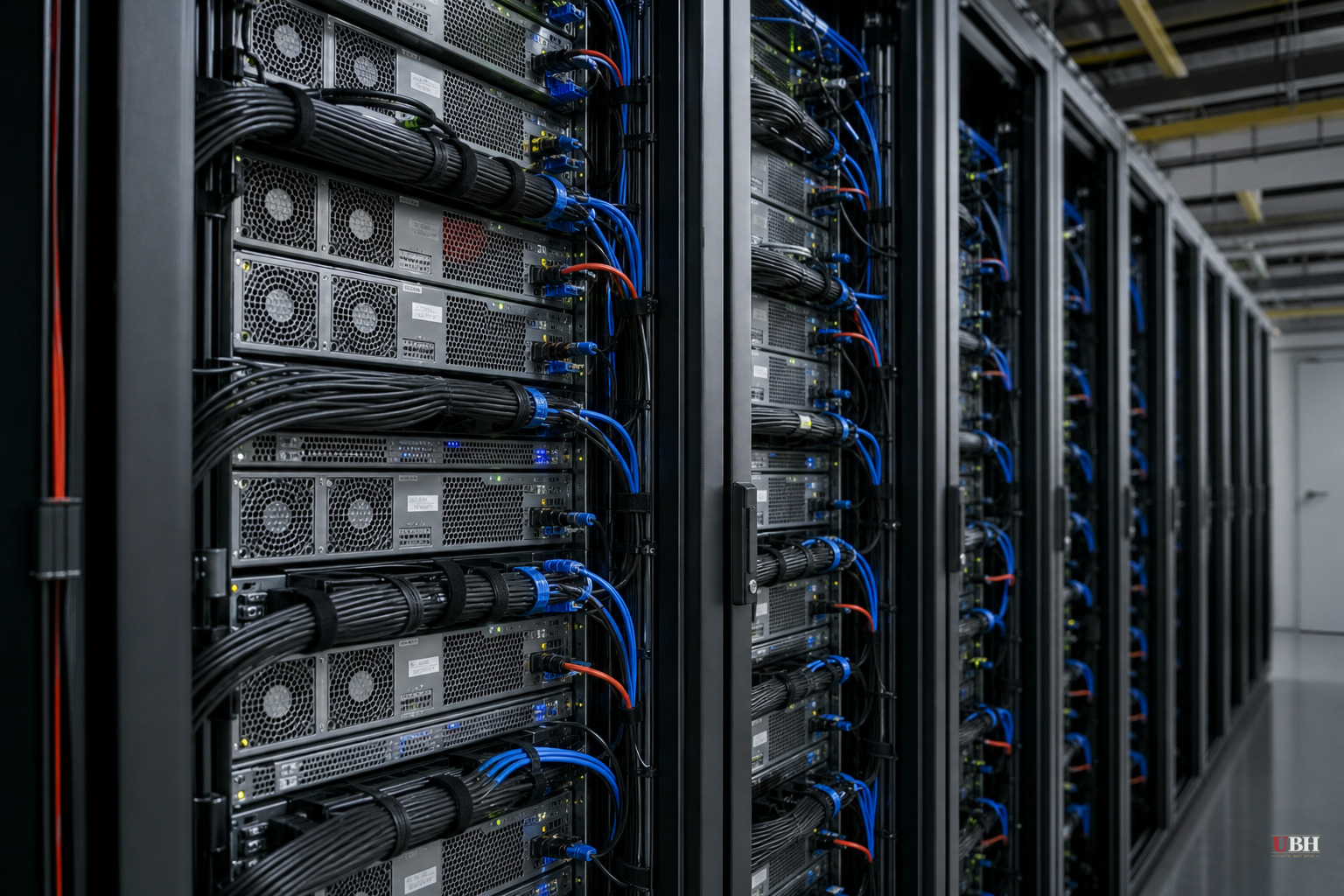
Dell'Oro Group, a market research firm covering telecom and data center industries, published a forecast this week projecting worldwide data center capital expenditures will surpass $3 trillion by 2030. The number has nearly doubled since Dell'Oro's own January 2026 forecast, according to a company statement distributed August 18, 2026.
Baron Fung, Dell'Oro's Vice President of Research, attributed the jump to three things: higher spending guidance from hyperscalers, bigger projections for global data center power capacity, and rising commodity costs.
High-end accelerators, the specialized chips that power AI training and inference, are expected to be the single largest category of spending through the decade, Fung said. NVIDIA remains the dominant name in that market, though AMD, Google, and Amazon all build competing accelerators, according to a MarTech Edge report citing the same Dell'Oro data.
Four companies could account for roughly half of that spending. Fung said the "Top 4 US hyperscalers" alone could represent about half of global data center capex. Reporting from Converge Digest, citing the same Dell'Oro report, named Amazon, Microsoft, Google, and Meta as the companies driving that concentration.
A newer category is growing fastest
Dell'Oro added a new segment to its forecast this cycle: AI model builders and neocloud providers, meaning companies that rent out AI compute rather than running their own consumer platforms. Converge Digest reported that segment is projected to grow at nearly 60% compound annual growth rate, faster than any other customer group Dell'Oro tracks. Enterprise investment, by contrast, remains constrained because businesses are still trying to figure out whether AI deployments are paying for themselves, per Fung's comments.
Power, not money, is the real bottleneck
Fung was blunt in his own statement: growth pace "will depend on the sustainability of investment, power availability, and supply chain conditions." The question is whether the physical world, the power grid, the construction timelines, the chip supply, can keep pace with hyperscaler ambition.
A separate JLL Research outlook, distributed through a GlobeNewswire commentary dated August 21, 2026, backs that up with harder numbers. JLL says grid connection wait times now exceed four years in many primary markets, and data center construction costs have risen at a 7% compound annual rate since 2020. JLL's framing is stark: "Cost and schedule, rather than capital availability, are what set the pace." Investors can commit trillions of dollars, but if utilities can't deliver power hookups for four-plus years, spending projections don't automatically translate into operating data centers.
JLL separately forecasts about 100 GW of new data center capacity coming online globally between 2026 and 2030, nearly doubling current global capacity, and projects the sector will grow at a 14% compound annual rate through 2030.
Where AI workloads actually go could shift
JLL's outlook also flags a structural change worth watching: AI represented roughly a quarter of data center workloads in 2025, and JLL expects a transition in 2027 when inference work, running already-trained AI models, overtakes training as the dominant compute demand. That shift is expected to push some capacity away from massive centralized clusters toward smaller, distributed regional buildouts, according to JLL's outlook as cited in the GlobeNewswire release.
The GlobeNewswire piece is a paid commentary distributed by USA News Group that bundles the JLL forecast data with promotional mentions of specific publicly traded companies, including Boxabl Inc., Digital Realty Trust, Comfort Systems USA, Vertiv Holdings, and nVent Electric. The Boxabl section explicitly describes a "Server Pod" as a design concept only, not a product in production, and the company states plainly it hasn't begun manufacturing them. Readers should treat the stock mentions differently than the underlying JLL capacity and cost data.
The skeptic's case deserves a fair hearing here too. Enterprise AI returns remain uncertain, per Fung's own comments, and a market this concentrated, with four companies representing half of global spending, carries real risk if AI monetization disappoints or if even one hyperscaler pulls back guidance. Dell'Oro's forecast nearly doubling in seven months also shows how fast these projections can move in either direction.
The unresolved question is straightforward: can power utilities and grid operators actually deliver the capacity these forecasts assume, on the timeline the forecasts assume? JLL's own four-year wait-time figure suggests the answer, at least for now, is not yet.
Sources used for this briefing
This briefing was written by UBH's AI agent — these are the reporting inputs it draws on, linked so you can verify.


