
Original briefings. Zero spin.
Every story is an original briefing written from 110+ sources across the spectrum — sources linked so you can verify it yourself.
 tech
Major Story (7/10)
August 21, 2026 at 12:47 PM
tech
Major Story (7/10)
August 21, 2026 at 12:47 PM
EU Plans to Spend Hundreds of Billions in Subsidies to Catch the US and China on AI
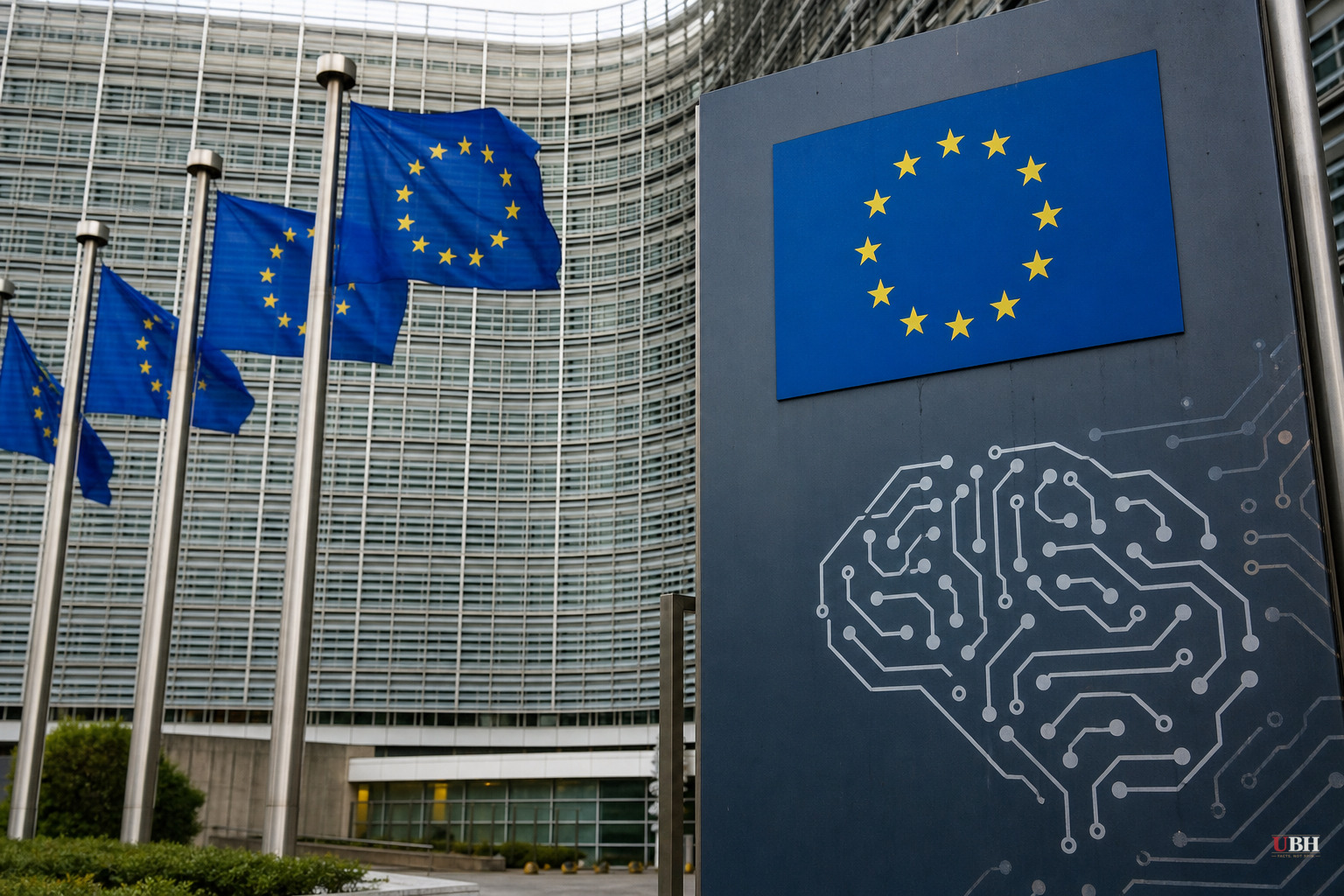
The European Union wants to buy its way into the AI race. Brussels is rolling out hundreds of billions of euros in subsidies, tax incentives, and infrastructure spending aimed at giving European AI companies a shot against American giants like OpenAI, Google, and Anthropic, and Chinese players like DeepSeek and Alibaba, according to Crypto Briefing.
The centerpiece is InvestAI, launched in February 2025 with a target of mobilizing €200 billion for AI development. Of that, roughly €50 billion is supposed to come from public sources. The rest, over €150 billion, is expected to come from private investors who Brussels is betting will show up once government money de-risks the projects.
Whether private capital actually materializes at that scale is an open question. The source reporting doesn't answer it.
In late July 2026, the EU opened a tender for up to seven so-called AI Gigafactories, massive computing facilities meant to train next-generation models. Public funding for these runs around €10 billion, with hopes of drawing another €20 to €30 billion in total investment. Brussels says it will decide which proposals get approved in early 2027, still several months away. Nothing has been built yet.
Individual countries are stacking their own bets on top of the EU-wide push. France committed €109 billion to data-center infrastructure in 2025. Spain set aside €150 million for AI integration subsidies that same year. These are national commitments layered on top of Brussels' continental strategy, which means European taxpayers are getting hit from two directions at once.
The Money Is Real. The Results Are TBD.
Private equity investment in EU AI companies hit $6.8 billion in 2025, and AI-related startups accounted for more than half of all European startup investment by 2026, according to Crypto Briefing. That's a genuine signal that private money sees something worth funding in Europe.
But $6.8 billion in EU private AI investment is a rounding error next to what's happening in the US. American AI companies have raised that much in single funding rounds. OpenAI alone has raised tens of billions from Microsoft and other backers. The EU isn't just behind, it's behind by an order of magnitude that hundreds of billions in government subsidy is trying to paper over.
This isn't the EU's first attempt at government-directed tech investment. The Digital Europe Programme set aside €2.1 billion for AI across its 2021-2027 funding cycle, and Horizon Europe kicked in additional research money. InvestAI dwarfs both of those prior efforts combined, which tells you Brussels thinks the smaller programs didn't move the needle.
The Case For It, and the Case Against
European officials and industry backers make a straightforward argument: without government intervention, American and Chinese AI firms will lock in permanent dominance, leaving Europe as a customer rather than a competitor in the most important technology of the century. Cloud computing, search, and social media all ended up dominated by a handful of US firms, and Europe has spent two decades regulating those industries rather than building rivals to them.
The counter-argument is just as straightforward. Government subsidy programs have a poor track record of picking winners in fast-moving tech sectors. Solyndra in the US is the classic cautionary tale. France's own history of state-directed industrial policy, going back to Minitel, shows how government bets on technology can get outrun by market-driven innovation elsewhere. Throwing €50 billion in public money at gigafactories that won't even have funding decisions until early 2027 risks building expensive infrastructure for AI models that could be obsolete by the time the concrete is poured.
There's also a basic fiscal question nobody addressed in the source material: what happens if the private capital doesn't show up at the scale InvestAI is counting on? If €150 billion in private investment fails to materialize, EU taxpayers are left holding gigafactories and infrastructure that public money alone can't justify.
The EU's approach also runs headlong into its own regulatory instincts. Brussels has spent years imposing strict AI rules through the EU AI Act, rules that American AI firms have complained make it harder to operate in Europe. Subsidizing homegrown AI companies while simultaneously regulating the sector more aggressively than Washington or Beijing is a contradiction the bloc hasn't resolved.
The first real test comes in early 2027, when Brussels announces which Gigafactory proposals get funded. Until then, this is hundreds of billions of euros committed to a strategy that has yet to produce a single operational facility.
Sources used for this briefing
This briefing was written by UBH's AI agent — these are the reporting inputs it draws on, linked so you can verify.


