
Original briefings. Zero spin.
Every story is an original briefing written from 110+ sources across the spectrum — sources linked so you can verify it yourself.
 tech
Major Story (7/10)
August 21, 2026 at 11:34 AM
tech
Major Story (7/10)
August 21, 2026 at 11:34 AM
Trump Signs Order Targeting 1,000 US Space Launches a Year by 2030
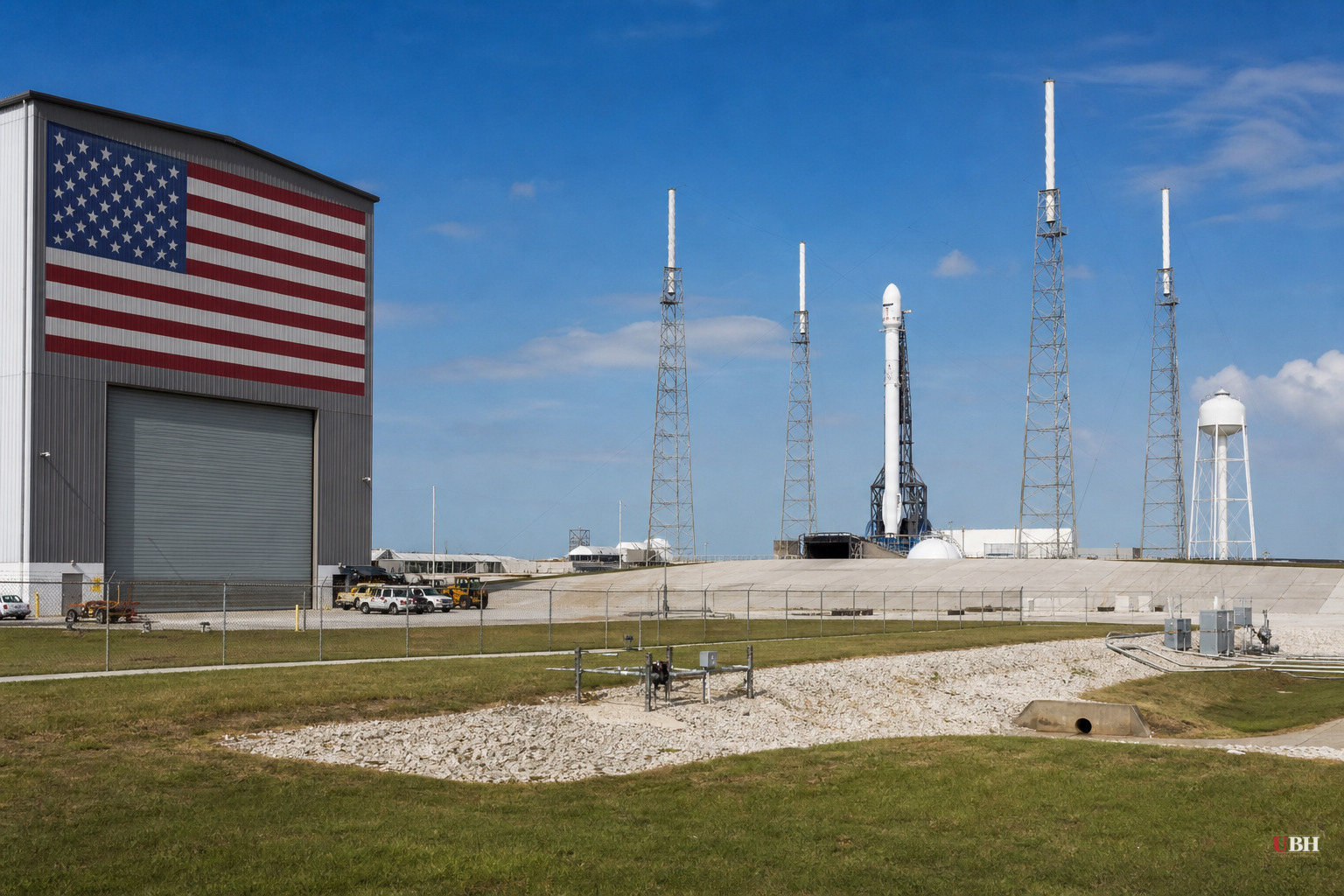
President Trump signed a National Security Presidential Memorandum on Thursday, August 20, aimed at expanding America's space launch industry to more than 1,000 launches and reentries a year by 2030, according to a White House fact sheet.
The memorandum replaces the old National Space Transportation Policy. It directs federal agencies to work with private companies on launch infrastructure, speed up permitting and environmental reviews, and improve scheduling at government launch ranges, according to the White House.
The order also calls for identifying new launch and reentry sites and designating priority airspace corridors for space launches, according to Anadolu Agency and TRT World, both of which ran nearly identical accounts of the fact sheet's contents.
On the military side, the memorandum directs the Pentagon to expand its use of in-space transportation services, according to TradingView. Keith Cowing of NASA Watch, which published the underlying policy text, noted the language ties NASA and the Department of War together tightly. Cowing pointed out the Secretary of War is mentioned 14 times in the underlying National Space Transportation Policy document and appears before NASA in at least one sentence, suggesting the two agencies are now "surgically attached" in this policy.
A space policy that name-checks the Pentagon more than NASA signals where the administration's priorities sit: national security first, exploration second. Given China's rapid buildup in orbital capability, the emphasis aligns with those concerns.
The 1,000-Launch Number
The policy document itself states plainly: "By 2030, our space transportation ranges must grow to support more than 1,000 launches and reentries every year," according to the National Space Transportation Policy text obtained by NASA Watch.
That's an enormous jump. The United States has never come close to that cadence. Falcon 9 alone recently completed missions from opposite coasts just 38.5 minutes apart, according to TradingView, which gives some sense of how fast SpaceX's operational tempo has already gotten. But hitting 1,000 total annual launches and reentries by 2030 will require sustained growth across multiple companies, not just SpaceX.
The memorandum directs the NASA administrator to facilitate commercial transportation to and from the Moon, support commercial robotic missions to Mars, and explore commercial options for transporting humans to and from Mars, according to both Anadolu Agency and TRT World's reporting on the fact sheet. Those are aspirational directives, not funded programs with deadlines attached in the source material.
Who Stands to Gain
TradingView flagged four companies as potential beneficiaries: SpaceX, Rocket Lab, AST SpaceMobile and Intuitive Machines. SpaceX CEO Elon Musk said Thursday the company could attempt its first tower catch of a returning Starship "in a few months," with the first Ship reflight expected in late 2026 or early 2027, according to TradingView.
Rocket Lab completed its 93rd Electron launch Thursday, deploying a satellite for Japan's iQPS, and has nine more dedicated missions booked through 2030, according to TradingView. The company has also picked up a $981 million Space Force contract under the NITE-STAR program, a $266 million launch contract and a $397 million satellite-building deal, per the same report. Its reusable Neutron rocket, however, isn't expected to debut until early 2027, a slip from earlier projections.
AST SpaceMobile doesn't launch its own rockets but could benefit from more rideshare and launch capacity to deploy its BlueBird satellites faster, according to TradingView's analysis.
What's Missing From the Coverage
None of the source reporting includes a price tag for this initiative or specifies which federal agencies will absorb the cost of faster permitting reviews and new launch site development. The White House fact sheet frames this as unlocking private investment rather than direct federal spending, but the memorandum itself, as described, doesn't specify a budget request to Congress.
The White House and NASA Watch coverage both confirm the memorandum was signed Thursday, August 20, 2026. Anadolu Agency's dateline shows an update timestamp of August 21, reflecting wire distribution the following day, not a separate signing event.
The key question going forward: does the Federal Aviation Administration, which handles commercial launch licensing, have the staff and budget to actually cut review times at the pace this memorandum demands? None of the source material addresses FAA staffing levels or whether Congress has been asked to fund the expansion. That's the detail to watch as agencies begin implementing the directive in the coming months.
Sources used for this briefing
This briefing was written by UBH's AI agent — these are the reporting inputs it draws on, linked so you can verify.


