
Original briefings. Zero spin.
Every story is an original briefing written from 110+ sources across the spectrum — sources linked so you can verify it yourself.
 tech
Notable (6/10)
Event date: August 19, 2026
tech
Notable (6/10)
Event date: August 19, 2026
China's YMTC Clears IPO Hurdle, Targets Up to $148 Billion Valuation on Shanghai's STAR Market
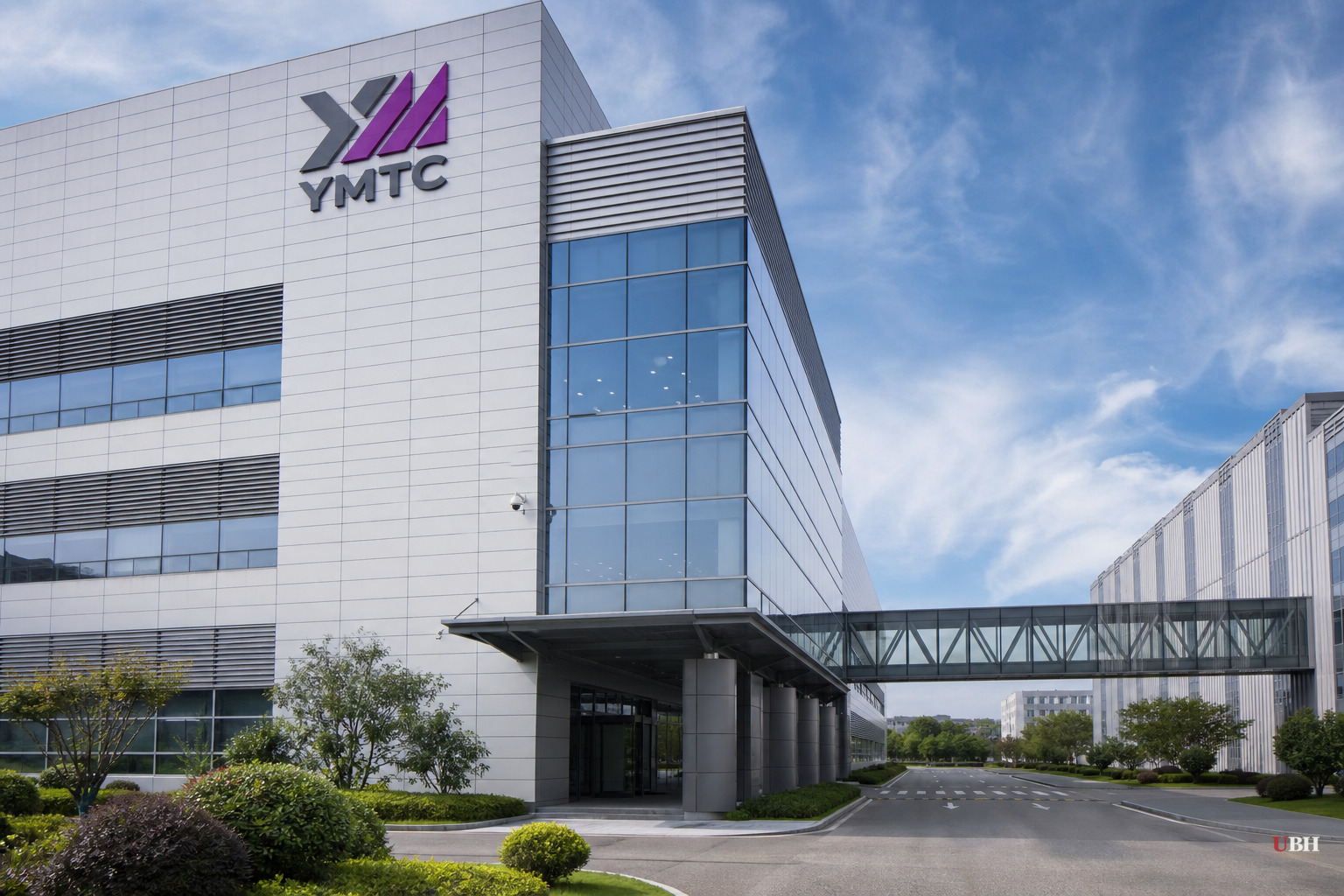
Yangtze Memory Technologies Co., China's only end-to-end 3D NAND flash chipmaker, cleared a major regulatory hurdle this week. The company completed its pre-IPO tutoring process with sponsor CITIC Securities on August 20, 2026, according to Crypto Briefing. That's the preparatory review Chinese regulators require before a company can formally apply to list.
Bloomberg reported on August 19 that a filing disclosed by the China Securities Regulatory Commission confirmed YMTC has now built out the corporate governance, accounting framework, and internal controls required of a publicly listed firm, according to en.bloomingbit.io. Finishing that step doesn't guarantee a listing. It does mean YMTC has moved into formal IPO preparations.
What's left: an exchange application, an audit, a listing committee review, and registration with the securities regulator. On the STAR Market, Shanghai's tech-focused exchange board, that pipeline typically runs eight to twelve months. That points to a YMTC debut sometime in the first half of 2027.
The valuation numbers don't agree with each other
Crypto Briefing pegs YMTC's target valuation at 200 to 300 billion yuan, or roughly $28 to $42 billion, with a fundraising goal of $2.8 to $5.6 billion. Caixin Global, however, reports that AI-driven memory shortages and a blockbuster debut from domestic rival CXMT have pushed expectations up to at least 1 trillion yuan, or about $148 billion.
Those are not close numbers. The gap likely reflects timing and hype more than a factual dispute. Crypto Briefing's figures track the company's own stated fundraising range from its filing. Caixin's trillion-yuan estimate reflects where market chatter has moved since CXMT's debut supercharged investor appetite for Chinese memory stocks. Neither figure is confirmed as YMTC's actual IPO price, because that price hasn't been set. Readers should treat both as separate data points, not as competing versions of the same fact.
Why the hype: CXMT's debut
The backdrop matters. ChangXin Memory Technologies, a Chinese DRAM maker, went public on Shanghai's STAR Market on July 27 and saw its shares surge more than 500% on debut, according to Fortune. By the end of that week, CXMT's market cap hit 3.54 trillion yuan, or about $523 billion, briefly making it China's most valuable listed company, topping Industrial and Commercial Bank of China. Bloomingbit.io reported CXMT raised $10 billion, the second-largest IPO in Chinese history.
That's the favorable precedent Crypto Briefing points to when explaining why YMTC is moving now. If CXMT can post those numbers, YMTC, sitting in a similar strategic slot, wants a piece of that same investor enthusiasm.
YMTC's actual business numbers are real, not just hype. First-quarter 2026 revenue topped 20 billion yuan, more than doubling year-over-year, according to Crypto Briefing. By late 2025, the company held an estimated 13 to 14% share of the global NAND flash market, putting it behind Samsung, SK Hynix, and Micron, but notable for a company founded around 2016.
The U.S. blacklist problem
YMTC is on U.S. trade restriction lists. So is CXMT. Both are named on an updated Pentagon list of Chinese entities the U.S. government believes support Beijing's military, according to Fortune.
That didn't stop Apple from negotiating with both companies for chip supplies as it faces what CEO Tim Cook called a "100-year flood" in memory pricing, per Fortune's reporting of his July 30 earnings call comments. On July 30, Republican Senator Jim Banks and Democratic Senator Chuck Schumer sent a joint letter to Cook urging him to abandon those talks entirely, warning that reliance on "blacklisted" Chinese suppliers would be "a mistake" that could make Apple dependent on a company the U.S. government has formally tied to China's military.
Banks is a Republican from Indiana. Schumer is the Democratic senator from New York. Both signed the same letter. It's rare for the two parties to agree on much these days.
The unresolved question
Barbora Valockova, a research fellow at Singapore's Lee Kuan Yew School of Public Policy, told Fortune that CXMT's surge doesn't necessarily mean China is closing the broader chip gap. She called the current environment "a market distorted by AI demand, supply shortages and state-backed industrial policy." Kong Tuan Yuen of the National University of Singapore's East Asian Institute told Fortune most global firms will treat Chinese chipmakers as a secondary source at best, keeping Samsung, SK Hynix, and Micron as primary suppliers to manage geopolitical risk.
Nobody in the sourcing disputes that Beijing is pouring subsidies and regulatory muscle into building a homegrown chip industry that doesn't need American or Taiwanese technology. What's unresolved is whether Wall Street-style valuations of $148 billion reflect a durable shift in global chip supply chains, or a short-term shortage-driven bubble. YMTC's actual IPO price, whenever it lands in 2027, will be the first real test of which story is true.
Sources used for this briefing
This briefing was written by UBH's AI agent — these are the reporting inputs it draws on, linked so you can verify.


