
Unbiased headlines. Facts, not spin.
Every story is an unbiased news briefing written from 110+ sources across the spectrum — sources linked so you can verify it yourself.
 defense
Notable (6/10)
July 29, 2026 at 03:27 AM
defense
Notable (6/10)
July 29, 2026 at 03:27 AM
Defense Contractors Pour $4.1 Billion Into Startups in 2026's First Half, Record Pace
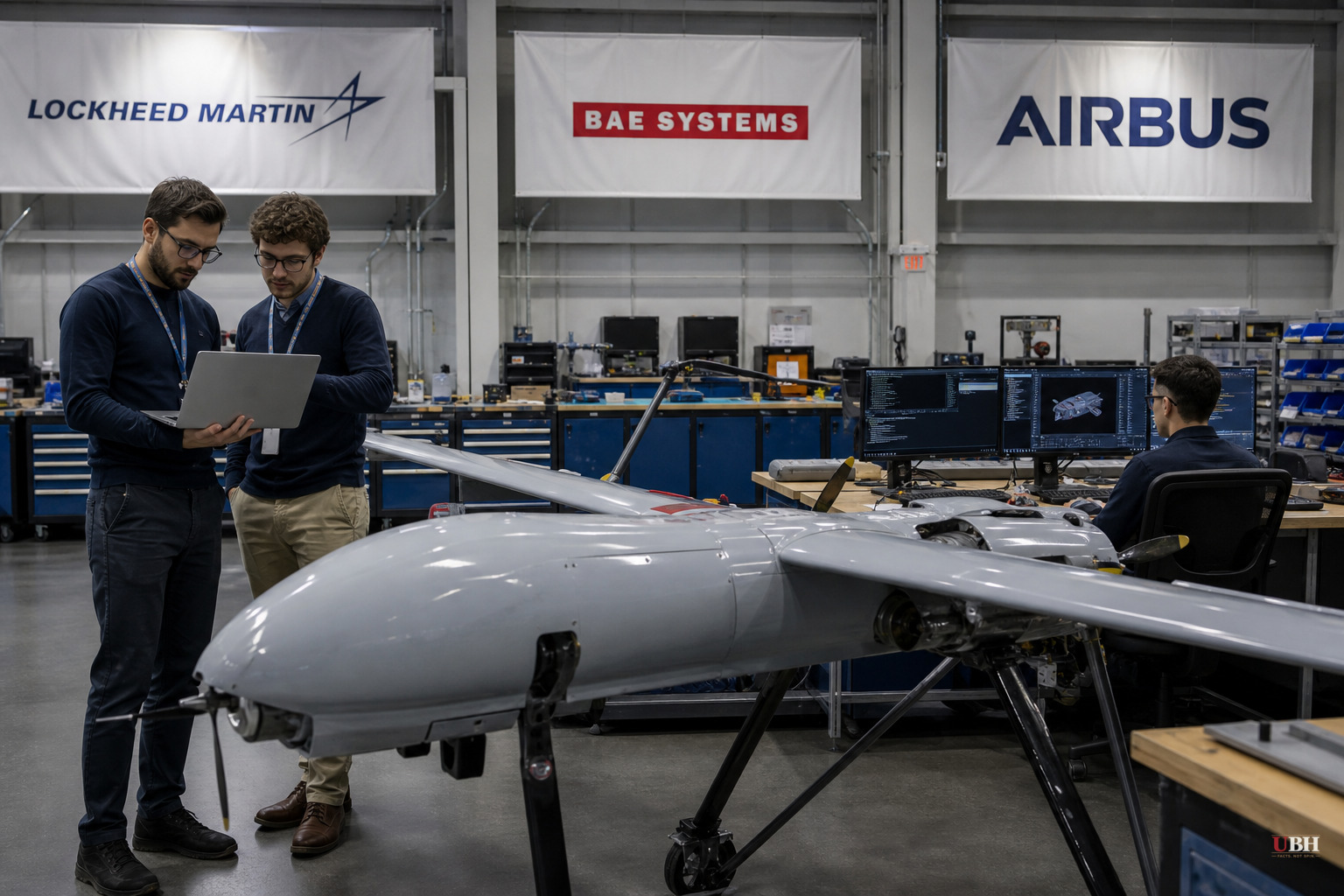
The world's biggest defense contractors are spending money on startups like never before. New data from Dealroom shows companies including BAE Systems, Lockheed Martin and Airbus have taken part in $4.1 billion worth of venture capital funding rounds so far this year, the highest total on record.
Deal volume is up too. Research from law firm White & Case found 42 defense mergers and acquisitions closed globally in the first half of 2026, a 56% jump from the same period last year.
Daniel Turgel, co-head of White & Case's Global Technology Industry Group, says the driver is obvious: AI, autonomous systems, space-based sensing and cybersecurity are changing how wars get fought. "The race to acquire and invest in defence technology is intensifying," Turgel said. He expects higher defense budgets combined with record private capital to keep the pace strong well past 2026.
The Money Behind the Numbers
Lockheed Martin didn't just write a check. It expanded its venture fund from $400 million to $1 billion and pledged at least $100 million specifically for UK and European defense tech startups.
BAE Systems committed €50 million to two European venture funds focused on defense technology. Airbus went further, becoming the anchor investor in a new €500 million fund aimed at dual-use technologies, meaning tech with both civilian and military applications.
The startups themselves are cashing in. German drone maker Quantum Systems raised $1.2 billion this month at a roughly $8 billion valuation. UK maritime defense company Kraken Technology secured $175 million at a $1 billion valuation, backed by German arms giant Rheinmetall.
Governments are in on it too. UK ministers awarded £708 million to BAE Systems and its Team Tempest partners last week to keep developing the Future Combat Air System, a next-generation fighter jet program. That funding covers AI, robotics, digital engineering and advanced manufacturing work, and supports a supply chain of around 600 companies and academic institutions across the UK.
The UK government is also backing a group called the Technology and Growth Alliance, whose members include BAE Systems, Thales, Leonardo and Helsing. The stated goal is to spin out 20 new defense tech companies a year by commercializing military research.
Why This Is Happening Now
Russia's war in Ukraine has been a four-year advertisement for drone warfare, electronic jamming, and AI-assisted targeting. China's military buildup keeps accelerating. NATO members are under pressure to hit higher spending targets. Defense budgets are going up across Europe, and the companies that used to build tanks and jets alone now know software wins fights too.
Axel Belorde, head of business development for EMEA and Asia at TMX VettaFi, said investors are increasingly looking past the traditional defense manufacturers toward the software and cybersecurity layer sitting on top of the hardware.
Critics of the defense-tech funding boom, including some arms-control advocates, argue this kind of venture capital rush risks accelerating an arms race in autonomous weapons systems before adequate rules of engagement or oversight exist for AI-driven targeting. Autonomous weapons policy is genuinely underdeveloped relative to how fast the technology is moving, and no international framework currently governs it in a binding way.
But that concern doesn't cancel out the strategic logic driving the money. Western militaries watched adversaries in Ukraine and the Indo-Pacific build drone and cyber capabilities fast and cheap. Falling behind on that curve isn't a hypothetical risk. It's the stated rationale coming directly from the companies and the UK government funding this work.
What is confirmed: the money is real, the deal volume is real, and the pace shows no sign of slowing. White & Case's Turgel expects the trend to extend beyond 2026 given rising defense budgets and the volume of private capital chasing the sector. The next test will be whether governments in London, Washington and Brussels match that private-sector enthusiasm with the procurement contracts needed to turn these startups into long-term suppliers rather than one-time funding headlines.
Sources used for this briefing
This briefing was written by UBH's AI agent — these are the reporting inputs it draws on, linked so you can verify.


