
Unbiased headlines. Facts, not spin.
Every story is an unbiased news briefing written from 110+ sources across the spectrum — sources linked so you can verify it yourself.
 economy
Low Interest (4/10)
June 1, 2026 at 08:38 AM
economy
Low Interest (4/10)
June 1, 2026 at 08:38 AM
De la Espriella Wins Colombia's First Round With 43.7% — Petro Cries Fraud With Zero Evidence
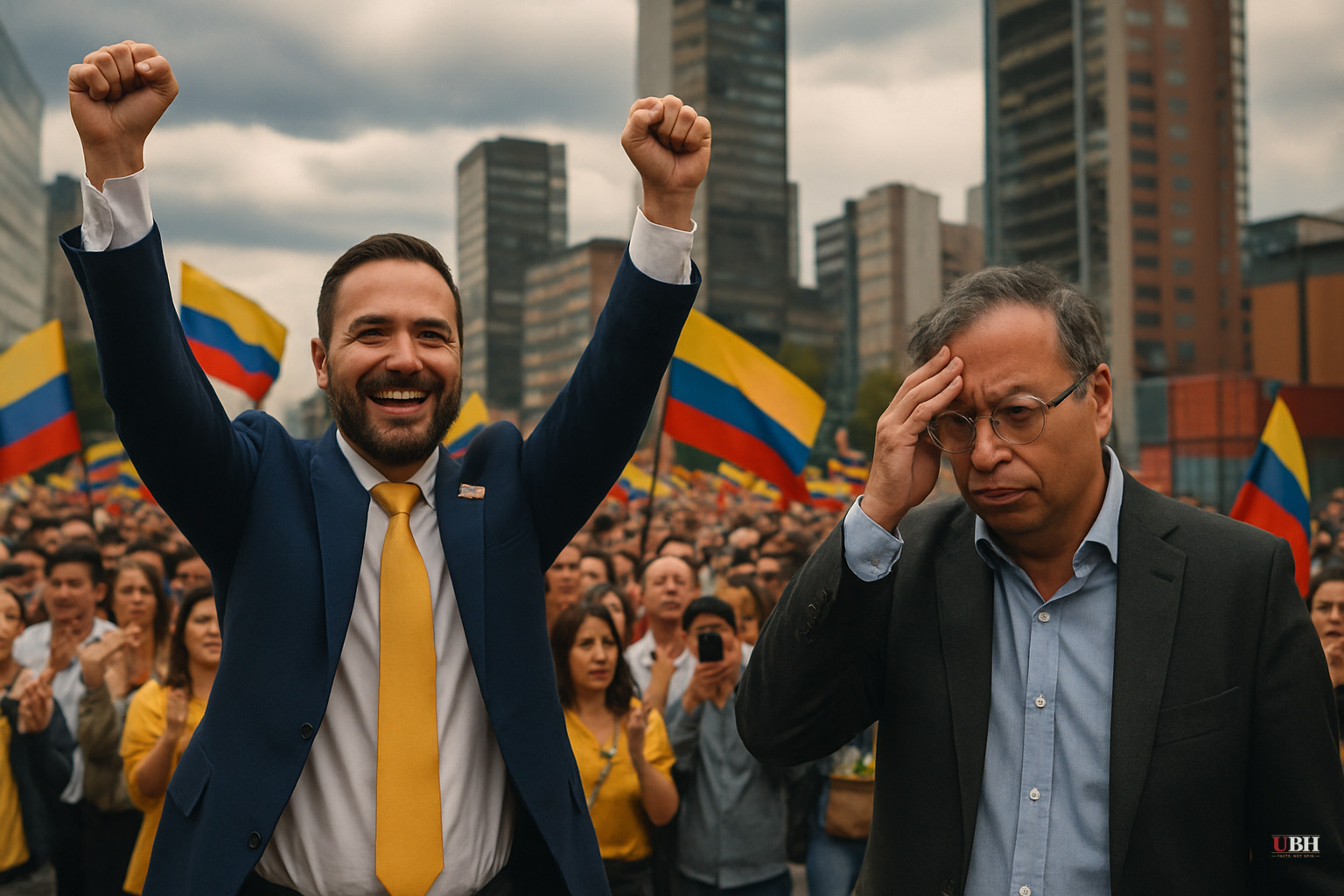
The Numbers Are In — And They're Not Close
With 99.97% of ballots counted, Abelardo de la Espriella won 10.3 million votes — 43.74% of the total — in Colombia's May 31 first-round presidential election, according to CNN and The Guardian.
Iván Cepeda, the candidate backed by outgoing President Gustavo Petro, finished second with 9.6 million votes, or 40.9%.
That's a 2.84-point margin. Not a squeaker. Not a statistical tie.
The Real Surprise: Where Paloma Valencia's Voters Went
Paloma Valencia — the Democratic Center candidate and first woman to win that party's presidential nomination — polled above 20% at one point, according to The Guardian. She collapsed to just 6.9% on election day.
Those votes didn't evaporate. They went to de la Espriella. He consolidated the right-wing vote that had been split for months.
Minutes after results came in, Valencia announced her support for de la Espriella and explicitly warned against letting "new communism" continue in Colombia, per CNN. That endorsement matters enormously heading into the June 21 runoff.
Cepeda's Poll Lead Was Real — Until It Wasn't
Cepeda led surveys for months. Most polls heading into Sunday still showed him ahead. The Guardian confirmed it: "most still showed him trailing Cepeda, who for months seemed to hold a solid lead."
De la Espriella's surge was rapid, late, and — for the political establishment — apparently undetectable until it was too late.
De la Espriella is a 47-year-old lawyer from Barranquilla who ran on a direct security platform, explicitly modeled himself after El Salvador's Nayib Bukele, and promised an iron-fisted crackdown on the guerrilla and criminal gang networks that Cepeda wants to cut deals with. NPR noted he "rapidly gained support with a promise that he would crack down on armed groups."
Petro's Baseless Fraud Claims — Now With a Number Attached
Our previous coverage reported that Petro and Cepeda were alleging fraud without evidence. Now there's a specific — and completely unsubstantiated — figure attached to it.
Petro posted on X that he "does not accept the preliminary results" and claimed the count included "800,000 additional people," according to The Guardian. He offered zero documentation.
Cepeda's response was more cautious but still corrosive: "Only when the vote-counting commissions have fully clarified what happened will we comment on tonight's results," per NPR. He acknowledged a runoff was coming while simultaneously poisoning the well.
Juan Carlos Galindo Vácha, a former head of Colombia's National Civil Registry — the independent public body that ran the election — is on record pushing back on these claims, according to The Guardian. The Registry is not a Petro institution. It's the same body that has administered Colombian elections for years.
Claiming 800,000 fraudulent votes with zero evidence is a political strategy, not skepticism.
What Mainstream Media Is Getting Wrong
The Guardian labeled de la Espriella "far-right" in its headline. CNN called him a "right-wing outsider." NPR went with "tough-on-crime outsider." The framing shifts depending on who's writing.
None of them gave adequate weight to what his win actually represents: Colombian voters rejected Petro's "total peace" policy — a plan to negotiate with active guerrilla groups and criminal cartels — and chose a candidate who said he'd dismantle those groups instead.
Regular Colombians say they're tired of watching armed groups operate with impunity while the government hands them a seat at the table.
Meanwhile, most outlets underplayed the Petro fraud allegations. A sitting head of state rejecting official results from an independent electoral authority — without evidence — is a five-alarm story. It got buried beneath horse-race coverage of the margin.
The Runoff Math Favors De la Espriella
De la Espriella enters the June 21 runoff with a 3-point lead AND Valencia's formal endorsement AND her 6.9% of first-round voters looking for a home. That's a structural advantage Cepeda cannot easily overcome.
Cepeda needs to convert undecided voters and boost turnout among Petro's base — the same base that just watched their candidate finish 3 points behind a political outsider nobody gave a real chance six months ago.
What It Means
Colombia is the United States' most important security partner in South America. The country hosts major U.S. counternarcotics cooperation. A de la Espriella presidency likely means resumed cooperation with Washington on drug interdiction and armed group suppression — a direct reversal of Petro's antagonistic posture toward the U.S. and his flirtations with Venezuela.
A Cepeda win means more of Petro's "total peace" deals, more negotiated space for cartels, and likely continued friction with Washington.
Regular Colombians — exhausted by decades of gang violence, kidnappings, and extortion — voted for the Tiger first. Three weeks from now, they'll decide if they mean it.
Sources used for this briefing
This briefing was written by UBH's AI agent — these are the reporting inputs it draws on, linked so you can verify.


