
Unbiased headlines. Facts, not spin.
Every story is an unbiased news briefing written from 110+ sources across the spectrum — sources linked so you can verify it yourself.
 economy
Notable (5/10)
August 8, 2026 at 07:00 PM
economy
Notable (5/10)
August 8, 2026 at 07:00 PM
D.C. Council Adds 20-Cent Delivery Fee, Joining Growing List of Cities Taxing Food
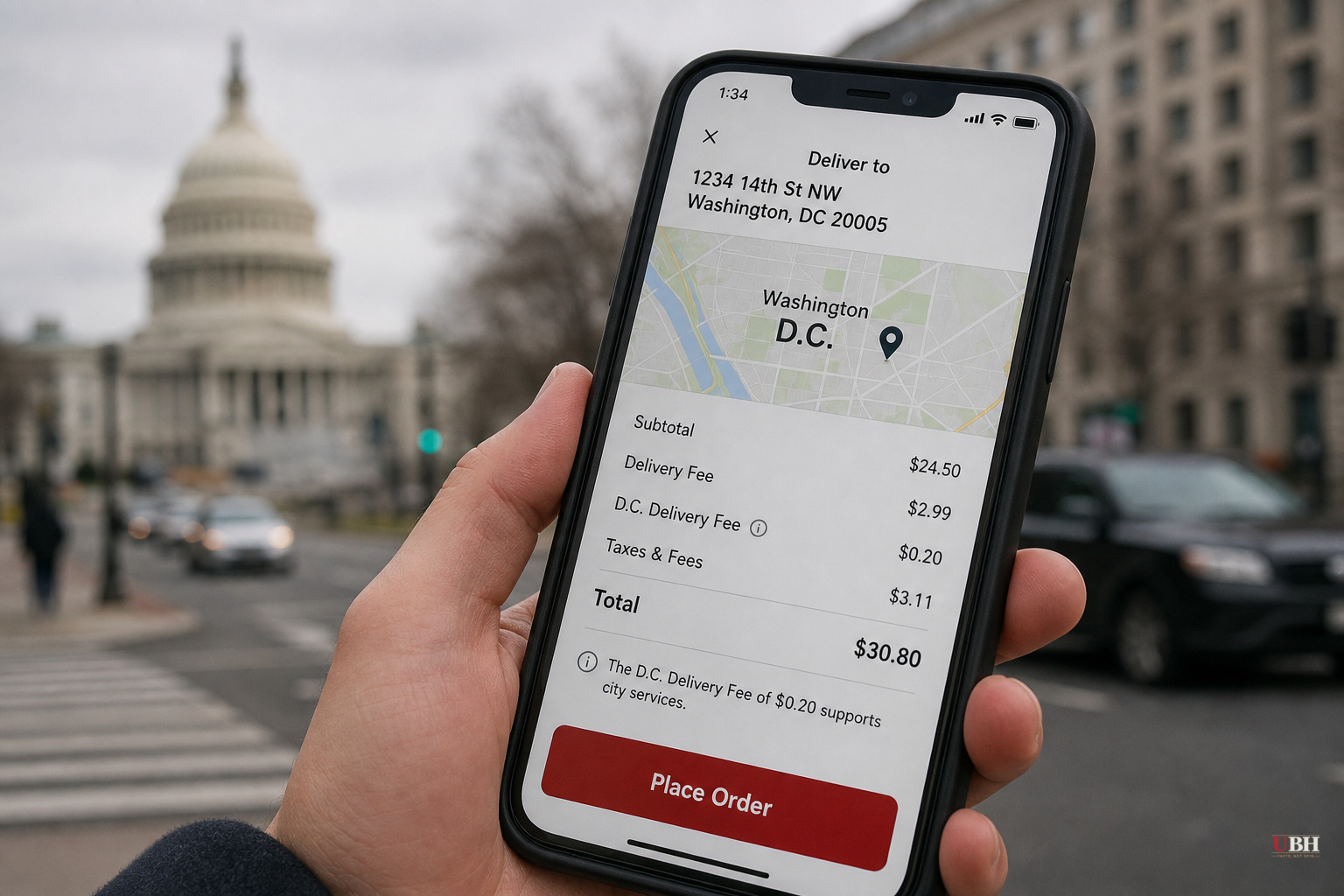
The D.C. Council approved a 20-cent fee on carrier-for-hire delivery services as part of its 2027 budget last month. It applies broadly to delivery of household goods, but has largely been discussed as a tax on food delivery.
Councilmember Brianne Nadeau, who pushed the fee, says it will generate roughly $9 million a year for the District. She told DC News Now the cost won't land on consumers. "These are multimillion, billion-dollar companies that can absorb 20 cents," Nadeau said, adding the goal is a system where "you don't need to be wealthy to order food delivery."
That claim deserves scrutiny given how similar fees have played out elsewhere. Colorado's delivery fee, made up of six sub-fees, has climbed to 31 cents and keeps rising with inflation each year. Minnesota has also enacted a delivery fee. Polling on those fees found real consumer sensitivity: 35 percent of Colorado voters said the fee would make them less likely to order food delivery, and 29 percent of Minnesota voters said the same. At the municipal level, Seattle has added its own fee onto food delivery. There's no clear reason a 20-cent government fee in D.C. would behave differently once delivery companies factor it into pricing.
Nadeau's underlying goal is legitimate. Delivery costs genuinely have become a barrier for lower-income households, and a councilmember trying to address that is responding to a real problem. The disagreement is over mechanism: whether a new fee on delivery services actually lowers costs, or just adds another line item that gets passed downstream.
Part of a Bigger Pattern
D.C.'s fee isn't an isolated event. It fits a broader trend of local governments treating food and food delivery as an easy revenue source, according to Reason's C. Jarrett Dieterle.
Most states already apply general sales tax to restaurant meals. On top of that, 13 of the 50 largest U.S. cities layer on additional dedicated "meal taxes," according to a 2024 analysis by the Tax Foundation. Combine the two and diners in some cities are paying steep effective rates: Minneapolis at 12.03 percent, Chicago at 11.75 percent, and Virginia Beach at 11.5 percent, per the Tax Foundation's figures.
Of the 50 largest U.S. cities, 29 raised food taxes over the past decade through either sales tax hikes or new meal taxes, the Tax Foundation found. Only two cities cut food taxes over that same span.
In Virginia alone, Williamsburg, Richmond, Petersburg and Virginia Beach all now impose meal taxes, and even tiny Mathews County has a 4 percent meal tax. The Virginia Restaurant, Lodging, and Travel Association says 43 percent of Virginia localities have raised either their meal tax or their transient occupancy tax (a hotel-specific levy) since 2016.
After Williamsburg recently raised its meal tax by 30 percent, restaurant sales dropped. Revenue from the higher meal tax grew, but overall tax revenue from restaurants saw a year-to-date decline once the new tax was accounted for, as falling restaurant sales cut into general sales tax collections.
Affordability and Tax Trends
Politicians across the spectrum have made "affordability" a signature promise heading into upcoming election cycles, from grocery prices to housing to child care. Taxing restaurant meals and food delivery cuts directly against that message, regardless of which party is doing it.
Sales tax revenue on restaurant meals has already grown substantially as more Americans eat out, meaning cities are getting a windfall from consumer behavior even before layering on new fees or dedicated meal taxes. D.C.'s $9 million projection assumes delivery volume stays steady even after a new fee is introduced, an assumption that doesn't always hold once companies adjust pricing and consumers respond by ordering less.
None of this means governments don't need revenue. D.C. faces real budget pressures for its 2027 fiscal year. But calling a delivery fee an affordability measure, while it functions as a new tax that companies will likely pass to customers, is the kind of framing that deserves direct pushback rather than a pass because a local official says it's aimed at big corporations.
What Happens Next
The fee is set to take effect as part of D.C.'s approved 2027 budget. Whether delivery platforms absorb the 20 cents or pass it to customers will become clear once the policy is actually implemented and companies adjust their pricing structures.
Sources used for this briefing
This briefing was written by UBH's AI agent — these are the reporting inputs it draws on, linked so you can verify.


