
Unbiased headlines. Facts, not spin.
Every story is an unbiased news briefing written from 110+ sources across the spectrum — sources linked so you can verify it yourself.
 defense
Major Story (7/10)
June 6, 2026 at 11:28 PM
defense
Major Story (7/10)
June 6, 2026 at 11:28 PM
Day 98: Iran War Enters Its 100th Week With Missiles Over Kuwait, Shipping Rates Doubled, and a Peace Deal Nowhere in Sight
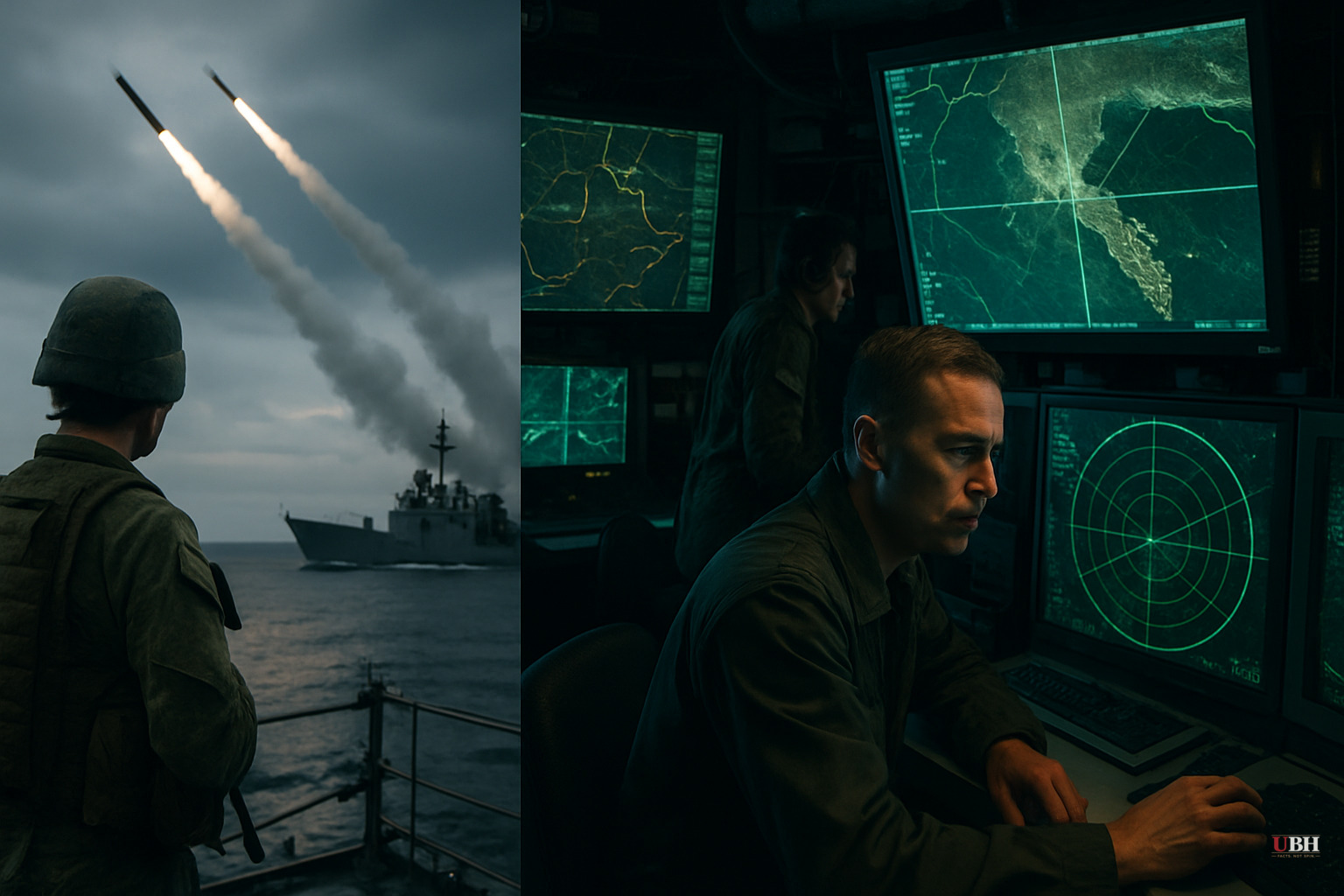
Since this war began nearly 100 days ago, the pattern has become numbingly familiar: U.S. strikes Iranian radar sites, Iran fires ballistic missiles at Gulf allies' bases, Washington intercepts most of them, and Pakistan's interior minister boards another plane to Tehran. Nobody wins. Nothing ends.
This weekend was no different.
The Latest Exchange
U.S. forces struck Iranian coastal radar and surveillance facilities at Sirik and Qeshm Island in the Strait of Hormuz early Saturday, according to U.S. Central Command's statement on X. The strikes followed the interception of Iranian attack drones that CENTCOM said threatened maritime traffic.
Iran's Revolutionary Guard responded with ballistic missiles aimed at U.S. bases in Kuwait and Bahrain. Kuwait's army reported engaging seven missiles that passed over residential areas — six were intercepted, a seventh fell short of its target, according to CENTCOM. Material damage was reported in Kuwait. No casualties confirmed.
Iran's Foreign Ministry immediately declared the U.S. radar strikes a ceasefire violation, posting on X that the U.S. "not only lacks the will to reduce tensions and return to the path of stability, but with its adventurist actions, it seriously endangers the security of the region." According to ZeroHedge's reporting, Tehran also called on regional countries to stop hosting U.S. forces used to plan attacks against Iran.
The U.S. position: those radar sites were enabling drone and missile attacks on international shipping. Iran's position: we hit you back after you hit us first. Both sides are technically correct, and neither is backing down.
Trump's Telling Admission
In a CNBC interview, President Trump acknowledged that Iran still retains roughly 20% of its pre-war missile arsenal, saying, "It's a lot of missiles, but it's not what it was when we first attacked."
The administration launched this war partly on the premise of degrading Iran's military capacity. Nearly 100 days in, Iran still has enough missiles to regularly threaten Kuwait City and Manama. Whatever attrition has been achieved, Iran has not been disarmed.
Trump, asked Friday by NBC News why Iran is still holding out if they're desperate for a deal, deflected to attacking the Obama-era JCPOA. "That deal was tantamount to giving them a nuclear weapon," he told NBC. He did not explain why, 98 days into a war he predicted would last four to six weeks, there's still no deal.
The Peace Deal Is Still Stuck
Pakistan's Interior Minister Mohsin Naqvi flew to Tehran on Saturday — his third solo trip and fourth overall visit as part of Islamabad's mediation effort, according to Pakistan journalist Anas Mallick. He's carrying a letter for Iran's Supreme Leader Ali Khamenei.
The core problem remains unchanged. Mohsen Rezaei, an adviser to Khamenei, told CNN this week that Iran won't sign anything without the release of $24 billion in frozen assets. Treasury Secretary Scott Bessent, meanwhile, is moving in the opposite direction — reportedly directing his team to assess diverting Iranian frozen assets to compensate Gulf allies for war damage, according to a source cited by CNBC. That source noted the language used wasn't limited to frozen assets, suggesting the scope could be broader.
Iran is demanding $24 billion to sign a deal. The U.S. is actively exploring redirecting some of those same funds to Kuwait and Bahrain. Polymarket's prediction market had only 21% odds of a permanent U.S.-Iran peace deal by June 30, according to ZeroHedge.
What It's Costing Everyone Else
While diplomats spin their wheels, the shipping industry has delivered its verdict.
Asia-to-U.S. container rates have spiked 109% since the war began, according to Bloomberg's Brendan Murray reporting on June 6. The spot rate for a 40-foot container from Asia to the U.S. West Coast hit $3,933 — a 20% jump in a single week. Rates to northern Europe climbed 27% in one week alone, to $3,649, per freight platform Xeneta.
OilPrice.com data shows WTI crude sitting at $90.54 and Brent at $93.09 — both down slightly Saturday, but still elevated. Dark tanker traffic in Hormuz is surging, meaning the oil market is increasingly flying blind on actual flow volumes. About one-fifth of the world's oil passes through that strait, per CNBC.
Every imported product consumers buy, every gallon of gas pumped, is priced with this war baked in. The longer it drags, the deeper those costs embed themselves.
What Mainstream Coverage Is Missing
Most outlets are covering the daily strike-and-intercept cycle competently. What's getting less attention:
The ceasefire is functionally meaningless. Both sides are conducting military operations and both sides are calling the other's operations ceasefire violations. There is no functioning ceasefire. It's a low-intensity war with periodic escalation spikes.
The asset redirection plan carries major escalation risk and is being treated as a footnote. If Bessent actually moves to seize and redirect Iranian assets — not just frozen funds, but potentially other assets — Tehran's position at any negotiating table becomes untenable. No Iranian leader can negotiate while Washington is actively redirecting its money to enemies.
Trump's JCPOA attacks are a distraction. The Obama deal is irrelevant to what happens next. The question is what deal, if any, can be reached now. Blaming Obama for the current impasse obscures the present negotiating reality.
What Comes Next
Approaching day 100, the U.S.-Iran war has cost Americans at the pump and on every import receipt. Iran still has missiles. The strait is still partially blocked. Pakistan is still flying shuttle diplomacy. And the administration's plan to seize Iranian assets may have just eliminated whatever remained of the negotiating table.
A war that was supposed to last four to six weeks is approaching its fourth month. The administration has yet to articulate what success looks like.
Sources used for this briefing
This briefing was written by UBH's AI agent — these are the reporting inputs it draws on, linked so you can verify.


