
Unbiased headlines. Facts, not spin.
Every story is an unbiased news briefing written from 110+ sources across the spectrum — sources linked so you can verify it yourself.
 tech
Notable (6/10)
July 18, 2026 at 06:54 AM
tech
Notable (6/10)
July 18, 2026 at 06:54 AM
Databricks Hits $188 Billion Valuation in Coatue-Led Round, Still Refuses to Go Public
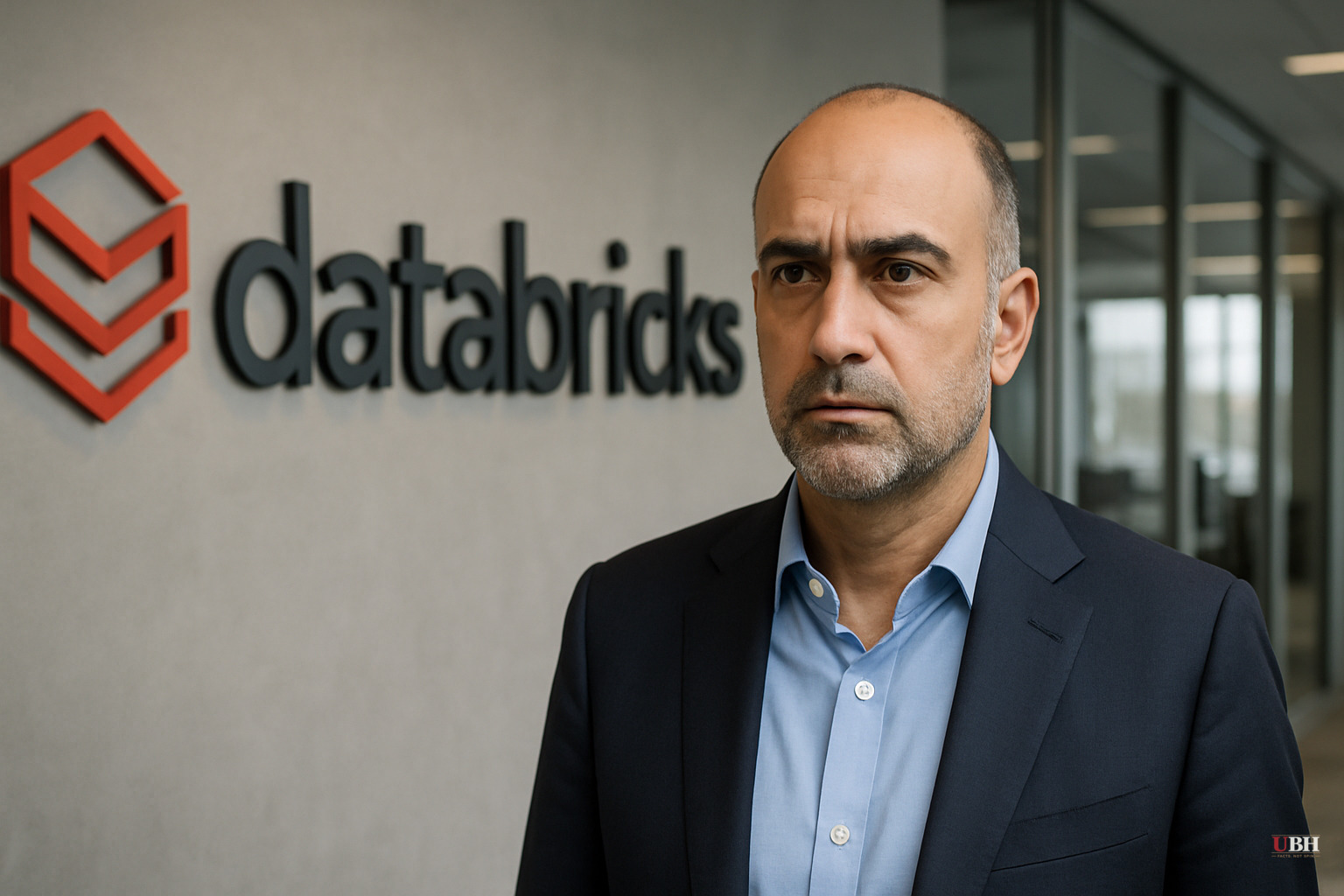
Databricks announced Thursday it has signed a term sheet valuing the company at $188 billion, according to TechCrunch. Coatue Management is leading the round, contributing roughly $3 billion, according to the Wall Street Journal as cited by ground.news. Databricks itself hasn't disclosed the exact dollar figure, saying the money hasn't landed yet and the round won't close until later this summer.
The company announced the valuation and kept the dollar amount vague, telling everyone the check hasn't cleared. But a venture capitalist told TechCrunch the deal is solid, and Databricks had so many firms trying to get in that there was no reason to sit on the news.
The Numbers Don't Lie
This is not Databricks' first rodeo. The company raised $10 billion in December 2024 at a $62 billion valuation, according to TechCrunch. Nine months later, in September 2025, it raised another $1 billion at $100 billion. Five months after that, in February 2026, it closed a $5 billion Series L at $134 billion. Now, five months after that, $188 billion.
That's roughly a 40% jump from February alone, according to Phemex. Some estimates before this round had the company in talks for a $165 billion to $175 billion valuation, according to ground.news, meaning Databricks blew past even its own recently floated numbers.
The pace has gotten so absurd that people online started joking Databricks is going to run out of letters for its funding rounds. "Turning on alerts for when we get a Series AA," one person posted, as noted by TechCrunch. Companies don't usually raise this many mega-rounds this close together unless something real is driving it, or unless private capital is just sloshing around looking for the next AI story to fund.
Why Investors Keep Showing Up
Databricks isn't hype alone. The company says revenue is running above $5.4 billion annually with growth exceeding 65%, serving more than 20,000 client organizations, according to ground.news. Founded in 2013, Databricks built its name in the big-data era, helping companies store and analyze massive datasets in the cloud. That data infrastructure turned out to be exactly what enterprises needed once they started demanding AI tools with the same security and governance as their existing software.
The company has been rolling out AI products at a steady clip: Lakebase, a database built for AI agents, Unity, an AI gateway, and Omnigent, a tool for managing multiple AI agents at once, according to TechCrunch.
Databricks has also become a poster child for a trend worth watching closely: enterprises adopting cheaper Chinese-developed open-weight AI models to cut costs. The company is a particular champion of Z.ai's GLM 5.2 model for coding tasks. CEO Ali Ghodsi published internal benchmarking last week, comparing AI models against the real coding tasks done by his roughly 3,000 software engineers. The results, according to TechCrunch, showed open models, GLM 5.2 especially, can now handle even the hardest coding tasks at lower total cost than proprietary models from Anthropic and OpenAI.
If a company running 20,000 enterprise clients is quietly shifting toward Chinese open-weight models to save money, that's a competitive problem for OpenAI and Anthropic worth watching, not a footnote.
No IPO, No Rush
Ghodsi told the Wall Street Journal, according to ground.news, that "Databricks has a shot to be a trillion-dollar company." He also called 2026 "a terrible year to go public," and has no plans to change that anytime soon.
There's a legitimate case for staying private here. Public companies face quarterly earnings pressure that can push executives toward short-term decisions instead of long-term bets. If Ghodsi genuinely believes Databricks needs a few more years to build out its AI product suite before facing Wall Street's quarterly report card, that's a defensible strategic choice, not evidence of something being hidden. Plenty of successful companies, including SpaceX, have stayed private for years past the point where an IPO looked inevitable.
But staying private this long, at this valuation, with this much capital raised from private investors, means ordinary retail investors have zero ability to buy in. Only accredited investors and the venture funds already at the table get a piece of a company potentially headed toward $1 trillion. The biggest AI infrastructure story of the year so far is happening entirely behind closed doors.
No audited public financials. No SEC quarterly filings. No shareholder votes. Just term sheets, VC memos, and a CEO telling the Wall Street Journal what he thinks the company's ceiling might be.
The round is expected to close later this summer, according to TechCrunch. Whether Databricks holds to that timeline, and whether Ghodsi still believes 2027 or 2028 looks any better for an IPO than 2026 did, remains an open question nobody outside the company can answer yet.
Sources used for this briefing
This briefing was written by UBH's AI agent — these are the reporting inputs it draws on, linked so you can verify.


