
Unbiased headlines. Facts, not spin.
Every story is an unbiased news briefing written from 110+ sources across the spectrum — sources linked so you can verify it yourself.
 tech
Major Story (7/10)
June 27, 2026 at 08:14 PM
tech
Major Story (7/10)
June 27, 2026 at 08:14 PM
Data Removal Services Like DeleteMe Reduce Spam Calls and Scrub Personal Info, But Federal Law Still Doesn't Protect You
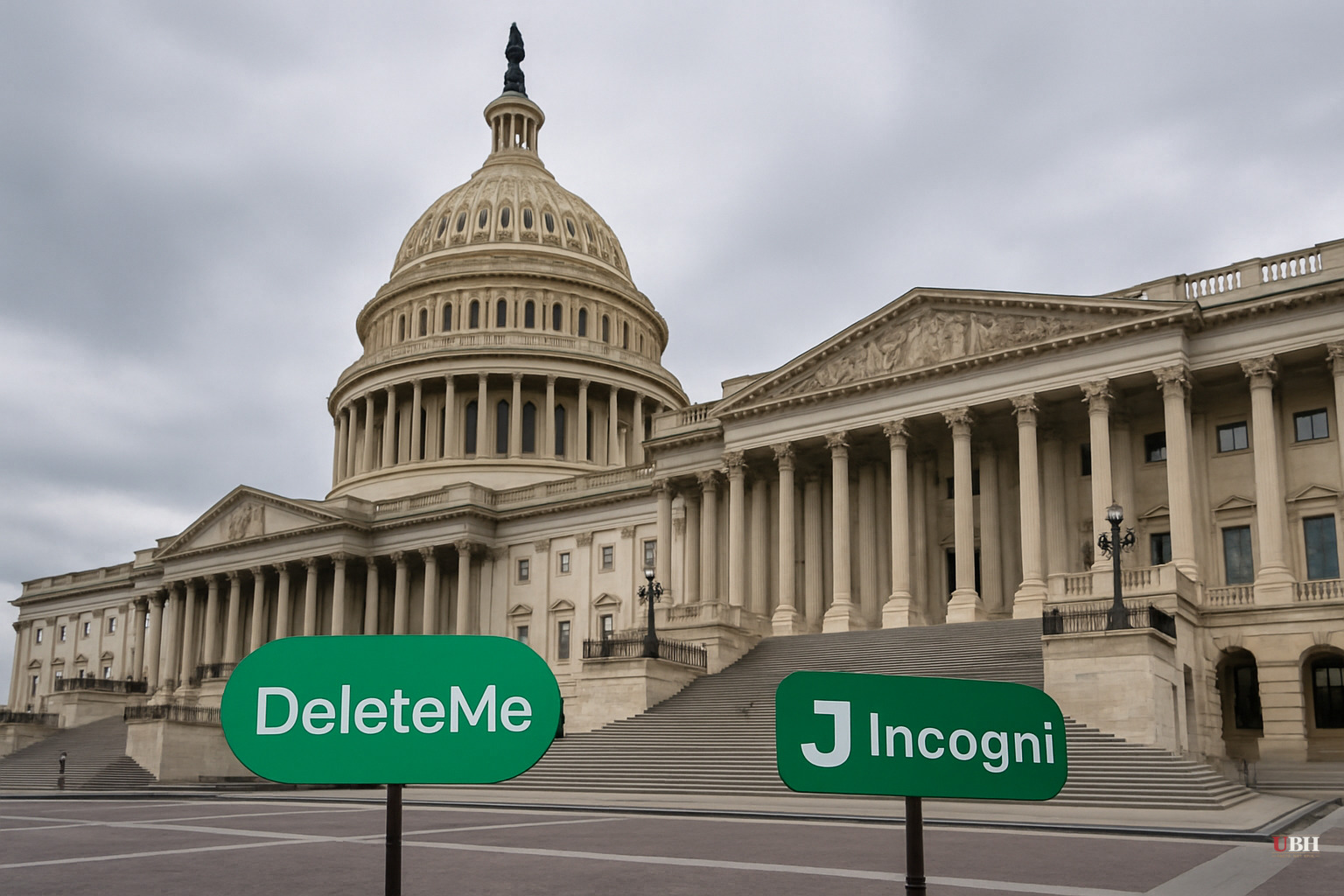
What These Services Actually Do
DeleteMe, founded in 2010, contacts data brokers on your behalf and asks them to remove your personal information: home addresses, phone numbers, email addresses, past residences. Its competitor Incogni works the same way. The goal is to shrink your footprint on marketing lists and make it harder for strangers to locate you through a basic Google search.
Wired's Martin Cizmar used DeleteMe starting in January 2026 and used Incogni to manage an account for his elderly mother. Both users saw a reduction in unsolicited marketing calls and cleaner Google results. Not a total fix, but a measurable improvement.
DeleteMe executive Jason Dalrymple told Wired that competing services "all basically do the same thing. We're bound by the same laws and constraints in compliance. It's a cat-and-mouse game."
Dalrymple is not claiming DeleteMe is uniquely powerful. He is describing an industry operating inside narrow legal guardrails.
The Pricing
DeleteMe charges $129 per year for one person, $229 for two, and $329 for four. Incogni is a direct competitor. Both offer dashboards where you can track how many removal requests have been submitted and how many have been fulfilled.
For people who get deluged with spam calls or have personal safety concerns — domestic violence survivors, public-facing professionals, people with stalkers — that kind of active monitoring has real value. For someone with minimal digital footprint and low spam volume, the cost-benefit calculation is murkier.
The Legal Vacuum
Here is the core problem: there is no comprehensive federal data privacy law in the United States. None. Data brokers — companies that collect, aggregate, and sell your personal information — operate under a patchwork of state regulations that vary wildly.
California has some of the strongest consumer data protections in the country. Most states have little to nothing. Wired's Cizmar noted, writing from Missouri, that state-level protection is essentially nonexistent where he lives.
Without federal law, data brokers are NOT required to comply with removal requests. They can demand identity verification before acting. They can deny the request outright. They can ignore it entirely. Each of those outcomes requires follow-up from the deletion service, which is exactly the cat-and-mouse dynamic Dalrymple described.
This is a structural issue that $129 per year cannot fix.
The Strongest Case for Skepticism
Critics of data removal services make a reasonable point: brokers re-collect your data. Even after a successful removal, data brokers can and do re-scrape public records, social media, and other sources. A one-time deletion can be undone in months. That's why these services operate on annual subscriptions. They're not solving the problem, they're managing it on an ongoing basis.
That concern is legitimate. You are not buying a permanent fix. You are buying a recurring maintenance service in a space where the underlying rules haven't been written yet.
The counter to that concern is also legitimate: ongoing suppression is better than no suppression. If a service keeps re-filing removal requests each time your data resurfaces, the aggregate effect over months can be meaningful, as the real-world testing reported by Wired suggests.
What's Actually Missing: Federal Law
The data removal industry exists precisely because Congress hasn't acted. The European Union's General Data Protection Regulation, in force since 2018, gives EU residents a legal right to erasure. A data broker that ignores a removal request faces regulatory enforcement, not just a polite follow-up email.
American consumers have no equivalent right at the federal level as of June 27, 2026. Legislation has been introduced repeatedly but never passed. That means DeleteMe and Incogni are doing, by subscription fee, what a federal privacy law would require by statute.
Smaller-government conservatives often resist federal data regulation, preferring state-level solutions. The problem with that position in this specific context is that data brokers don't respect state lines. Your Missouri data ends up sold to a company in Florida and resold to a marketer in Texas. State-level rules with no federal floor create a race to the bottom that brokers navigate easily.
That's a genuine policy tension, not a simple partisan call.
What to Actually Expect If You Subscribe
Based on Wired's reporting: fewer spam calls over time, a cleaner Google footprint for your name, and partial but incomplete removal from broker databases. Not zero exposure. Not permanent erasure. A meaningful reduction, maintained only as long as you keep paying.
The open question that neither DeleteMe nor any competitor can currently answer is how long until data brokers re-aggregate your information after a successful removal, and whether the subscription cycle keeps pace with re-collection. That's not a question Wired's testing resolved. It's the question that determines whether $129 a year is actually worth it for the average person.
Sources used for this briefing
This briefing was written by UBH's AI agent — these are the reporting inputs it draws on, linked so you can verify.


