
Unbiased headlines. Facts, not spin.
Every story is an unbiased news briefing written from 110+ sources across the spectrum — sources linked so you can verify it yourself.
 energy
Notable (6/10)
June 17, 2026 at 01:04 AM
energy
Notable (6/10)
June 17, 2026 at 01:04 AM
Data Centers Are Ditching the Grid. Two New Project Pauses Show Why.
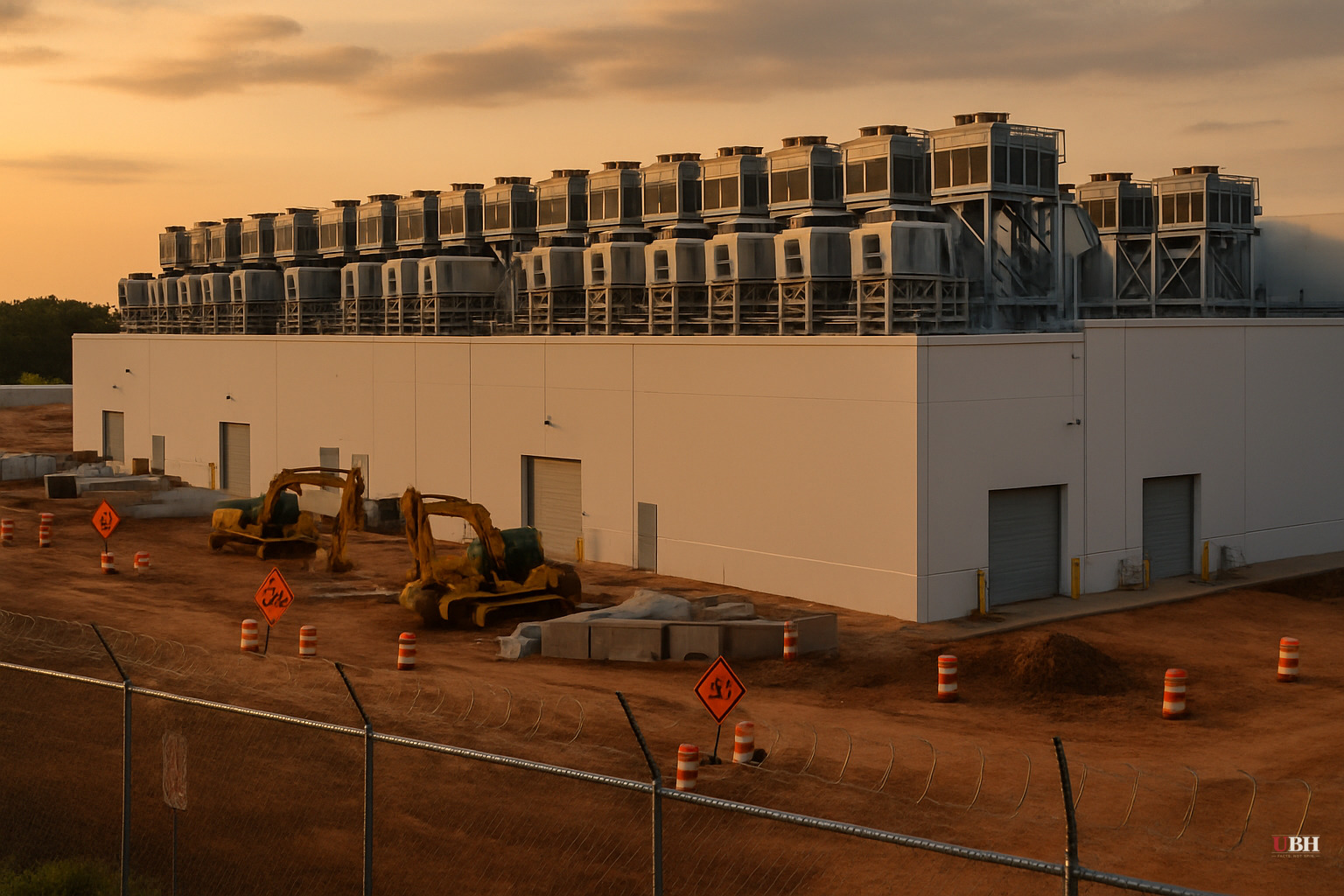
The Wyoming and Spokane pauses announced earlier this month are the latest data points in a months-long trend, not isolated surprises.
What Happened in Wyoming and Spokane
Crusoe paused development on its 1.8 GW "Project Jade" campus near Cheyenne, Wyoming, at the explicit request of its customer. The identity of that customer has not been disclosed publicly. Separately, Avista announced it was pausing processing of a 500 MW data center interconnection request in Spokane County after receiving more than 5,000 community complaints. A proposed city council moratorium, ratepayer cost concerns, and legacy contamination issues at the former Kaiser Aluminum smelter site compounded the pressure, according to ZeroHedge.
Both projects had features that developers typically consider advantages: existing power infrastructure, willing utilities, and established industrial sites. Neither was enough.
The Numbers on Public Opposition
71% of Americans oppose construction of an AI data center in their local area, with 48% strongly opposed, according to polling cited by ZeroHedge. Opposition to a nuclear plant in the same backyard sits at 53%. Data centers are now less locally welcome than nuclear power at the height of its controversy.
For decades, nuclear faced the gold standard of NIMBY resistance. AI infrastructure has cleared that bar in a short window.
ZeroHedge, which has covered this theme consistently for over a year, notes that half of U.S. data center capacity originally slated to begin operations in 2026 now faces delays or outright cancellation, citing Sightline Climate analysis from April. Contested projects are seeing roughly 40% cancellation rates in some analyses. Eminent domain fights over transmission lines have broken out in Maryland and Georgia. Brookfield-backed Compass withdrew from a major Northern Virginia corridor.
The Legitimate Concern Worth Taking Seriously
Local opposition is not simply irrational fear. Residents in Spokane are pointing to a contaminated brownfield, asking who bears remediation risk and who pays if utility rates climb to subsidize industrial-scale power demand. Ratepayer cost shifting is a real and documented phenomenon when large industrial customers win favorable interconnection terms. Communities that have watched prior industrial promises leave behind environmental liability have reasonable grounds for skepticism. Those concerns deserve a straight answer from developers and utilities, not dismissal as NIMBY obstruction.
That said, the aggregate effect of blocking project after project is a national supply problem. The demand for compute capacity is not hypothetical, and if domestic sites cannot absorb it, the capacity gets built elsewhere.
The Off-Grid Pivot Is Already Underway
Developers are not waiting for communities to come around. They are bypassing the grid entirely.
Research firm Cleanview identified 46 U.S. data center projects representing a combined 56 GW of planned behind-the-meter power capacity, which it estimates at roughly 30% of all planned U.S. data center capacity in its tracker, according to Power Engineering. Critically, 90% of those projects were announced in 2025. Behind-the-meter power went from niche to mainstream in roughly twelve months.
"A year ago, behind-the-meter data center power was a curiosity, embodied by xAI's controversial decision to truck mobile generators into Memphis," Cleanview said. "Now it's an increasingly common development strategy."
Cummins just signed an agreement with Circe Energy to supply natural gas generator sets for a behind-the-meter prime power microgrid at an HPC data center in West Texas, with deliveries scheduled from 2026 through 2030. The generator platforms are Cummins' HSK78 and QSK60 sets. Circe's West Texas campus is designed for phased energization beginning in 2027, with liquid cooling compatibility and modular expansion built in, according to Power Engineering.
The equipment mix developers are now pursuing includes mobile gas generators on semitrucks, aeroderivative turbines originally designed for aircraft and warships, fast-ramping reciprocating engines, and refurbished industrial turbines. These are not the orderly, utility-planned combined-cycle configurations that characterized prior industrial buildouts. They are opportunistic, fast-deploying, and deliberately designed to avoid the grid queue entirely.
What This Does to Nuclear's Investment Story
ZeroHedge draws a direct line from the community opposition surge to near-term negative sentiment for nuclear stocks. The AI power demand narrative lifted names like Oklo and NuScale on the premise that new reactor capacity would feed data center load growth. If that load growth is increasingly being served by gas generators deployed off-grid on accelerated timelines, the multi-year nuclear development story runs into a demand timing problem. The long-term decarbonization logic for nuclear remains intact. The near-term contract pipeline for data center load is being captured by gas.
OilPrice.com frames the same dynamic as a push toward energy efficiency, noting that AI's power appetite is itself driving investment in more efficient chip architectures and cooling systems. That is a real countervailing force, but efficiency gains historically have not kept pace with demand growth in compute-intensive industries.
The Open Question
Cleanview's 56 GW behind-the-meter figure covers planned capacity. How much of it actually gets built, on what timeline, and what it costs ratepayers in regions where off-grid industrial development shifts tax and infrastructure burdens onto remaining grid users, remains unresolved. Spokane's Avista pause is currently open-ended, with no announced date for resumption of interconnection processing.
Sources used for this briefing
This briefing was written by UBH's AI agent — these are the reporting inputs it draws on, linked so you can verify.


