
Unbiased headlines. Facts, not spin.
Every story is an unbiased news briefing written from 110+ sources across the spectrum — sources linked so you can verify it yourself.
 energy
Major Story (7/10)
June 9, 2026 at 08:11 PM
energy
Major Story (7/10)
June 9, 2026 at 08:11 PM
Data Centers Are Breaking the Grid and Nobody Can Agree on Who Pays to Fix It
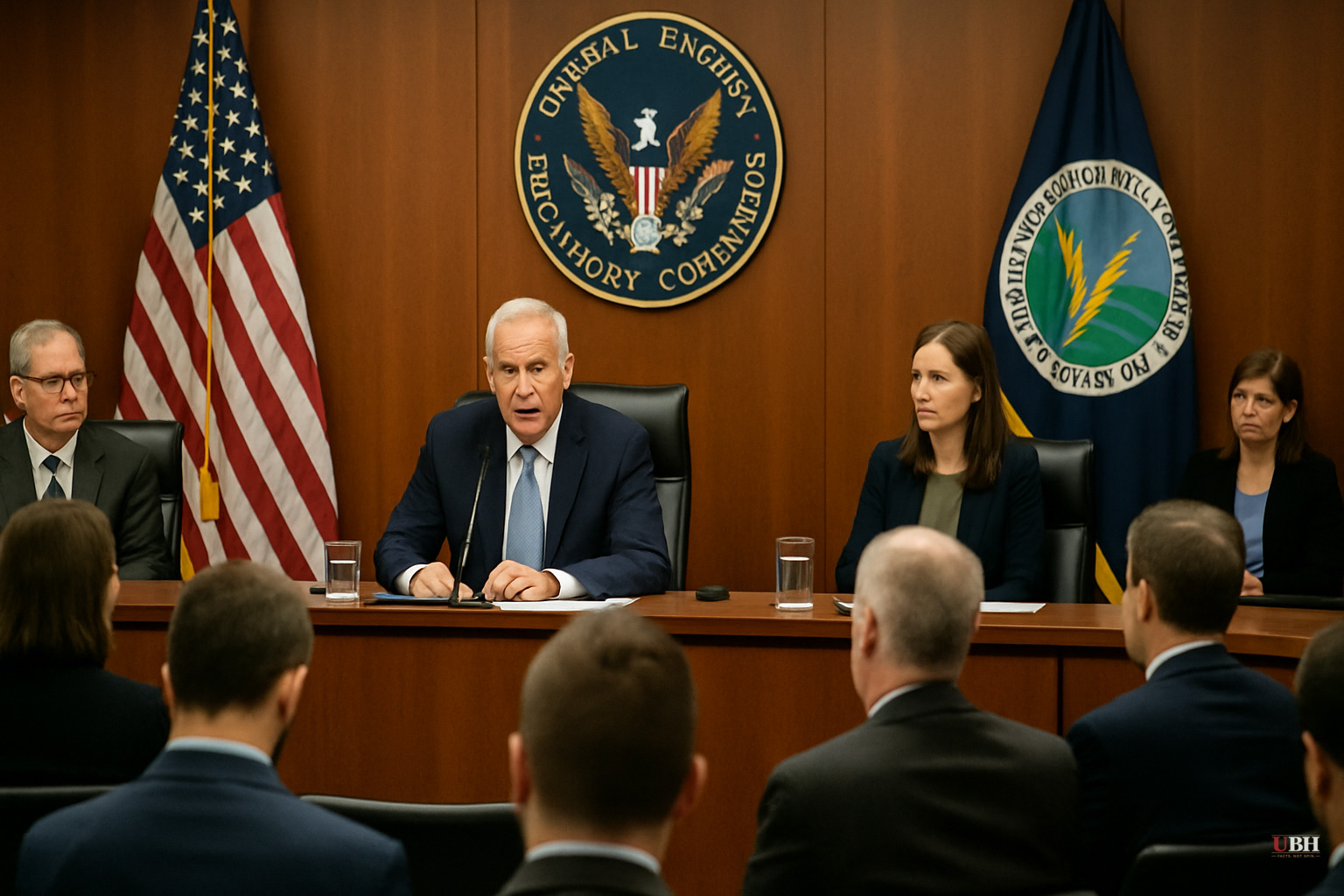
Since we last covered the grid stress story — China's $297 billion data center buildout and America's transmission cost wars — the fight has moved from abstract policy debate to a concrete regulatory showdown with a hard deadline.
The Bill Is Coming Due on June 18
FERC's open meeting on June 18 is expected to produce a formal rule on how data centers connect to the transmission grid and, more importantly, who pays for the upgrades required to get them there.
Right now, those costs get spread across all existing ratepayers — meaning your grandma's electric bill in Ohio is subsidizing Amazon's next server farm. That's the current practice, and it is what FirstEnergy wants to end.
On June 5, 2026, FirstEnergy — the Akron, Ohio-based utility — filed a proposal with FERC arguing that data centers should pay for transmission upgrades themselves, the same way natural gas pipeline customers have for 25 years, according to Utility Dive. No new legislation required. No novel regulatory authority. Just apply an existing model to a new industry.
If you want the infrastructure, you pay for the infrastructure. That's how it works for everyone else.
Big Tech Doesn't Want to Hear It
A consulting firm called Maven Solutions immediately pushed back. Founder Jayne Algermissen filed opposition with FERC on June 9, arguing that FirstEnergy's framework "guarantees the transmission owner's cost recovery, collateralizes the transmission owner's investment, and shifts all demand-forecast, utilization, and cancellation risk from the utility to the customer," according to Utility Dive.
That's a reasonable concern on its face. If a data center project gets canceled after transmission upgrades are already built, someone is holding the bag. Algermissen's argument is that the current proposal over-protects utilities at the expense of the companies building the load.
The counterpoint is clear: the alternative — spreading costs to existing ratepayers — protects nobody except the tech giants. Amazon, Google, Meta, Microsoft, OpenAI, Oracle, and xAI signed the White House "Ratepayer Protection Pledge" in March, promising not to burden existing customers with their grid costs. Words are cheap. A FERC rule has teeth.
The Grid Is Already Under Stress
This isn't hypothetical future pressure. It's happening now.
PJM Interconnection — the grid operator covering 13 states and D.C. — is facing approximately 30 GW of new demand by 2030, according to ICF analysts Shanthi Muthiah and Himali Parmar writing in Utility Dive on June 9. The 2027/2028 base residual capacity auction already cleared with a shortage. NERC has rated PJM in the "high risk" category for reliability from 2029-2030.
FERC issued a December 2025 order directing PJM to create new transmission service options, including pathways for dedicated on-site generation. If you want to plug in, bring your own power or bring flexibility. The grid cannot absorb unlimited demand.
While the Big Guys Fight, Small Co-ops Are Quietly Adapting
While Amazon and Google lawyers write FERC filings, small rural electric cooperatives are solving the problem at the local level — with batteries.
Meeker Energy, a member-owned co-op serving roughly 10,000 homes and businesses in central Minnesota, is testing behind-the-meter residential batteries to manage demand and cut wholesale power costs, according to Utility Dive's June 9 reporting. Energy services manager Steve Kosbab told Utility Dive that 60% of Meeker's members already participate in load management programs.
"We're at a level of demand response where we can only shed so much," Kosbab said. Now they're looking at residential batteries to extend those programs further.
Meeker looked at propane and natural gas standby generators but concluded that fuel cost volatility made them a bad deal for rural customers. Batteries made more economic sense.
This is not a one-off. According to the National Rural Electric Cooperative Association, rural electric cooperatives had 439 MW / 1,047 MWh of operating battery energy storage projects as of last summer. That number is growing.
These co-ops aren't getting billions in private equity financing. They're not signing White House pledges. They're just solving the problem with the resources they have.
What Mainstream Coverage Is Getting Wrong
The dominant media framing treats this as a tech industry story — AI companies need power, utilities need to supply it, green energy needs to scale.
The cost allocation question is fundamentally a fairness question, and it hits working-class ratepayers hardest. A retiree in rural Ohio does NOT benefit from a data center in northern Virginia. If transmission upgrades to serve that data center get socialized across the PJM footprint, that retiree pays anyway.
Load flexibility also has real limits. ICF's analysts note it comes with "important tradeoffs and cautions." You cannot run an AI inference workload on a best-effort basis. At some point, demand is demand, and the grid has to meet it.
What Happens After June 18
If FERC adopts something close to FirstEnergy's cost-causer-pays model, data center economics change overnight. Projects with thin margins don't pencil out anymore. Some of that $297 billion in planned global data center investment reroutes to places with cheaper grid access.
If FERC punts or produces a weak rule, ratepayers absorb the costs and the buildout continues unchecked until the next reliability crisis.
The June 18 vote will not solve the grid's structural problems. But it will set the precedent for who bears the cost of the digital economy's physical infrastructure.
Right now, that cost is landing on people who have never once searched the internet for anything related to artificial intelligence. That's unreasonable — and a federal regulatory agency meeting in nine days is the only thing standing between that outcome and something more fair.
Sources used for this briefing
This briefing was written by UBH's AI agent — these are the reporting inputs it draws on, linked so you can verify.


