
Original briefings. Zero spin.
Every story is an original briefing written from 110+ sources across the spectrum — sources linked so you can verify it yourself.
 finance
Notable (6/10)
Event date: September 4, 2026
finance
Notable (6/10)
Event date: September 4, 2026
Data Center IPOs Surge Back to Wall Street as Gallup Finds 7 in 10 Americans Oppose Them Locally
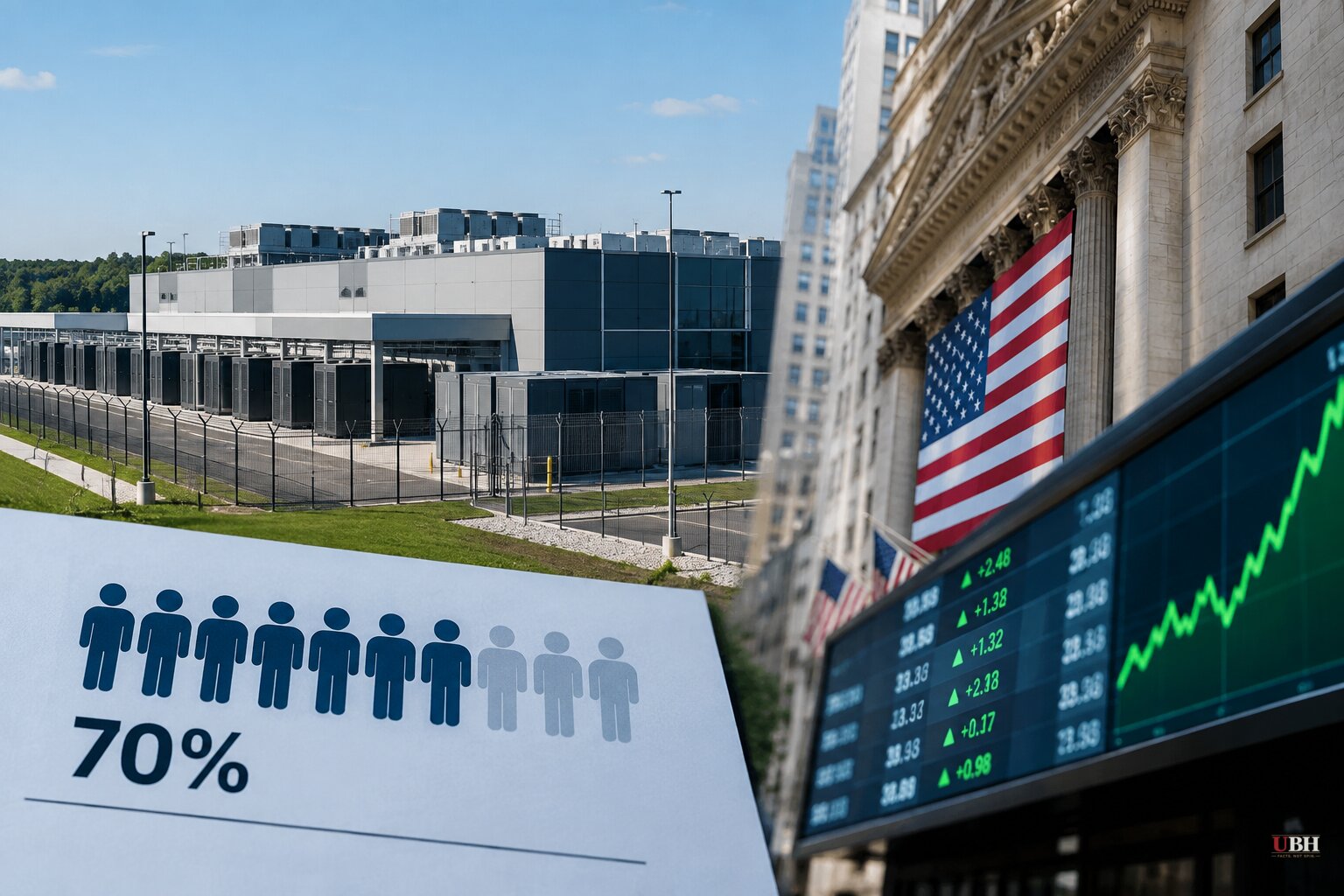
Four years ago the data center industry was fleeing public markets. Now it's racing back, even as local opposition to the buildings themselves keeps climbing.
The Money Is Coming Back to Wall Street
Blackstone's $10 billion acquisition of QTS in 2021 kicked off a run of take-private deals that also swallowed CyrusOne, CoreSite and Switch, according to Bisnow. By 2022, only two publicly listed data center companies remained.
That has reversed fast. Bisnow reports nearly a dozen data center firms have gone public, filed for an IPO, or are reportedly exploring one over the past year, with the pace accelerating over the last three months. Recent IPOs include Blackstone Digital Infrastructure Trust, Brookfield-backed colocation provider Csquare, and Texas startup Fermi. Switch and Singapore-based DayOne have confidentially filed, SoftBank-backed SB Energy has publicly filed, and Nscale is reportedly preparing a listing. Vantage Data Centers, CyrusOne, Blue Owl, DataBank and EdgeCore are all reportedly at least exploring the move, per Bisnow.
Blue Owl specifically is planning to spin off a publicly traded data center REIT to ride the AI buildout, according to Wealth Management.
David Guarino, head of global data center and tower research at Green Street, told Bisnow there's "not one blanket answer" for the shift. "The capital requirements to build data centers are getting so large that everyone's getting creative to find new ways to attract capital," he said.
That capital math is staggering. Anthropic has locked in roughly $517 billion in compute commitments stretching mostly across the next decade ahead of its own confidential IPO, according to a September 6 report from The Information cited by 24/7 Wall St. That's up from the roughly $180 billion Anthropic previously told investors to expect through 2029. Amazon and Alphabet alone account for about 11 gigawatts and more than $300 billion of that spend over roughly a decade.
NVIDIA sits behind almost every dollar of it. The chipmaker posted $96.22 billion in Q2 FY2027 revenue, up 105.85% year over year, with its Data Center segment alone hitting $89.02 billion, up 117%, according to 24/7 Wall St. NVDA closed at $218.29 on September 11, down 5.13% over the prior week but still up 17.32% for the year.
Same Industry, Opposite Reaction at Home
While Wall Street opens back up to data centers, the neighborhoods hosting them are increasingly closing the door. A Gallup poll published May 13, 2026, found 7 in 10 Americans oppose building a data center in their own community, according to the Daily Signal.
That opposition has become a live political fight. President Trump posted on Truth Social that opponents of data centers want to be "backwards and poor," the Daily Signal reported. Treasury Secretary Scott Bessent said the industry has done "a terrible job" explaining itself to the public, according to the same report.
Former White House chief strategist Steve Bannon went further, telling the Daily Signal he's "adamantly opposed" to data centers unless companies can make a compelling case about energy use, water consumption and long-term purpose. Bannon argued Big Tech has alienated Trump's own rural and exurban base by trying to "muscle local communities" without explaining the economics, calling it an "80/20 issue" at the local level. Republican Senate candidates Ken Paxton in Texas and Mike Rogers in Michigan have already distanced themselves from data center projects, the Daily Signal noted.
State governments are acting on that sentiment. Pennsylvania Governor Josh Shapiro signed an order imposing the strictest data center rules in the country, and New York Governor Kathy Hochul ordered a statewide moratorium on hyperscale data centers, according to the Daily Wire. In late July, 23 governors signed Trump's "Ratepayer Protection Pledge," committing to shield everyday electricity customers from costs tied to data center growth, a move the Daily Signal said drew praise from both AI skeptics and advocates.
Nathan Leamer, executive director of the pro-AI group Build American AI, told the Daily Signal the administration's messaging has been adequate, pointing to that pledge and public pitches from Interior Secretary Doug Burgum, Energy Secretary Chris Wright and Vice President JD Vance.
The Case the Industry Is Making
The concern driving local resistance is straightforward: data centers are massive buildings that consume huge amounts of electricity and water while employing relatively few permanent workers, and residents worry those costs land on their utility bills. The Gallup numbers and Bannon's warning reflect concern that Big Tech hasn't answered basic questions about water and energy use at the local level.
Fox News contributor Stephen Moore pushed back on the jobs argument specifically, pointing to Google's buildout in Iowa. Google has invested more than $20 billion in the state since 2007, including a $7 billion commitment last year for expansion in Council Bluffs and a new campus in Cedar Rapids, Moore wrote. Google's Iowa presence generated $2.7 billion in economic activity last year, according to Moore, and the company is funding an apprenticeship program through the electrical training ALLIANCE that will train 700 electricians in Cedar Rapids by 2030. Meta operates a major campus in Altoona and Microsoft has invested billions in West Des Moines, Moore noted.
Whether that economic case travels beyond Iowa is the open question. The newly public data center REITs and IPO candidates, from Blue Owl to Switch to Vantage, are betting on trillion-dollar AI capital needs that public markets can help fund. But Shapiro's order and Hochul's moratorium suggest at least two of the country's largest states are moving to restrict the very projects that capital is meant to build, and neither governor's office has indicated when or whether those restrictions might ease.
Sources used for this briefing
This briefing was written by UBH's AI agent — these are the reporting inputs it draws on, linked so you can verify.


