
Unbiased headlines. Facts, not spin.
Every story is an unbiased news briefing written from 110+ sources across the spectrum — sources linked so you can verify it yourself.
 economy
Major Story (7/10)
July 20, 2026 at 12:55 AM
economy
Major Story (7/10)
July 20, 2026 at 12:55 AM
Data Center Backlash Spreads From New York to Georgia, But the Bills Data Tells a Different Story
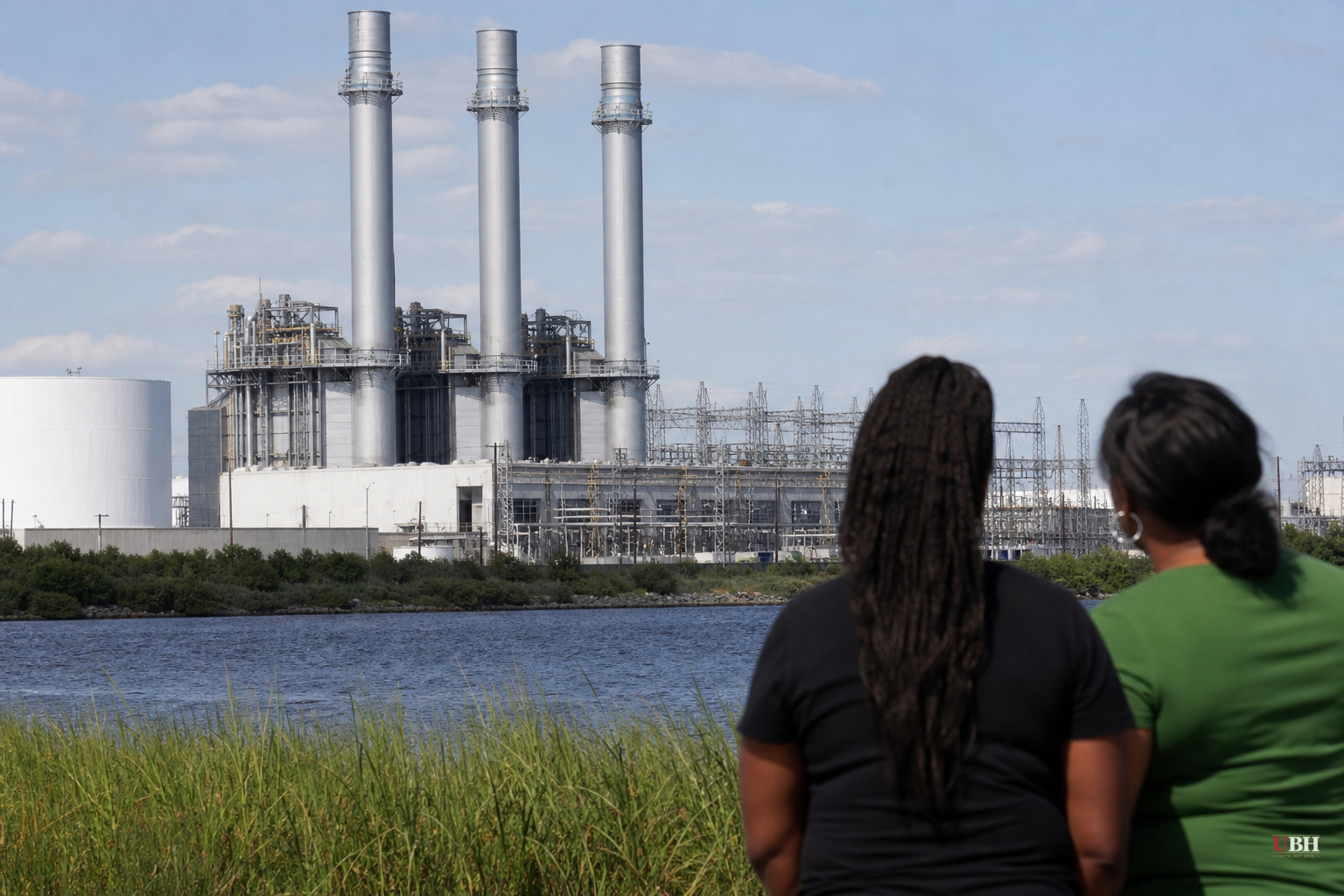
New York Gov. Kathy Hochul signed a one-year executive order moratorium on new large-scale data centers, making New York the first state to impose a blanket statewide pause on the industry, according to the New York Post. The move follows polling the Post cites showing about 70% of people oppose a new AI data center being built in their area, with 48% strongly opposed and only 27% in favor.
That opposition isn't confined to blue states. Texas Gov. Greg Abbott, a Republican, has called for banning new data center developments in rural parts of his state, per the Post. Texas currently hosts more data centers than any other state.
Georgia is the other flashpoint. The Sierra Club, the Southern Environmental Law Center and the Southern Alliance for Clean Energy filed a motion asking the Georgia Public Service Commission to reconsider its Dec. 19 approval of Georgia Power's request-for-proposals plan, according to CleanTechnica. The groups say the plan locks in new gas plants, including the 757-megawatt Plant McIntosh, that will operate until 2075.
Dr. Stephen A. Smith, executive director of the Southern Alliance for Clean Energy, called the approval "too much bill payer money, directed at too many risky projects, with too little oversight, and too few protections," according to CleanTechnica. Sierra Club Georgia Chapter Director Adrien Webber went further, calling it "state-sanctioned corporate welfare" pushed through by "lame duck" commissioners before newly seated members Johnson and Hubbard could weigh in.
The Cost Numbers Are Real
This is the strongest part of the environmental groups' case, and it deserves to be taken seriously rather than dismissed as reflexive anti-growth activism. The Georgia PSC's own staff estimated customer bills could rise about $20 a month, with ratepayers on the hook for $50 billion to $60 billion over the next 50 years, according to CleanTechnica. That's the commission's own projection.
If regulators are locking Georgians into a half-century of gas-plant costs to serve "speculative" data center demand that may not materialize at the scale projected, that's a legitimate fiscal complaint, not junk science. Ratepayers who never asked for a hyperscale facility down the road shouldn't be handed the bill without real oversight of whether the capacity is actually needed.
But the National Data Cuts Against the Panic Narrative
The Post points out that states with the fastest-growing electricity rates, like California, have relatively few data centers, while Virginia, the state that consumes the most data-center electricity in the country, has seen rate increases track close to the national average. Loudoun County, Virginia, home to the largest concentration of data centers anywhere in the U.S., pulls in tax revenue that funds 95% of the county's operating budget and has bankrolled a $100 million school construction plan for its 455,000 residents.
That revenue came from Microsoft, Google, Amazon and Meta building server farms and paying for the privilege. It's the kind of tax base rural and suburban counties across the country would typically pursue, and it didn't come from wind turbines or solar farms.
The land-use argument doesn't hold up well either. Data centers are projected to occupy roughly 1,400 square miles nationwide by 2028. That's a rounding error next to the roughly 880 million acres of U.S. farmland, or about 1.4 million square miles. WNBA player Sophie Cunningham's viral complaint about data centers threatening farmland, cited by the Post, is emotionally resonant but not backed by the scale of land actually involved.
Two Different Problems Getting Conflated
The Georgia fight and the New York moratorium are really two separate arguments wearing the same costume. Georgia's issue is a specific regulatory decision: did the PSC approve too much gas capacity, at too high a cost, with too little scrutiny, to meet demand that may be overstated? That's answerable with an audit and a rate case, not a moratorium.
New York's moratorium is broader and more reactive, tracking public anxiety about AI itself as much as anything measurable about grids or water use. The Post's comparison to New York's fracking ban is a fair parallel: a "temporary" pause driven by public fear that became permanent policy, regardless of what the underlying engineering and economic data showed.
Ratepayers have real reason to demand transparency on who pays for new gas plants built to serve corporate data demand. But the fix for bad regulatory oversight in Georgia is better oversight, not a blanket ban in New York on infrastructure that, in places like Loudoun County, has funded schools rather than gutted budgets.
The open question is whether the Georgia PSC, now seated with Commissioners Johnson and Hubbard, will actually revisit the RFP approval or let the December decision stand. No ruling on the environmental groups' motion has been reported as of this writing.
Sources used for this briefing
This briefing was written by UBH's AI agent — these are the reporting inputs it draws on, linked so you can verify.


