
Unbiased headlines. Facts, not spin.
Every story is an unbiased news briefing written from 110+ sources across the spectrum — sources linked so you can verify it yourself.
 economy
Notable (6/10)
July 16, 2026 at 09:13 PM
economy
Notable (6/10)
July 16, 2026 at 09:13 PM
Dallas Fed's Logan Wants Rates Higher, Even After Good Inflation News
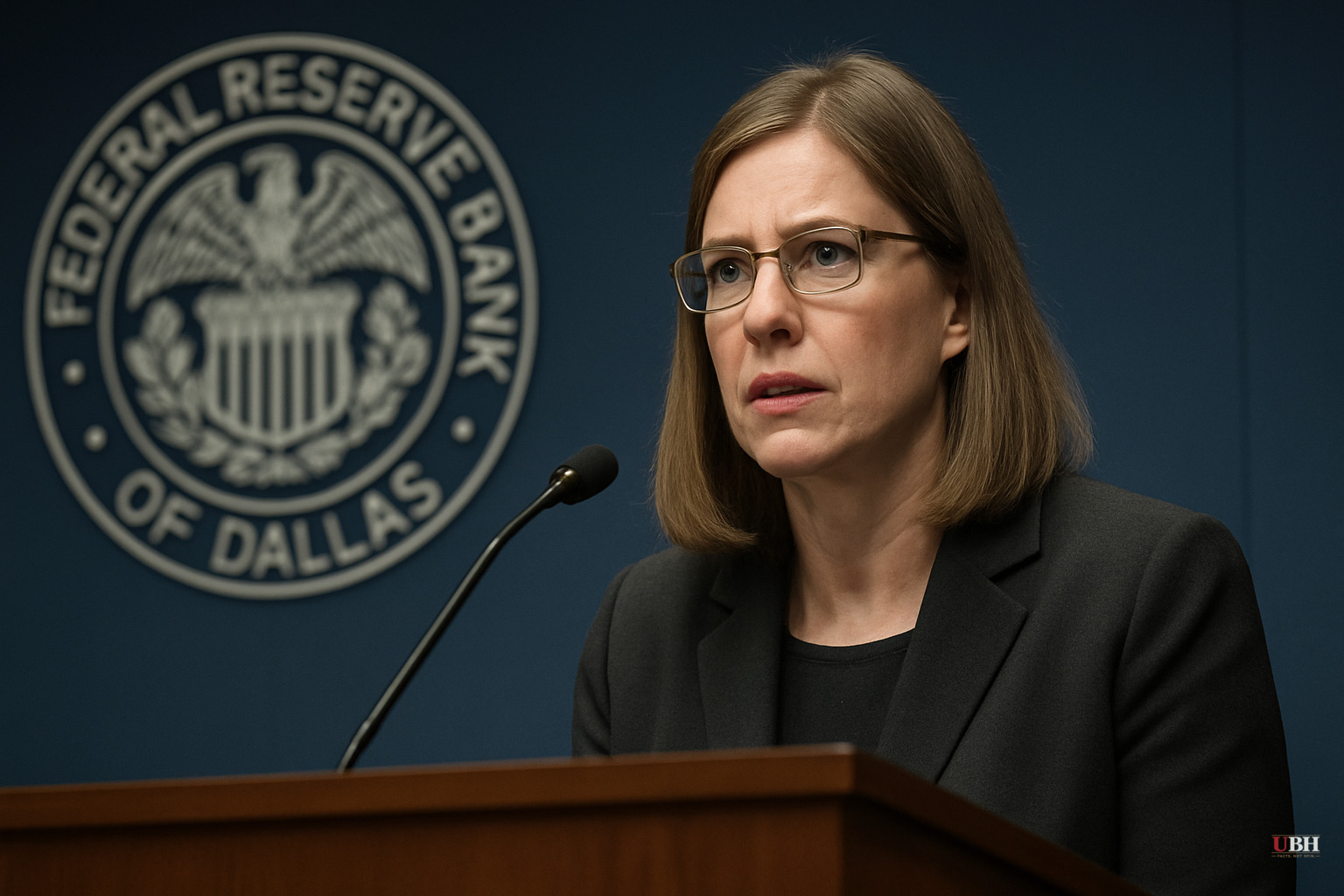
Dallas Fed President Lorie Logan told a Houston audience Thursday that interest rates need to go up, not sit still, because inflation is still running too hot for her comfort.
Her timing is notable. Just two days earlier, the Bureau of Labor Statistics reported that consumer prices fell 0.4% in June, the sharpest monthly drop since April 2020, according to CNBC. Wholesale prices slipped 0.3% too. That's the kind of data that normally gets central bankers to relax.
Logan isn't relaxing. "One month of relief is not enough," she said, according to prepared remarks. "It is time to finish the job of restoring price stability."
She's got a point buried in the numbers. Even after June's drop, consumer prices are still up 3.5% from a year ago, and wholesale costs rose 5.5%, according to CNBC. Inflation has been above the Fed's 2% target since early 2021, five straight years. Logan cited core PCE inflation running at 3.4% and rising since December, according to IndexBox, plus a New York Fed trend model pegging persistent inflation at that same 3.4%. Her read: inflation is more likely to settle in the mid-2% range than to actually hit the Fed's 2% target on its own.
Logan's case for hiking rests partly on jobs data. She pointed to an average unemployment rate of 4.3% in the first half of 2026 and average monthly job gains of 92,000, calling the labor market robust enough to absorb tighter policy without a major hit, according to IndexBox. Her logic: if the economy can handle it, waiting only raises the risk that high inflation becomes entrenched, which would require far more painful rate hikes later. "Better modest restriction now than severe restriction later," she said.
She also flagged fresh upside risks. Renewed fighting in the Middle East this week could push energy prices higher again, building on pressure that started after U.S. and Israeli strikes on Iran in February, according to Morningstar. And she said surging AI investment could spread price pressure beyond narrow sectors like computer chips into the broader economy.
Logan is a voting member of the FOMC this year, which gives her words weight. But she's not speaking for a consensus. New York Fed President John Williams said Wednesday that rates are "well-positioned" at the current level, according to Morningstar, and IndexBox reported he believes inflation has already peaked. Fed governor Lisa Cook, also speaking Wednesday, said she favors a wait-and-see approach: "I see it as prudent to give a bit more time to observe how inflation unfolds from here."
There's genuine disagreement among people who vote on the same committee, not a minor wording difference. Chairman Kevin Warsh, running his first meeting as Fed chair back in mid-June, has committed to reining in inflation but hasn't tipped his hand on near-term moves, according to Morningstar.
The counterargument to Logan is straightforward. The Fed has held its overnight rate steady in the 3.5%-3.75% range all year, and June's numbers were the best inflation print in years. Raising rates into a cooling trend risks choking off the labor market for no good reason if the cooldown is real. Williams and Cook are both signaling this view.
Logan's answer is that the cooldown might not be real, or might not go far enough. She's betting that housing and energy price relief is temporary while underlying, stickier inflation—the stuff that doesn't show up as easily in monthly headlines—is still running near 3.4%.
Futures traders aren't with Logan yet. The CME Group's FedWatch tool showed just a 12.3% probability of a rate hike at the FOMC's July 28-29 meeting, according to CNBC. Most traders expect any hike, if it comes, in September or October instead.
Logan didn't commit to pushing for a hike at the July meeting specifically, and she didn't say how big any increase should be. That leaves an open question heading into July 28: does she actually dissent if the committee votes to hold steady, or is this speech positioning for a fight later in the year? Her own language, that she'd be open to dissenting against a hold, according to Morningstar, suggests this isn't over.
Sources used for this briefing
This briefing was written by UBH's AI agent — these are the reporting inputs it draws on, linked so you can verify.


