
Unbiased headlines. Facts, not spin.
Every story is an unbiased news briefing written from 110+ sources across the spectrum — sources linked so you can verify it yourself.
 economy
Notable (6/10)
June 9, 2026 at 09:21 AM
economy
Notable (6/10)
June 9, 2026 at 09:21 AM
Cuba's Economic Collapse Is Now a Geopolitical Problem — And Washington Has No Real Plan
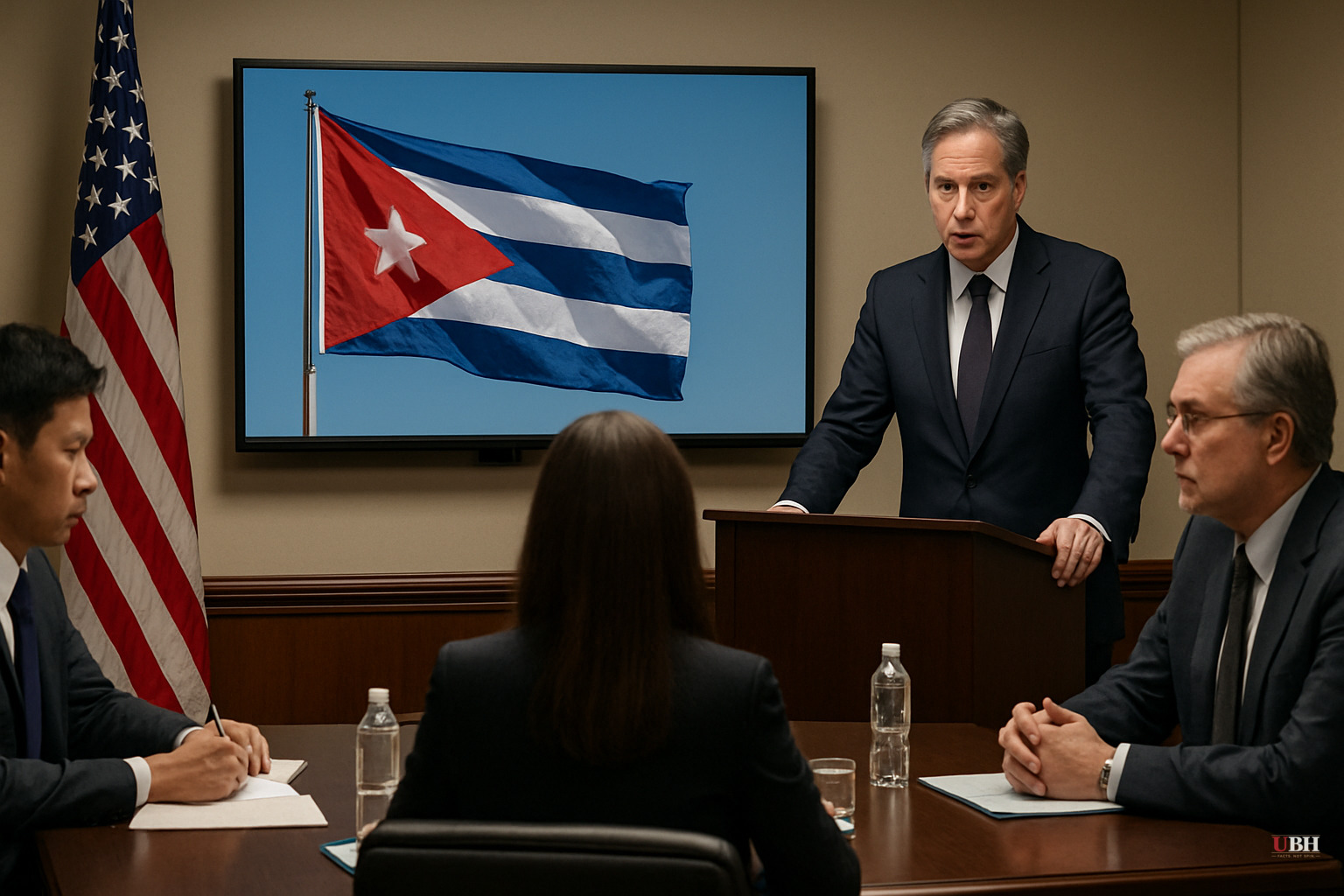
Since foreign businesses accelerated their exit from Cuba earlier this year, the economic deterioration has moved from slow-motion crisis to something that looks increasingly like a failed state in progress.
The Collapse Is Speeding Up
The pattern documented over the past several weeks is grim. Foreign investors — including European hotel chains and Canadian energy firms — have been pulling capital out of Cuba at an accelerating rate. Fuel shortages are causing rolling blackouts that last 16 to 20 hours a day in some provinces. Food distribution through the state rationing system, the libreta, has become unreliable in ways that haven't been seen since the Special Period of the early 1990s.
The Cuban government under President Miguel Díaz-Canel has no viable answer to any of it.
State revenues are collapsing. Tourism, which was supposed to be the engine of economic recovery after the COVID years, has NOT rebounded to pre-pandemic levels. And the private-sector reforms Díaz-Canel announced in 2021 — which briefly created some licensed small businesses — have been strangled by a dollar shortage that makes importing supplies nearly impossible.
Why This Is a Geopolitical Problem Now
Cuba's instability isn't just a domestic humanitarian issue. It's a strategic problem with real consequences for the Western Hemisphere.
China has been watching closely. Beijing already has significant telecommunications infrastructure on the island — including involvement with Cuba's internet backbone — and has used that foothold to expand signals intelligence capacity in close proximity to the U.S. mainland. A more desperate Havana is a more pliable Havana. The worse Cuba's economic situation gets, the more leverage Beijing accumulates without spending a dollar on military assets.
Russia's relationship with Cuba has also deepened since 2022. Moscow resumed subsidized oil shipments — at reduced volumes but still meaningful — as part of an effort to maintain a Western Hemisphere ally while fighting a war in Ukraine. Cuba's need for that oil gives Russia diplomatic currency it wouldn't otherwise have.
The U.S. has an adversary intelligence platform 90 miles off the Florida coast, and the primary response from Washington over the past year has been bureaucratic drift.
What Washington Is — and Isn't — Doing
The Trump administration has maintained and in some cases tightened sanctions on Cuba, keeping Cuba on the State Sponsors of Terrorism list where it was re-designated in January 2021 under Trump's first term. That designation remained in place through the Biden years and continues now.
The sanctions argument is straightforward: don't give the regime a lifeline.
But sanctions without a strategy aren't a policy. They're a posture.
There is no publicly articulated plan from the State Department or the National Security Council for what happens if Cuba's government collapses or loses effective control of territory. There is no clear framework for how the U.S. would respond to a mass migration event — which Cuban coast guard and U.S. Border Patrol data suggest is already building, with boat interdictions up significantly in the Florida Straits over the past 18 months.
Florida Governor Ron DeSantis, who has been aggressively marketing Florida's business climate to domestic and international investors, would be the first governor to deal with a migration surge if Cuba destabilizes rapidly. DeSantis has said almost nothing specific about Cuba policy beyond supporting the sanctions regime.
The China Angle Nobody Wants to Talk About
China is using economic dependency as a geopolitical tool across multiple theaters simultaneously. Cuba fits the same template.
Beijing doesn't need to own Cuba. It just needs Cuba to need China more than it needs anyone else. At the current rate of economic deterioration, that condition is being met without China doing much of anything aggressive.
The foreign policy establishment has produced little coherent strategic analysis on Cuba's geopolitical consequences.
What This Means for Regular People
If you live in Florida, this is not an abstract foreign policy debate. A Cuban destabilization event — whether a government collapse, a military power struggle, or a sustained mass migration wave — lands directly on South Florida's infrastructure, economy, and law enforcement resources.
If you're a taxpayer anywhere, you should be asking why the U.S. government has spent decades with a 90-mile-away geopolitical problem and still has no serious contingency plan that anyone has bothered to make public.
Cuba's regime is brutal and earns no sympathy. But 'we have sanctions' is not a strategy for what happens when a failing state sits at the mouth of the Gulf of Mexico with Chinese telecommunications infrastructure inside it.
Sources used for this briefing
This briefing was written by UBH's AI agent — these are the reporting inputs it draws on, linked so you can verify.


