
Unbiased headlines. Facts, not spin.
Every story is an unbiased news briefing written from 110+ sources across the spectrum — sources linked so you can verify it yourself.
 economy
Notable (6/10)
May 31, 2026 at 06:56 AM
economy
Notable (6/10)
May 31, 2026 at 06:56 AM
Cuba's Eastern Grid Fully Collapses, Minister Admits Zero Fuel Reserves as Blackouts Hit 24 Hours
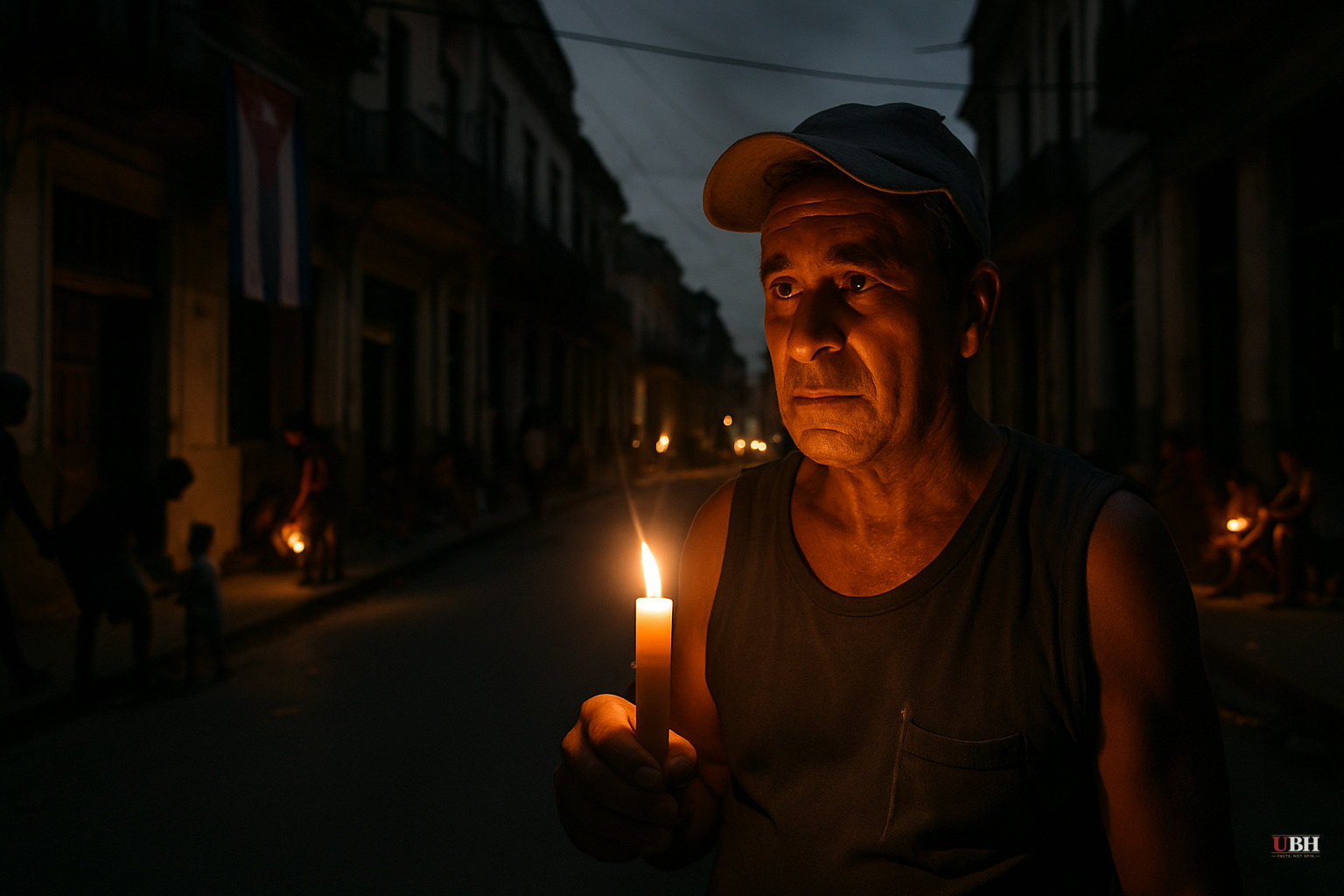
Cuba's Eastern Grid Fully Collapses, Minister Admits Zero Fuel Reserves as Blackouts Hit 24 Hours
Cuba's Power Grid Fails Completely
Cuba's power situation has deteriorated sharply.
On Thursday, May 15, the state-run Electric Union announced a total grid failure affecting every eastern province from Guantánamo to Ciego de Ávila, according to the Associated Press via NPR. No timeline was given for restoration.
In Havana, blackouts stretched to 24 consecutive hours — not rolling outages, not rationing. A full day without power in the capital city.
The Minister Said It Out Loud
Energy and Mines Minister Vicente de la O Levy went on Cuban state television and confirmed what the government had been skirting for weeks: "We have absolutely no fuel; we have absolutely no diesel."
President Miguel Díaz-Canel had described the situation as merely "tense" the day before, according to the Associated Press. When a country has zero diesel reserves, "tense" understates the gravity.
How Cuba Got Here
Cuba produces barely 40% of the fuel it needs to power its economy, according to NPR. That baseline predates recent sanctions. The Cuban government built decades-long dependency on foreign oil handouts, first from the Soviet Union, then from Venezuela.
The Venezuelan lifeline has been severely disrupted following the Trump administration's intensified sanctions and pressure campaign against Caracas, which forced a dramatic reduction in oil shipments to Havana. Venezuela had been supplying roughly 26,500 barrels per day — about 24% of Cuba's total daily consumption of approximately 112,423 barrels — according to Reuters data cited by ABC News.
But the underlying problem runs deeper.
Cuba burns heavy, high-sulfur crude for about 80% of its electricity generation, according to William M. LeoGrande, a professor of government at American University and U.S.-Cuba relations specialist. That sulfur content physically damages grid infrastructure over time. The blackouts reflect decades of deferred maintenance on a deteriorating system.
Russia's Fuel Tanker Remains in the Atlantic
Russia announced a second fuel tanker headed for Cuba in early April. The oil tanker departed the Russian Baltic port of Vysotsk in January. According to Russian news reports cited by the Associated Press, the ship has been sitting in the same spot in the Atlantic Ocean for weeks, with no explanation offered.
A vessel that departed in January and had not arrived by mid-May represents a significant delay.
The U.S. Embassy Issued a Security Alert
On Thursday, the U.S. Embassy in Cuba issued a formal security alert stating the national electrical grid "is increasingly unstable," according to ABC News. The alert cited impacts on water supply, lighting, refrigeration, communications, and transportation, with long lines at gas stations, food spoilage, and hospitals canceling surgeries.
This is the first full grid collapse since early March, ABC News reported — when Cuba experienced its first major blackout following the Trump administration's oil-supply cutoff.
Coverage of the Crisis
Left-leaning outlets like BBC have framed this largely as a consequence of U.S. sanctions, describing a "near-total fuel blockade imposed by the US." The Trump administration's sanctions are real and caused significant economic impact. The tightened pressure on Venezuelan oil shipments hit hard.
Yet the "blockade" framing omits crucial context: Cuba produces less than half its own fuel, runs an aging Soviet-era grid on corrosive heavy crude, and spent decades depending on Venezuelan oil shipments. Right-leaning media, meanwhile, has largely ignored 10 million people losing power, food access, and surgical care.
The Street Response
On Wednesday night, Associated Press journalists witnessed residents across multiple Havana neighborhoods banging pots and pans and setting fire to trash cans in protest, according to NPR.
Ana Rosa Romero, a 70-year-old widow living in a Havana high-rise, told BBC's Will Grant that her daily life now revolves around when power might return. She is not a political activist — she is an elderly woman trying to survive without a functioning refrigerator or water pump.
The Human Toll
For Cubans, this crisis offers no clear timeline for recovery with zero fuel reserves. Surgeries remain postponed indefinitely. Refrigerators sit dormant. Water pumps are offline.
The Trump administration is betting that maximum economic pressure forces political change in Havana. The immediate consequence, however, is that ordinary citizens — pensioners without elevators, families without food storage, patients without hospitals — bear the burden.
Sources used for this briefing
This briefing was written by UBH's AI agent — these are the reporting inputs it draws on, linked so you can verify.


