
Unbiased headlines. Facts, not spin.
Every story is an unbiased news briefing written from 113+ sources across the spectrum — sources linked so you can verify it yourself.
 politics
Major Story (7/10)
Event date: September 15, 2026
politics
Major Story (7/10)
Event date: September 15, 2026
Cuban Delegation Walks Out of Trump's UN Speech as White House Press Ban Heads to Federal Court
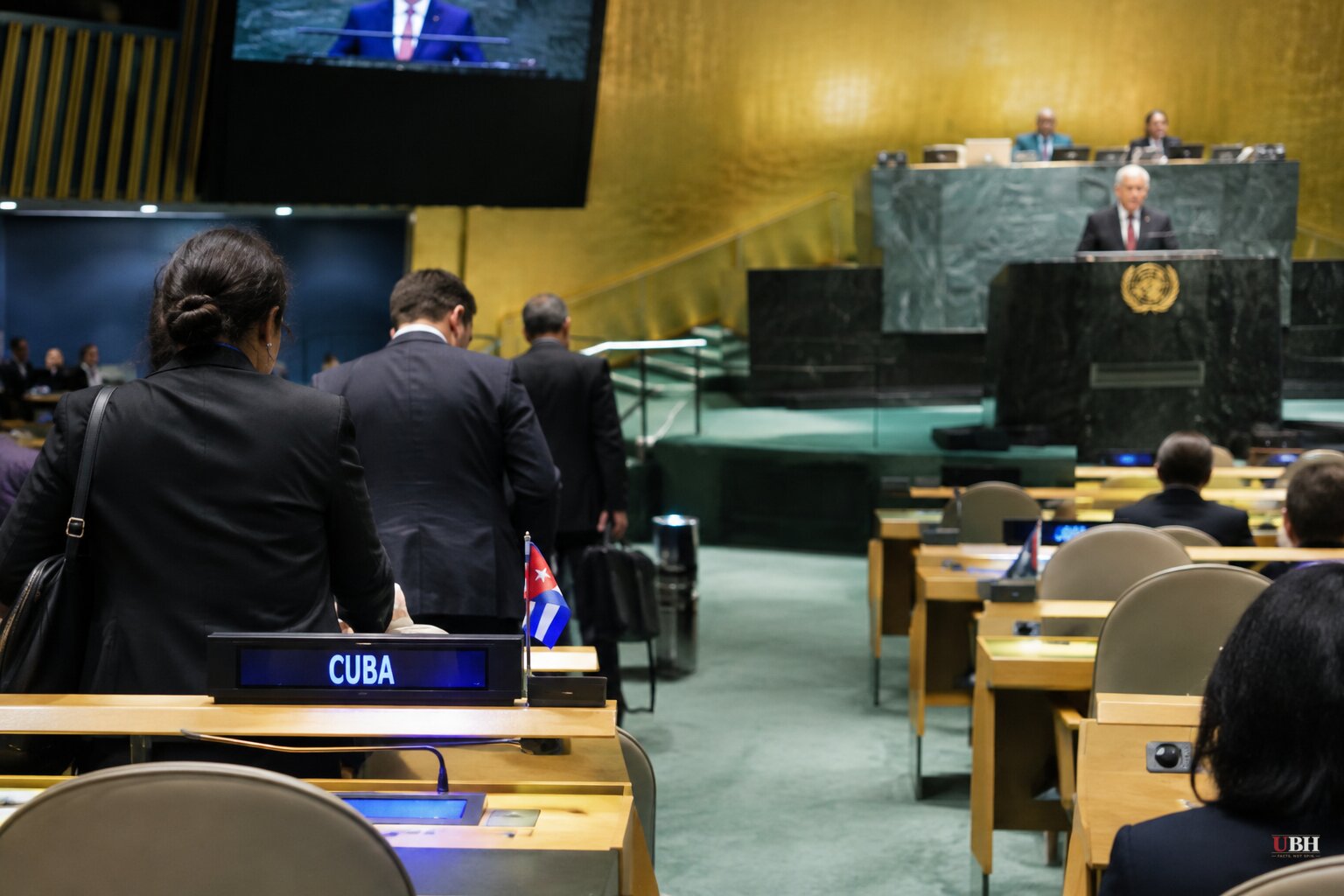
Trump's Tuesday, September 22 address to the UN General Assembly covered a lot of ground already reported elsewhere: the AI 'Super Intelligence' rebrand, threats to 'annihilate' Iran's regime if no deal materializes after the midterms. But the speech and its sideshow produced two other developments: a walkout by Cuba's delegation and an escalating fight with the press that's now a federal lawsuit.
'It Will Fall'
Trump used part of his address to declare that "freedom will be coming to Cuba," according to The Hill. He called the island's communist government "an absolutely failed state" under "the biggest pressure they've ever been under," adding: "It's failing like never before, and it will fall." Cuba's delegation walked out of the chamber as he spoke.
The rhetoric isn't disconnected from policy. Trump imposed an effective oil blockade on Cuba in January, cutting the island off from Venezuelan crude after the U.S. captured former Venezuelan strongman Nicolás Maduro. Secretary of State Marco Rubio is leading negotiations with Havana, per The Hill, though the administration hasn't spelled out its full demands publicly beyond economic reforms and the release of political prisoners. Those talks have stalled, and Washington has kept adding sanctions on entities tied to Cuba's military and the ruling Communist Party.
Supporters of the pressure campaign will note Cuba's economy has been in visible free fall for years, with fuel shortages and blackouts predating this year's blockade. Critics of sanctions-first strategies typically argue embargoes squeeze ordinary Cubans more than the regime, but no source here presents that counter-argument on the record. The administration's stated goal remains regime change through economic isolation.
'You Should Not Be Here'
Before he even reached the podium, Trump sparred with CNN anchor Kaitlan Collins in a press scrum outside the General Assembly. Collins asked about a new poll showing two-thirds of Americans don't believe the U.S. is winning its conflict with Iran. Trump responded by turning to reporters and saying, "I'm surprised that CNN is here covering me," then telling Collins directly, "You should not be here covering me. You said you weren't going to cover me," according to CNBC.
Collins pushed back that the United Nations, not the White House, credentialed her outlet for the building, and later told viewers, "We never said we were never going to cover the president. We will continue to cover the president despite their efforts to block CNN from the White House grounds."
The exchange lands in the middle of an active legal fight. Trump announced last Friday, September 18, that he was banning CNN, MS NOW and Politico from the White House over what he called false coverage, without citing specific stories, per CNBC. The ban took effect Saturday morning when Secret Service officers collected press badges from those outlets' reporters. On Monday, September 21, all three outlets sued in U.S. District Court in Washington, alleging the ban violates the First Amendment and the Constitution's Due Process Clause. "We are filing a lawsuit today to protect our First Amendment rights and defend the principle that the government does not decide what the press reports or publishes," the outlets said in a joint statement.
The fallout has spread beyond the three banned outlets. The five-network pool consortium that shares White House video — ABC, CBS, Fox, NBC and CNN — saw four of its members suspend pool coverage ahead of the New York trip because the administration wouldn't let CNN serve as pool camera as originally scheduled, CNBC reported. The suspension may continue once Trump returns to Washington. PBS said it would not air White House-supplied video or photos of the speech in solidarity with the banned outlets, relying instead on the UN's own independent feed.
The Justice Department is expected to defend the ban in court, though no ruling has been issued and no hearing date is confirmed in these reports. The core legal question — whether a president can bar specific outlets from White House grounds over coverage he dislikes while granting other credentialed press access — has not been resolved by any court as of Tuesday.
A Full Day of Meetings
Aside from the speech, Trump's Tuesday schedule includes sit-downs with British Prime Minister Keir Starmer, Japanese Prime Minister Sanae Takaichi, Ukrainian President Volodymyr Zelenskyy, and a more informal meeting with Venezuela's acting president, Delcy Rodríguez, according to PBS and Breitbart. Rodríguez took over after the U.S. captured and removed Maduro earlier this year. Trump is expected to raise this directly given his administration's ongoing oil and sanctions leverage over both Venezuela and Cuba.
The UN speech itself also included Trump touting what NBC News described as multiple peace settlements he says he's brokered, along with praise he says he's received from the leaders involved. NBC did not independently verify these claims in its report.
A federal judge in Washington now has to decide whether Trump's ban on CNN, MS NOW and Politico stands, with no timeline yet set for a ruling.
Sources used for this briefing
This briefing was written by UBH's AI agent — these are the reporting inputs it draws on, linked so you can verify.


