
Unbiased headlines. Facts, not spin.
Every story is an unbiased news briefing written from 110+ sources across the spectrum — sources linked so you can verify it yourself.
 economy
Notable (6/10)
July 23, 2026 at 09:43 PM
economy
Notable (6/10)
July 23, 2026 at 09:43 PM
Cuba Lost 245,264 People Last Year as Spain's Meliá Hotels Exits the Island Entirely
Cuba's population collapse, running for nine straight years, just got fresh numbers from the regime's own statisticians, and a major foreign investor just walked out the door.
Cuba's National Office of Statistics and Information, known as ONEI, published a demographic report this week showing 9,434,593 people remained on the island at the end of 2025, down 313,414 from 2024's count of roughly 9.7 million, according to Breitbart's review of the report. Of those who left, 72,056 came back, leaving a net loss of 245,264 people for the year.
That net figure lines up closely with recent years. Cuba lost more than 307,000 net in 2024, 330,000 in 2023, and over 500,000 in 2022, based on the same official tallies cited by Breitbart. Havana took the biggest hit in 2025, losing 98,773 residents, while Matanzas, Villa Clara, Santiago de Cuba, and Camagüey each lost around 20,000.
The Madrid-based outlet Diario de Cuba, cited by Breitbart, argues the real numbers are worse than ONEI admits. Diario de Cuba says the agency doesn't disclose that most people leaving are between 20 and 40, the prime working and childbearing years, which does more damage to future population growth than the headline number suggests. The outlet also flagged that Cuba counts anyone who spends just 180 days on the island in a calendar year as part of its official population, a methodology that can flatter the numbers.
Independent estimates go further still. Some studies say Cuba has lost as much as 24 percent of its population since 2017, when the island had more than 11.2 million people, compared to the roughly 16 percent drop implied by the government's own figures.
A Major Investor Leaves Too
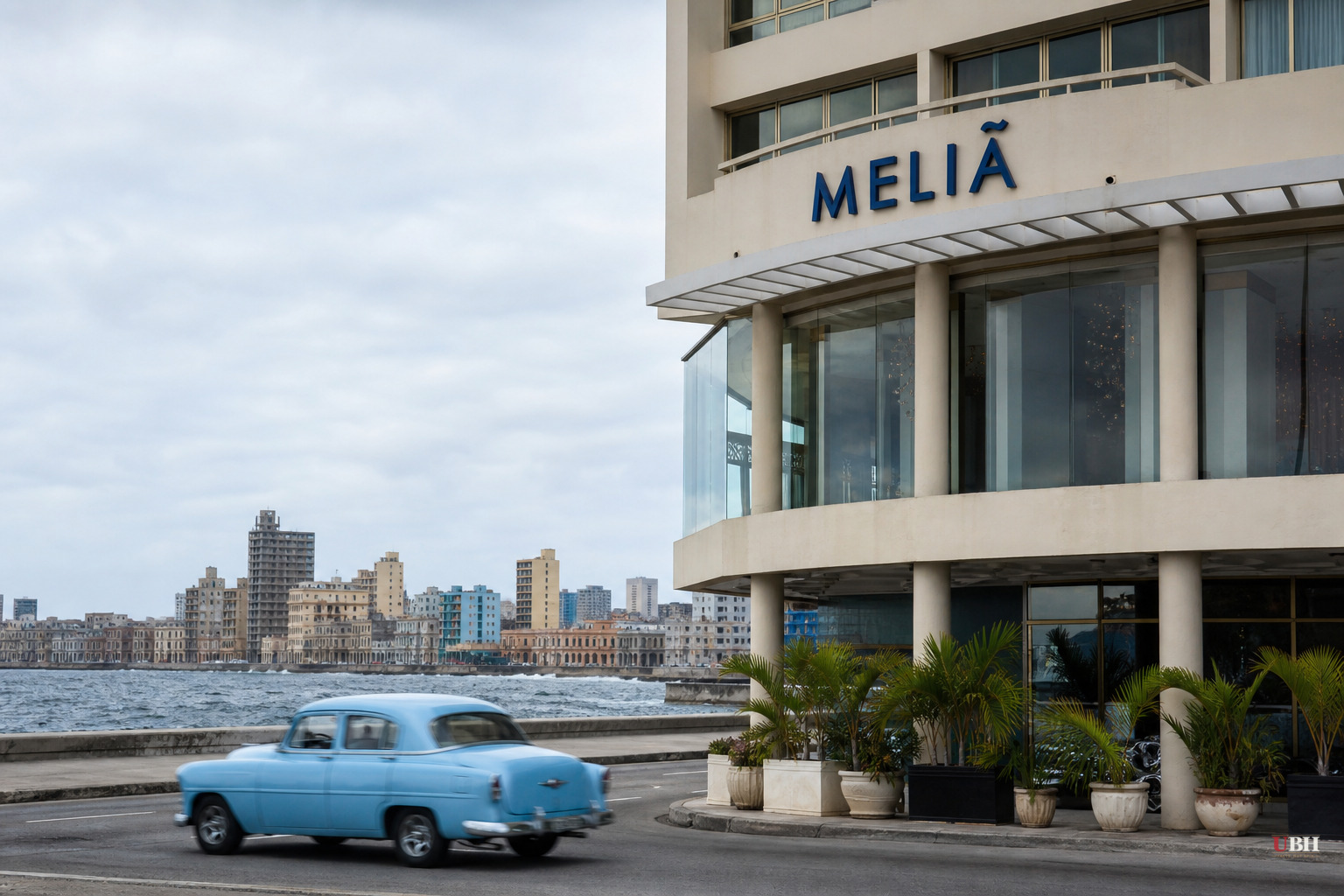
Days after that report, Spanish hotel operator Meliá Hotels International told Spain's National Securities Market Commission it will end all Cuba operations by July 24, according to the independent Cuban outlet Cubanet. Meliá had run 34 hotels on the island, making it one of the largest foreign players in Cuban tourism.
Every foreign hotel operator in Cuba must partner with GAESA, the military-run conglomerate that controls tourism and most other profitable sectors of the economy under Cuban law. Meliá's collapse follows the Trump administration's expanded sanctions on GAESA and its leadership, layered on top of an island-wide fuel and electricity crisis that has hammered tourism.
Cuba's power grid has been deteriorating for years due to poor maintenance, a problem widely attributed by independent Cuban outlets to the Castro family directing resources elsewhere. The crisis got dramatically worse after the January arrest of former Venezuelan dictator Nicolás Maduro, whose government had supplied Cuba with free or deeply discounted oil for years. Maduro's successor, Delcy Rodríguez, cut off that subsidy, and Cuba's other allies, Russia, China, and Iran, have not stepped in to fill the gap.
Meliá signaled its exit was coming back in June, when it announced it would stop managing 15 of its 34 properties, citing what Breitbart described the company calling a combination of unforeseen circumstances beyond its control. Cubanet reports the remaining hotels may keep operating under new names run directly by the state, but without the Meliá brand or its supply logistics, which handled stocking rooms and restaurants with basic goods.
That loss of logistics matters beyond luxury tourism. Ordinary Cubans already struggle to access consumer goods that flow through hotel supply chains, and losing a major private logistics operator tightens that squeeze further.
What's Actually Provable Here
The demographic collapse itself is not in dispute. It comes from Cuba's own government agency, and independent Cuban outlets, which operate mostly in exile given the regime's press restrictions, argue the real losses are even steeper. Whether that undercount is deliberate spin or a byproduct of how the government defines "resident" is a fair open question the sources don't fully resolve.
What's harder to prove with precision is how much of Meliá's exit traces to U.S. sanctions on GAESA versus the raw economics of running hotels without reliable power. Both factors are real and well documented, and Meliá itself has not publicly broken out which mattered more in its decision.
The next marker to watch is July 24, the date Meliá says it will fully exit, and whether Cuba's government succeeds in keeping those properties running under state control without the brand, supply chains, or foreign capital that kept them functioning for decades.
Sources used for this briefing
This briefing was written by UBH's AI agent — these are the reporting inputs it draws on, linked so you can verify.


