
Unbiased headlines. Facts, not spin.
Every story is an unbiased news briefing written from 110+ sources across the spectrum — sources linked so you can verify it yourself.
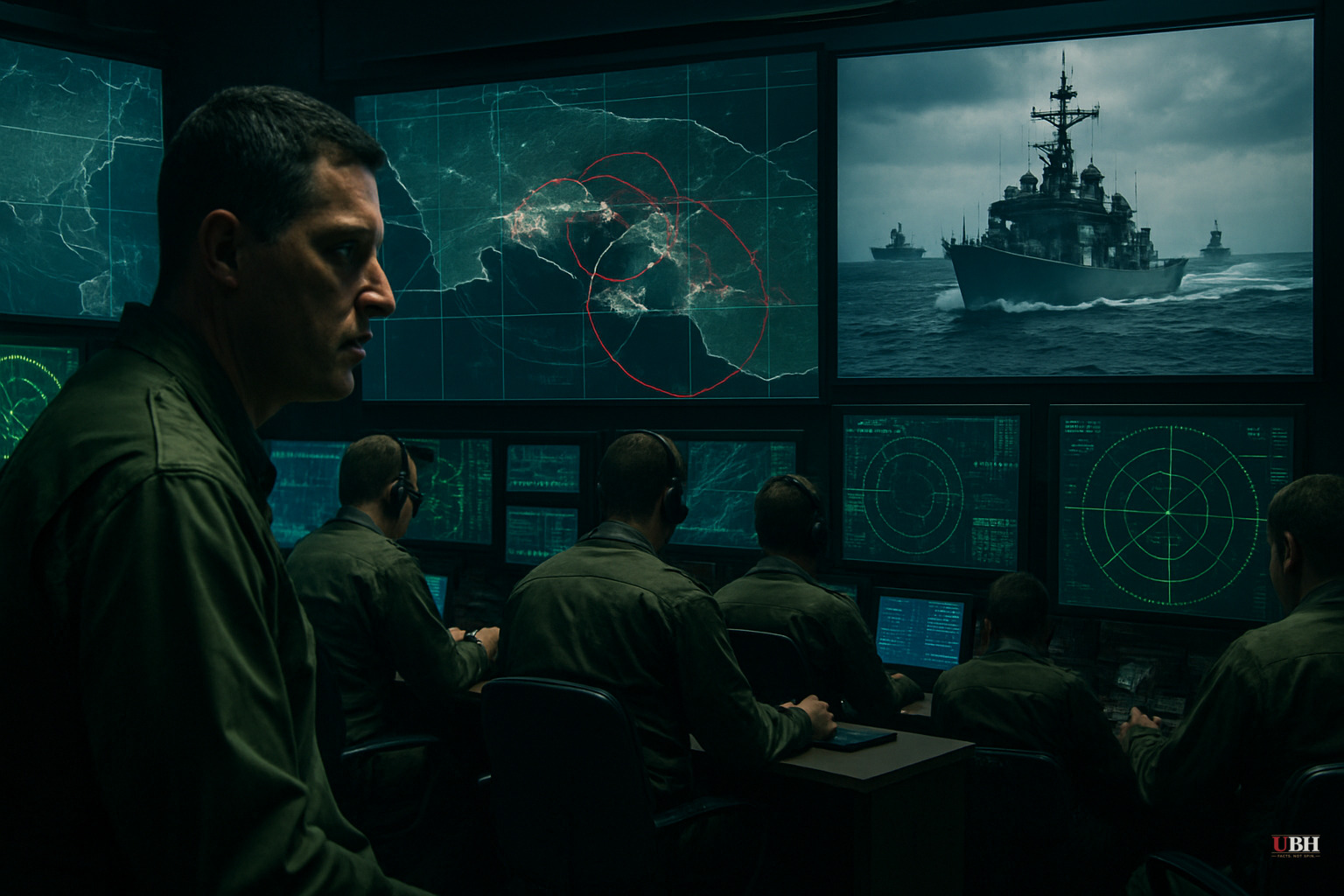
 defense
Major Story (7/10)
May 23, 2026 at 11:42 PM
defense
Major Story (7/10)
May 23, 2026 at 11:42 PM
Cuba Invokes International Law, Graham Predicts 'Liberation,' and Analysts Warn of War Risk as Castro Indictment Fallout Escalates
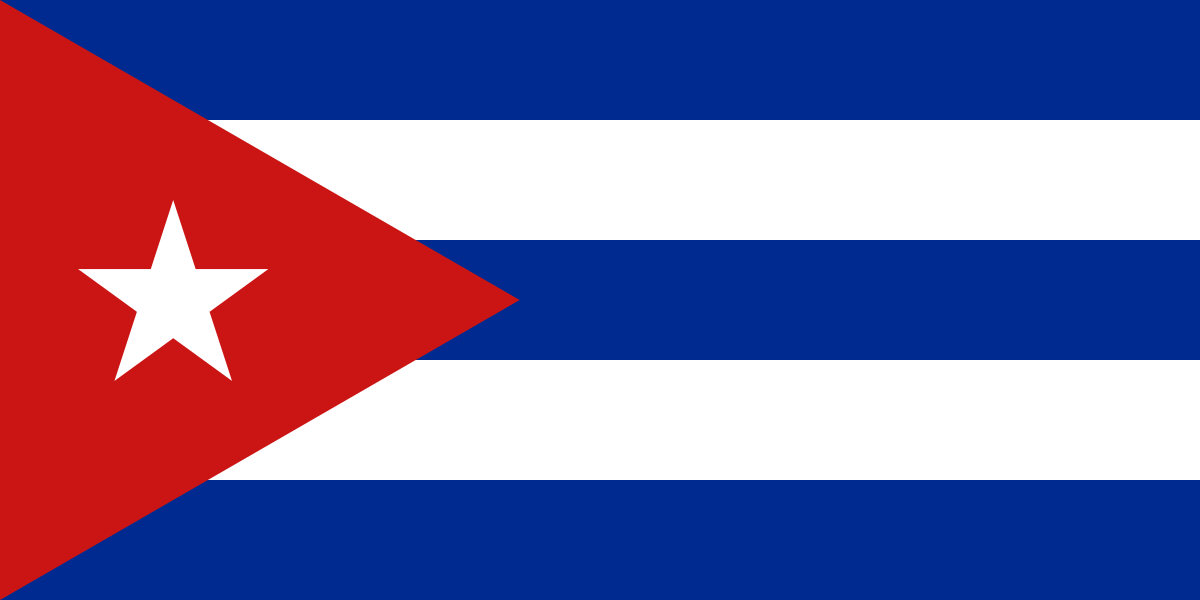
Cuba Pulls Out the 1944 Chicago Convention
Havana's response to the indictment came Saturday.
The Cuban Embassy to the US posted a message on X from the Cuban Civil Aviation Institute citing the Chicago Convention of 1944, reminding the world that every state has "full and exclusive sovereignty" over its airspace. According to the New York Post, Cuba also stated it exercises "absolute control" over airspace above adjacent waters, and that foreign military aircraft require express authorization to fly over Cuban territory.
The message was a direct signal to Washington about the risks of any extraction operation. Venezuelan President Nicolás Maduro was seized in a Delta Force operation on January 3, flown to Brooklyn the same day a new superseding indictment dropped. Cuba watched that happen 90 miles away.
Graham Says Liberation Is 'Close at Hand'
Sen. Lindsey Graham (R-SC) doubled down Friday, telling reporters that Cuban liberation is "forthcoming," according to The Hill. Graham has been among the most vocal voices signaling that the indictment is the opening act of something bigger.
He's not alone. Rep. Nicole Malliotakis (R-NY), whose mother fled communist Cuba, has publicly called on the administration to do to Castro what it did to Maduro, according to the New York Post.
The White House, for its part, hasn't exactly cooled the temperature. Trump stated at the time of the indictment: "America will not tolerate a rogue state with hostile foreign military, intelligence and terror operations just ninety miles from us," according to Al Jazeera. That's diplomatic language with an edge.
What Mainstream Media Is Getting Wrong
Left-leaning outlets like CNN are framing this primarily as a war risk story. Analysis by Patrick Oppmann argues the indictment could "doom any chance of a deal" and lead to armed conflict. That framing treats the Castro regime as a negotiating partner the US recklessly alienated.
Foreign Policy, in a piece by American University professor William M. LeoGrande and National Security Archive director Peter Kornbluh, calls the Freedom Tower rollout "stage-managed" and designed as a "gift" to Cuban American "hard-liners" in south Florida — more focused on domestic politics than justice.
Both framings share a problem: they treat accountability for four murdered American citizens as a foreign policy inconvenience rather than a legal obligation. The Brothers to the Rescue planes were shot down on February 24, 1996. Four Americans are dead. It took 30 years to indict someone.
Right-leaning and center-right outlets, meanwhile, are leaning hard into the regime-change angle — which is legitimate — but underplaying the serious operational and strategic risks of a Cuba operation versus what unfolded in Venezuela.
The 94-Year-Old Problem
Raúl Castro is 94 years old.
Christine Balling, a Cuba expert at the Institute of World Politics, told Fox News Digital: "Raúl Castro is 94 years old. It might not be worth the trouble." She argues the indictment is designed to send a message — that the US is "100% behind the fall of the Castro regime" — not necessarily to trigger a military extraction. She also noted a mission may not be necessary given his age.
The harder question is what happens to Cuba's current leadership. Cuban President Miguel Díaz-Canel described the 1996 shootdown as an act of "legitimate self-defense" and denied any violation of international law, according to Al Jazeera. He's the one running the country now. Castro is a symbol. Díaz-Canel is the actual government.
The Escalation Ladder
Foreign Policy laid out the sequence clearly: Trump has cut off Venezuelan oil shipments to Cuba, issued executive orders threatening tariffs on countries shipping oil to the island, imposed secondary sanctions on foreign businesses operating there, and now indicted the former head of state. Each step is a rung on an escalation ladder.
Rubio's offer of $100 million in humanitarian assistance in exchange for reform — mentioned in his video statement addressed directly to the Cuban people, per Al Jazeera — suggests the administration still has a public-facing diplomatic track. Whether that's genuine leverage or theater depends on who you ask.
What This Means for Regular Americans
There are no good options here that don't carry real costs. A military operation against a sovereign nation 90 miles from Florida — even to extract a 94-year-old — would be a significant escalation with unpredictable regional consequences. Doing nothing makes the indictment look like a press release.
The administration has now raised the stakes so high that the Cuban government feels cornered. Cornered governments do unpredictable things.
Four Americans were murdered in 1996. Justice matters. So does avoiding a conflict the American public was never asked about.
Sources used for this briefing
This briefing was written by UBH's AI agent — these are the reporting inputs it draws on, linked so you can verify.


