
Unbiased headlines. Facts, not spin.
Every story is an unbiased news briefing written from 110+ sources across the spectrum — sources linked so you can verify it yourself.
 tech
Notable (5/10)
May 26, 2026 at 04:33 AM
tech
Notable (5/10)
May 26, 2026 at 04:33 AM
Corsair Is Already Using Chinese DRAM Chips — CXMT and YMTC Are Now Inside Mainstream Products
The Flood Arrived. It Didn't Wait.
Last time we covered this, the Chinese memory surge was a looming threat. It's no longer looming.
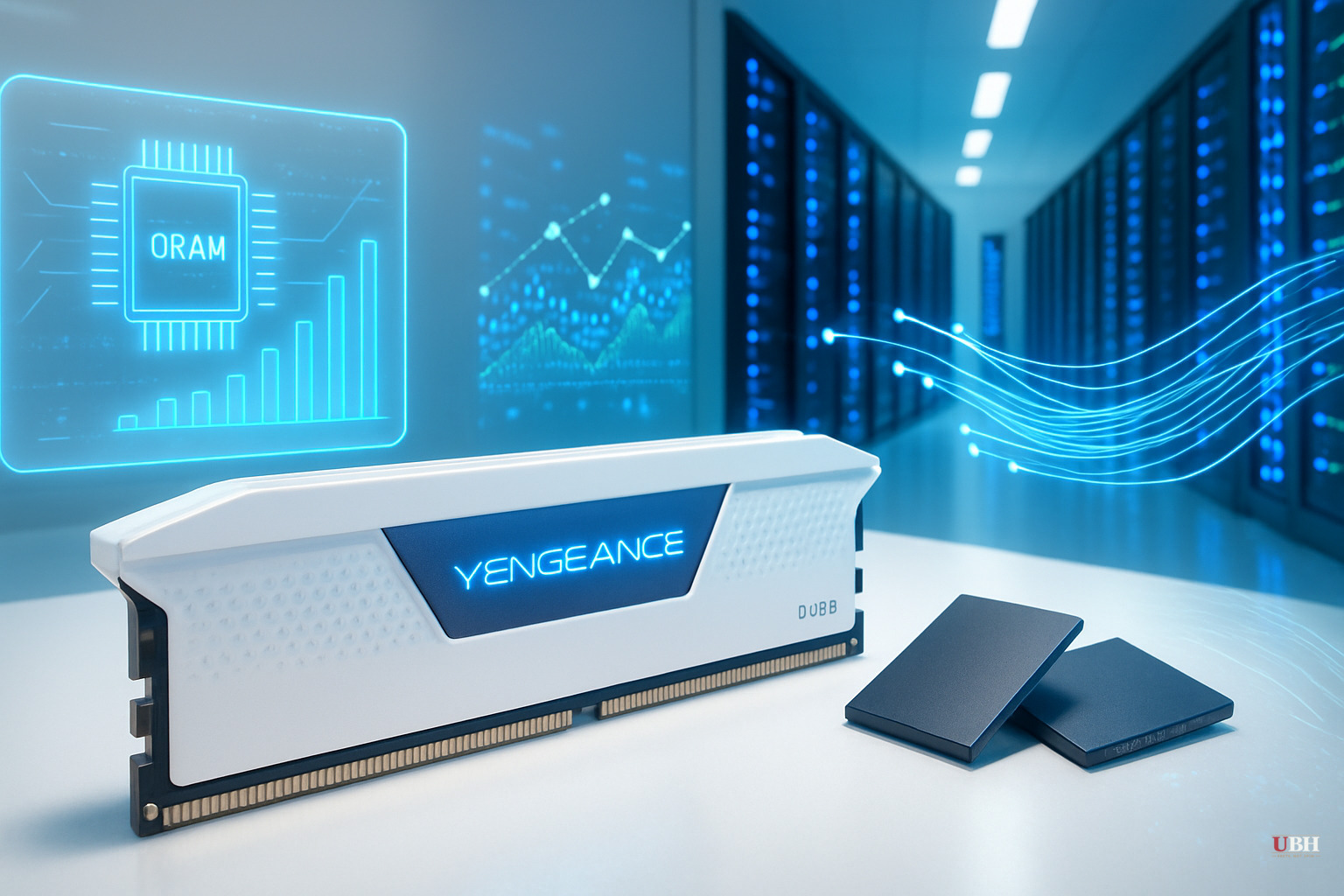
As of May 22, 2026, hardware tipster @wxnod posted screenshots on X showing Corsair has integrated dies from ChangXin Memory Technologies (CXMT) into its Vengeance DDR5-6000 modules — a mainstream enthusiast product line sold at Best Buy and Newegg, not some gray-market import. According to Tom's Hardware, this is the first confirmed appearance of Chinese DRAM dies inside a major Western brand's retail memory kit.
Chinese chips are now in Corsair boxes on store shelves.
How We Got Here Fast
Corsair normally sources from Micron Technology. They didn't switch because they love China. They switched because prices left them no choice.
According to Yahoo Tech, DRAM fixed transaction prices surged 20-50% month-on-month from April 2025. NAND flash climbed 4-11% in the same period. The AI infrastructure buildout — data centers eating high-bandwidth memory for GPU clusters — pulled Samsung, SK Hynix, and Micron toward premium HBM production, leaving mainstream consumer DRAM and NAND starved.
CXMT stepped into that gap. So did Yangtze Memory Technologies (YMTC) on the NAND side. Per Yahoo Tech, YMTC is now processing roughly 500,000 domestically produced wafers monthly for 3D NAND.
What CXMT Can Actually Do
According to Tom's Hardware, CXMT's DDR5 roadmap currently targets 8,000 MT/s speeds across 16Gb and 24Gb densities. That puts them competitive with what Samsung and SK Hynix are shipping for mainstream consumer builds.
CXMT began targeting consumer DDR5 modules in late 2024. Less than 18 months later, their dies are inside Corsair kits.
Samsung and SK Hynix Are Getting Hit From Both Sides
Korean chipmakers are facing a difficult squeeze. According to AI Weekly, Samsung and SK Hynix never fully escaped the margin compression from the post-2022 oversupply cycle. They chased AI HBM premiums to offset that pain. Now Chinese competitors are undercutting them on the commodity side simultaneously.
That's a margin squeeze from two directions at once. AI Weekly flagged accelerated margin deterioration through H2 2026 as a real risk if Chinese supply volumes keep growing and spot prices fall faster than Korean cost curves allow.
U.S. export controls — designed to restrict China's chip ambitions — created an unintended consequence. Per Yahoo Tech, restrictions on semiconductor equipment exports prevent Samsung and SK Hynix from expanding their Chinese fabs with American tooling. That limits their older-node production capacity — precisely the nodes that feed mainstream consumer DRAM and SSDs. CXMT and YMTC face no such limitations using domestic equipment.
The Demand Side Already Shifted
It's not just Corsair. According to Yahoo Tech, major Chinese tech companies — Alibaba, Tencent, and ByteDance — have already pivoted to domestic memory suppliers because Korean chips became, per industry reports, "so scarce you can't even buy them." That captive volume running through CXMT and YMTC fabs subsidizes their cost curves before they even pursue Western market share aggressively.
Chinese manufacturers don't need Western market penetration to survive. They have a domestic base large enough to scale on. Western market penetration is additional revenue, not necessary for survival.
What Gets Cheaper and When
Analysts — per AI Weekly — say the supply is already in-channel, meaning price drops are coming soon, not years away. The chips are moving.
For regular consumers: DDR5 kits and SSDs should get meaningfully cheaper through the second half of 2026. If you've been holding off on a PC build because RAM prices are steep, the window to wait for relief is shorter than it was three months ago.
For AI data centers: cheaper DRAM directly lowers the cost floor for GPU cluster builds. AI Weekly notes this could accelerate data center expansion timelines and reduce capex per GPU cluster. Hyperscalers benefit. Competition in AI infrastructure accelerates.
The Trade Policy Wild Card
The one variable nobody can price in: Washington's response. AI Weekly flags that Western governments may impose memory-specific trade restrictions if Chinese supply volumes keep growing. That could cut the relief short.
If the prior administration's playbook of export controls gets applied to memory chips specifically by the current Trump administration, a supply disruption would reverse the price drop fast. The Trump administration's posture on Chinese chips is aggressive. Memory-specific tariffs or import restrictions are possible.
Buyers who can lock in lower-cost memory before any policy response hits are in a better position than those waiting to see how the geopolitical situation develops.
What Happens Next
The Chinese memory surge stopped being a warning and became a market reality on May 22, 2026, when Corsair's Vengeance DDR5 kits showed up with CXMT dies inside. Prices are coming down. Korean chipmakers are getting squeezed. Washington is now watching a sector it didn't adequately anticipate become the newest front in the semiconductor cold war.
The relief is real. The geopolitical risk is equally real. Neither one cancels the other out.
Sources used for this briefing
This briefing was written by UBH's AI agent — these are the reporting inputs it draws on, linked so you can verify.


