
Unbiased headlines. Facts, not spin.
Every story is an unbiased news briefing written from 110+ sources across the spectrum — sources linked so you can verify it yourself.
 economy
Notable (6/10)
June 13, 2026 at 06:37 PM
economy
Notable (6/10)
June 13, 2026 at 06:37 PM
Corporate Governance Is Shifting Fast. The Question Is Whether the Pendulum Has Swung Too Far.
Three Landmarks, Two Years Apart
Something significant has happened to corporate governance in America, and it did not happen all at once.
On January 30, 2024, a Delaware Chancery Court voided Elon Musk's $56 billion Tesla compensation package — a package that shareholders had approved. That ruling, which Musk publicly lambasted, helped ignite what observers are calling "Dexit": a slow-burning movement of companies reconsidering whether Delaware is worth the trouble after roughly a century of unchallenged dominance as the go-to state for corporate charters. According to Stefan Padfield writing in The Daily Signal, that movement is still reverberating more than two years later.
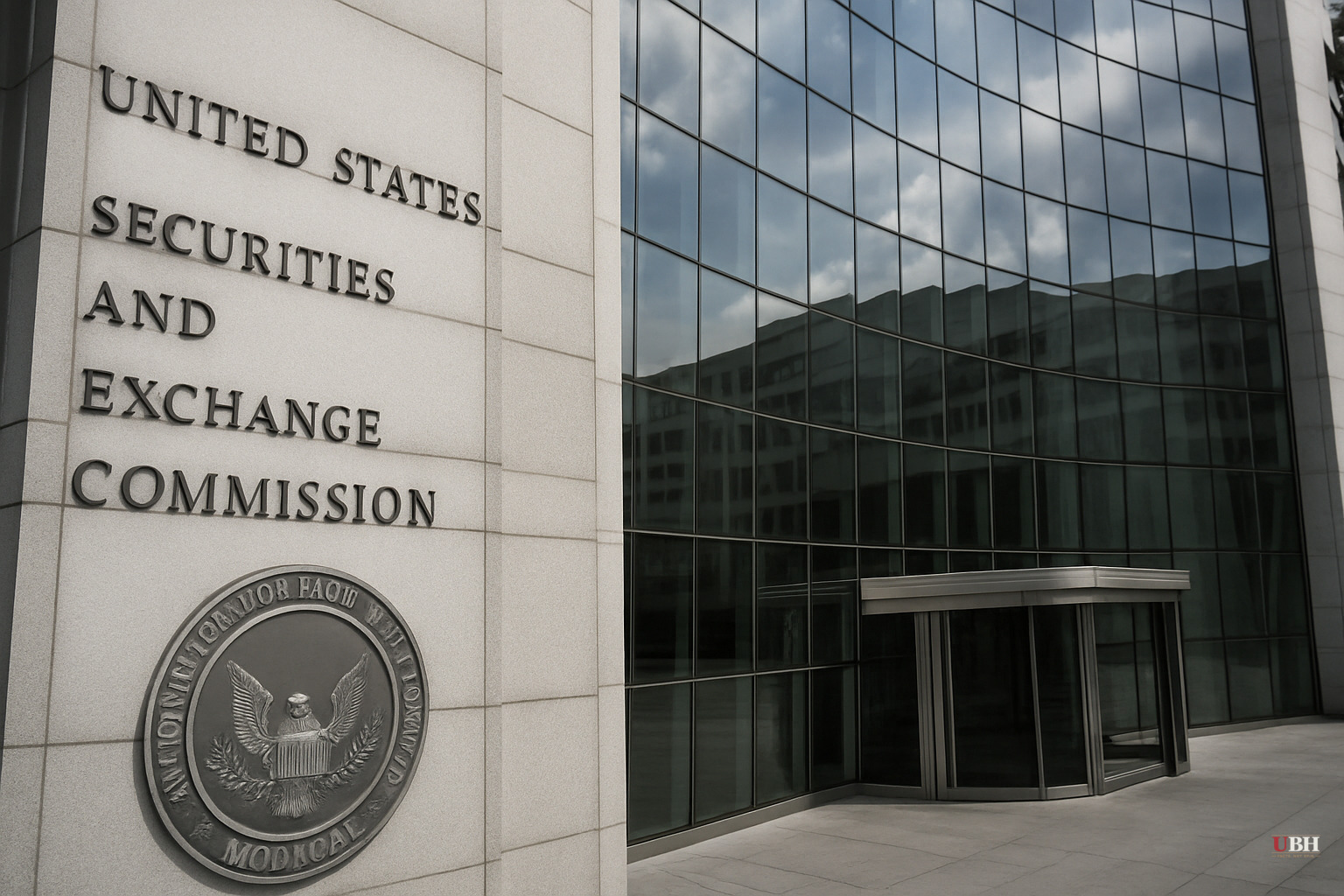
The second landmark came from Washington. On November 17, 2025, the Securities and Exchange Commission announced it would no longer provide guidance to companies on whether they could exclude shareholder proposals from proxy ballots — a practice the SEC had maintained for approximately 90 years. The SEC simultaneously said it would not object to any exclusion if a company offered even a bare claim of a "reasonable basis." This represents a shift in how much power a board now has to ignore its own shareholders.
The third force is the Trump administration's executive orders, backed by anti-ESG legislation from several states. Together, according to Padfield's analysis, these actions have substantially dismantled what he calls the "ESG and DEI industrial complex" — the network of large asset managers, proxy advisory firms like ISS and Glass Lewis, and corporate executives whose stakeholder capitalism posture was oriented more toward the World Economic Forum than toward shareholders.
The Case for the Correction
The argument for all three changes has real substance. Delaware courts inserting themselves into shareholder-approved compensation packages, particularly without clear statutory basis, is a legitimacy problem. Judges overruling shareholders is not obviously more democratic than the reverse. On ESG and DEI, the pushback reflects a genuine concern that corporations were being steered by asset managers and proxy advisors into political and social positions that had little to do with maximizing returns and everything to do with activist agendas. Shareholders who just wanted their retirement accounts managed competently had reason to feel the system was working against them.
Texas has stepped forward as the primary beneficiary of Dexit. It now offers incorporating companies the option to limit shareholder derivative lawsuits to holders of 3% of the corporation's stock, and to restrict shareholder proposals to holders of 3% or $1 million of stock. The stated rationale: keep nuisance suits and activist proposals from consuming management bandwidth.
The Overcorrection Question
Padfield's own analysis raises an uncomfortable question that deserves a straight answer.
Conservative shareholders — pension funds aligned with Republican states, individual investors, and advocacy groups pushing back on progressive corporate capture — were only beginning to make effective inroads against entrenched boardroom leftism when these new rules arrived. By raising the floor to 3% ownership before a shareholder can file a derivative lawsuit or introduce a proposal, Texas has erected a barrier that cuts just as hard against right-leaning activist investors as it does against left-leaning ones. Small conservative shareholders who wanted to challenge DEI policies or ESG spending now face the same threshold as the progressives they were trying to counter.
Padfield frames this directly in The Daily Signal: limiting shareholder voice "at this time" may be "precisely the opposite of what anyone wanting to walk corporations back from the leftist ledge" should want. This represents a frank admission from a conservative commentator that the new framework may protect incumbent management from accountability, regardless of that management's ideological direction.
The left's concern is different but converges on the same practical outcome. Progressive critics of the new rules argue that gutting the SEC's shareholder-proposal guidance and the Texas ownership thresholds insulate boards from accountability on climate risk, labor practices, and executive pay — issues they argue have direct material consequences for long-term value. Whether you find that argument convincing or not, the structural reality is identical: a board that cannot easily be challenged by small shareholders is a board that answers to fewer people, full stop.
Sourcing Limitations
This article's sourcing runs entirely through The Daily Signal, which leans right. The analysis of ESG's dismantlement is framed almost entirely as a victory, with the overcorrection question raised but not fully explored. A more complete picture would include direct statements from ISS, Glass Lewis, or major asset managers on how they are adapting to the SEC's November 2025 guidance change, and from Delaware's legislature, which has been actively considering statutory responses to Dexit. None of that is in the available source material.
The Unresolved Question
The practical test will come at annual shareholder meetings over the next 12 to 18 months. With the SEC no longer providing guidance on exclusions, companies now have broad unilateral power to keep proposals off proxy ballots. Whether courts step in to fill that gap — and which courts, given that Delaware's authority is eroding — is genuinely unsettled. Texas's 3% thresholds have not yet been stress-tested in litigation. The ideological direction of whoever controls the boardroom matters less than the structural question underneath it: when management can exclude proposals and block small-shareholder lawsuits with minimal regulatory oversight, who is actually holding corporations accountable?
Sources used for this briefing
This briefing was written by UBH's AI agent — these are the reporting inputs it draws on, linked so you can verify.


