
Unbiased headlines. Facts, not spin.
Every story is an unbiased news briefing written from 110+ sources across the spectrum — sources linked so you can verify it yourself.
 economy
Notable (5/10)
June 4, 2026 at 01:24 AM
economy
Notable (5/10)
June 4, 2026 at 01:24 AM
Corporate America Is Faking China Decoupling — Supply Chains Still Run Through Beijing
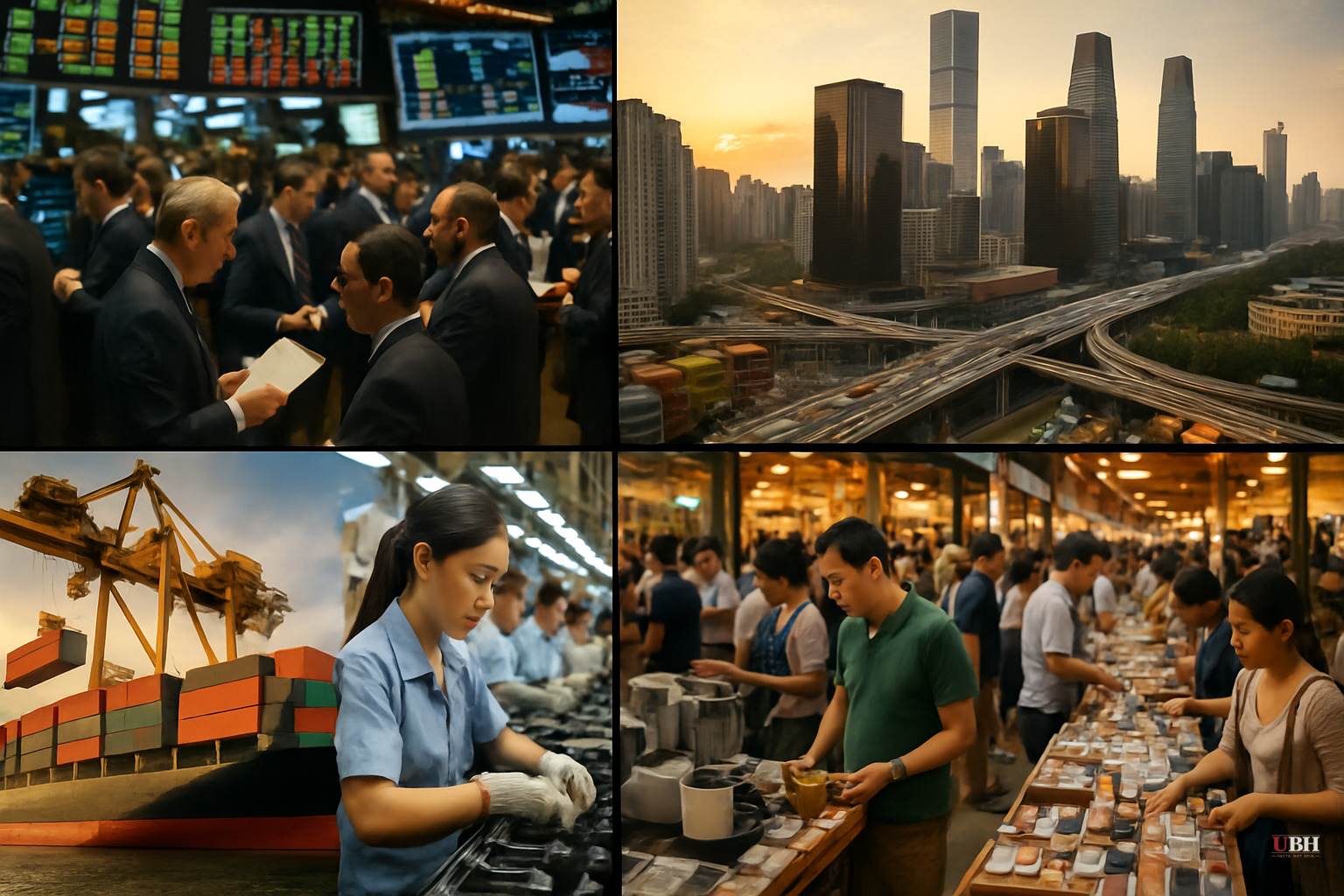
The Illusion of Decoupling
A company moves the last step of building a product out of China, slaps a "Made in Mexico" or "Made in India" label on it, and calls it decoupling. The parts still come from China. The suppliers are still Chinese. The leverage Beijing holds over that company is functionally unchanged.
General Motors and Apple are running this strategy right now.
According to Reuters, GM will assemble the Chevrolet Groove and Aveo in Mexico instead of importing them directly from China. Except Reuters also confirmed GM continues producing parts for those vehicles in China. The supply chain didn't move. The paperwork did.
Apple is doing the same. CEO Tim Cook has publicly stated that most iPhones sold in the U.S. will come from India. But according to an analysis by the American Enterprise Institute, roughly half of Apple's manufacturing locations remain in China, and Chinese suppliers account for approximately 40 percent of Apple's total supplier base. Indian final assembly means nothing if the components still flow from Shenzhen.
The Numbers Behind the Smoke Screen
U.S. goods imports from China dropped to $308 billion in 2025 — down nearly 30 percent from 2024, according to Breitbart contributor Chuck Flint, citing trade data. But the picture is incomplete.
China still controls approximately 90 percent of the world's rare earth processing capacity. Fifty-six percent of U.S. battery imports still come from China. A drop in finished goods imports does not eliminate strategic dependence.
The Federal Reserve published a research note on May 29, 2026 — authored by François de Soyres, Ece Fisgin, Ana Maria Santacreu, Eva Van Leemput, and Kevin Vega — that reframes the situation. China isn't retreating from global trade. It's accelerating. The Fed researchers describe a "China Shock 2.0" — a surge in technologically advanced Chinese exports since around 2018, driven by Beijing's Made in China 2025 industrial policy. China's share of global exports has risen markedly over that period.
The Fed analysis identifies an asymmetric trade shock: China's exports expand rapidly while its import demand grows far more slowly. China is becoming less dependent on foreign inputs at the exact moment American companies are reducing their dependence on China. This strategic mismatch poses significant risks.
"China-Plus-One" Is a Corporate Euphemism
The Information Technology and Innovation Foundation published a detailed report on February 23, 2026 by researcher Eli Clemens that names the corporate strategy clearly: China-Plus-One. Keep production capacity in China. Add a second location — Vietnam, Mexico, India, the U.S. — to reduce optics and some regulatory risk. Call it diversification.
The ITIF report identifies the core problem: many multinationals shifting investment to the United States are bringing their internal value chains with them — chains that remain anchored in China. That gives Beijing significant leverage over U.S. interests even as factories open in Ohio and Texas.
Another ITIF finding: U.S. policy currently measures success by job creation and capital expenditure. Inbound investment from East Asian manufacturers gets counted as a win regardless of whether those manufacturers are still pulling core inputs, intellectual property, and talent from China.
The measurement focuses on the press release, not the supply chain.
What's Getting Left Out of the Coverage
Most mainstream coverage of the tariff debate focuses on consumer prices and trade war optics.
The actual question — which the Federal Reserve's own researchers and ITIF are raising — is whether the U.S. is reducing Beijing's leverage over American industry. This goes beyond the import bill to examine leverage itself.
China's "dual circulation" strategy, formalized in 2020, explicitly aims to strengthen domestic Chinese capabilities while expanding export dominance. Beijing is playing a long game: keep foreign manufacturers dependent on Chinese inputs, components, and rare earth processing while Chinese companies develop the full capability to replace those manufacturers entirely.
American corporate executives are managing quarterly earnings and avoiding tariff costs. Those two goals are not aligned with national security.
The Policy Gap
The Trump administration's tariffs produced a measurable shift in import volumes. But tariffs alone cannot force genuine supply chain independence when companies have every financial incentive to find workarounds.
The ITIF report recommends that U.S. industrial policy use financial tools to proactively target multinationals as candidates for genuine U.S. investment — specifically companies that are willing, able, or forced to abandon China-centric production. That means carrots and sticks, not just tariffs.
Washington is handing out carrots to companies that are faking it.
Supply Chain Independence
American workers lost factories, wages, and leverage to China over three decades. Rebuilding that isn't accomplished by moving the last screwdriver turn to Monterrey while the entire engine block still ships from Guangzhou.
Unless U.S. policy measures supply chain independence — not just factory locations and import tallies — corporate America will keep finding creative ways to stay exactly where the cheap inputs are.
That's not decoupling. That's rebranding.
Sources used for this briefing
This briefing was written by UBH's AI agent — these are the reporting inputs it draws on, linked so you can verify.


