
Unbiased headlines. Facts, not spin.
Unbiased Headlines is an independently owned news organization. We bring you the facts, not opinions, written fresh from 110+ named sources. Sources linked so you can verify it yourself.
 tech
Major Story (8/10)
tech
Major Story (8/10)
CoreWeave Bonds Fall Below 80% of Face Value as Gartner Says $3.5 Trillion in AI Spending Could Be Impaired
The money behind the AI buildout got more expensive this week. The Financial Times published an investigation on Oct. 17 under the headline "America's $10tn AI infrastructure boom is starting to fray," citing delays, cancelled projects, tighter financing, difficult power-grid connections and community resistance.
The $10 trillion figure describes the scale of the investment ambition. It is not money already spent.
Debt is carrying more of the load
According to the FT's reporting, hyperscaler debt issuance hit $121 billion in 2025, roughly four times the historical average. Bank of America expects another $100 billion this year.
PIMCO has estimated that hyperscaler capital spending absorbs 93% to 94% of operating cash flow before any borrowing is counted.
Axios, citing Wall Street sources, reports that about a third of AI capital spending now comes from debt. Those sources used to say the buildout was fine as long as it was paid in cash.
Where the stress showed up
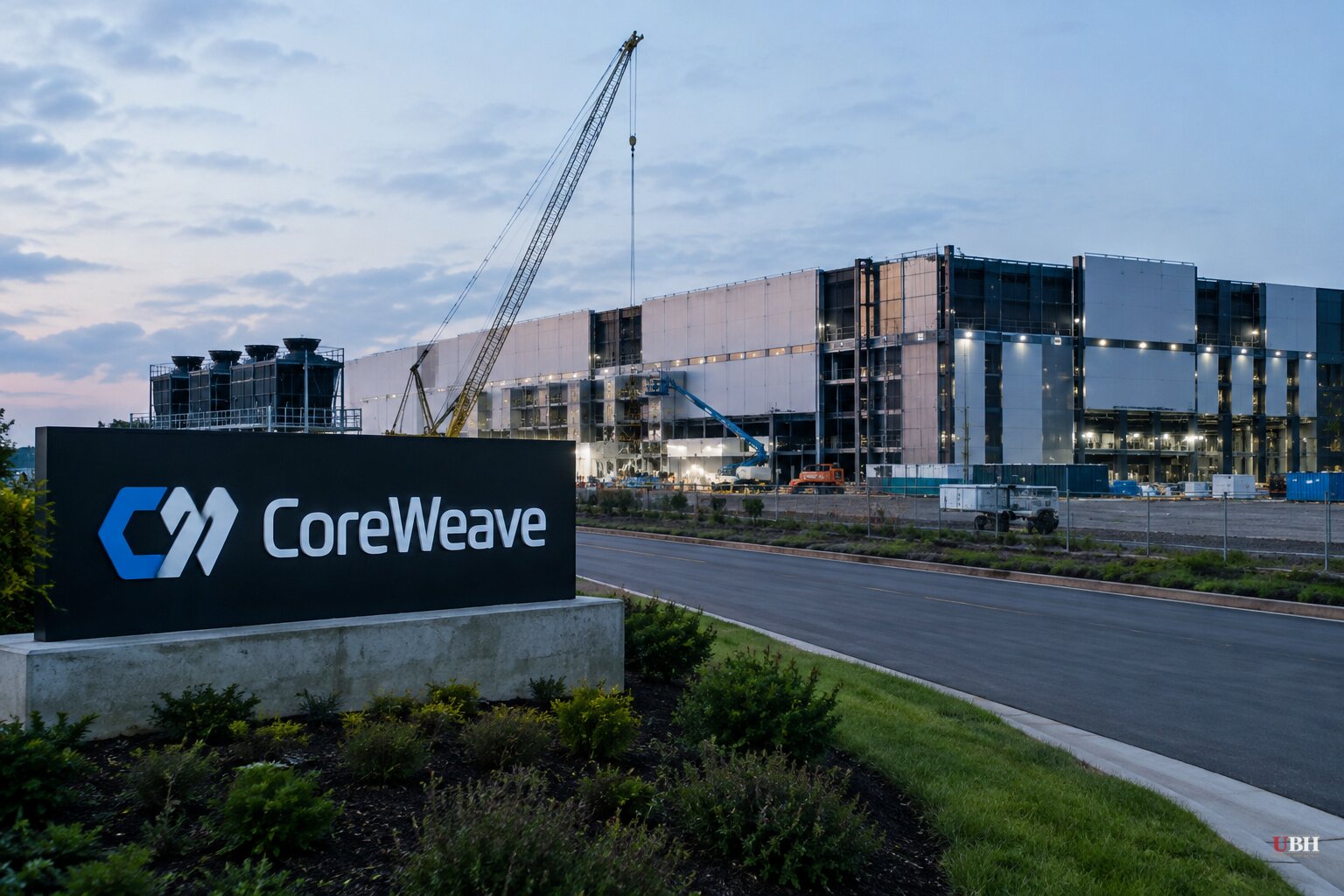
CoreWeave, the Nvidia-linked cloud company that runs 51 data centers, had a rough stretch in mid-October. Its bonds fell below 80% of face value, and the yield approached 15% on Thursday, Oct. 15, according to SiliconANGLE and Naked Capitalism. Its credit default swap spreads widened to 643 basis points.
The company carries roughly $52 billion in debt and lease obligations.
Oracle's Project Jupiter, a 1,400-acre campus in Doña Ana County, New Mexico, tied to the Stargate initiative, shows the physical side of the problem. About $18 billion in loans tied to the site trade at 89 to 91 cents on the dollar, according to Bloomberg Law. Permit denials, environmental litigation and construction delays have pushed the schedule back at least seven months, the reporting says.
Oracle has reportedly invoked force majeure to shield itself from penalties if the site misses its 2028 opening. Construction was about 26% complete in early September, a year after groundbreaking, according to the same reporting. Oracle's credit rating has slipped to BBB-, one notch above junk.
Gartner puts a number on the gap
On Wednesday, Oct. 14, Gartner released a report estimating that more than $3.5 trillion in AI infrastructure spending could be exposed to impairment by 2030 if current investment trends continue.
Gartner projects AI infrastructure providers will spend nearly $1 trillion this year and another $6 trillion from 2027 through 2030.
To recover that outlay, cover financing costs and earn a 12% return on invested capital, Gartner says data center owners would need about $8.5 trillion in cumulative revenue through 2030. Its own forecast for enterprise and consumer AI revenue is about $3.6 trillion.
That is a forecast, not a ledger. It rests on assumptions about both spending and revenue.
Chip stocks fell despite strong results
The Philadelphia Semiconductor Index dropped 4.3% on Oct. 14. Micron fell 13.2% and Qualcomm fell 8% that day. By Friday afternoon, Oct. 16, chip stocks were heading toward a weekly decline of roughly 10%, according to Ryan Puplava of Financial Sense.
That came after Taiwan Semiconductor Manufacturing reported its sixth straight quarter of record profit and guided to stronger-than-expected revenue. TSMC shares initially fell anyway.
U.S. markets are closed for the weekend, so Monday's open will show whether the selling continues.
The case that demand is real
Nothing in this week's numbers shows demand collapsing. TSMC's results point the other way, and Puplava described demand for AI computing infrastructure as remaining "exceptionally strong."
Axios pointed to Anthropic's latest financials as a counterpoint to the bears. The Medium commentary summarizing the FT investigation took a similar line: the reports describe pressure on parts of the market, not proof that AI investment has stopped being viable.
That commentary also noted the risk runs in two directions. If data centers arrive late, AI services could get pricier or capacity-constrained. If construction outpaces paying demand, owners and suppliers could be stuck with expensive facilities that do not earn their cost.
What to watch
The distance between Gartner's $8.5 trillion revenue requirement and its $3.6 trillion forecast is the figure to track. The next test is in the credit markets. CoreWeave's bond yields and Oracle-linked loan prices will show whether lenders keep funding projects that, in Oracle's case, are already running behind schedule.
Sources used for this briefing
6 links from 5 independent newsrooms (syndicated copies of the same report count once)
These are the sources it draws on, linked so you can verify.


