
Unbiased headlines. Facts, not spin.
Unbiased Headlines is an independently owned news organization. We bring you the facts, not opinions, written fresh from 110+ named sources. Sources linked so you can verify it yourself.
 tech
Major Story (7/10)
Event date: October 15, 2026 ·
tech
Major Story (7/10)
Event date: October 15, 2026 ·
India's Supreme Court Declares Internet Access a Fundamental Right for Children, Rejects Blanket Ban
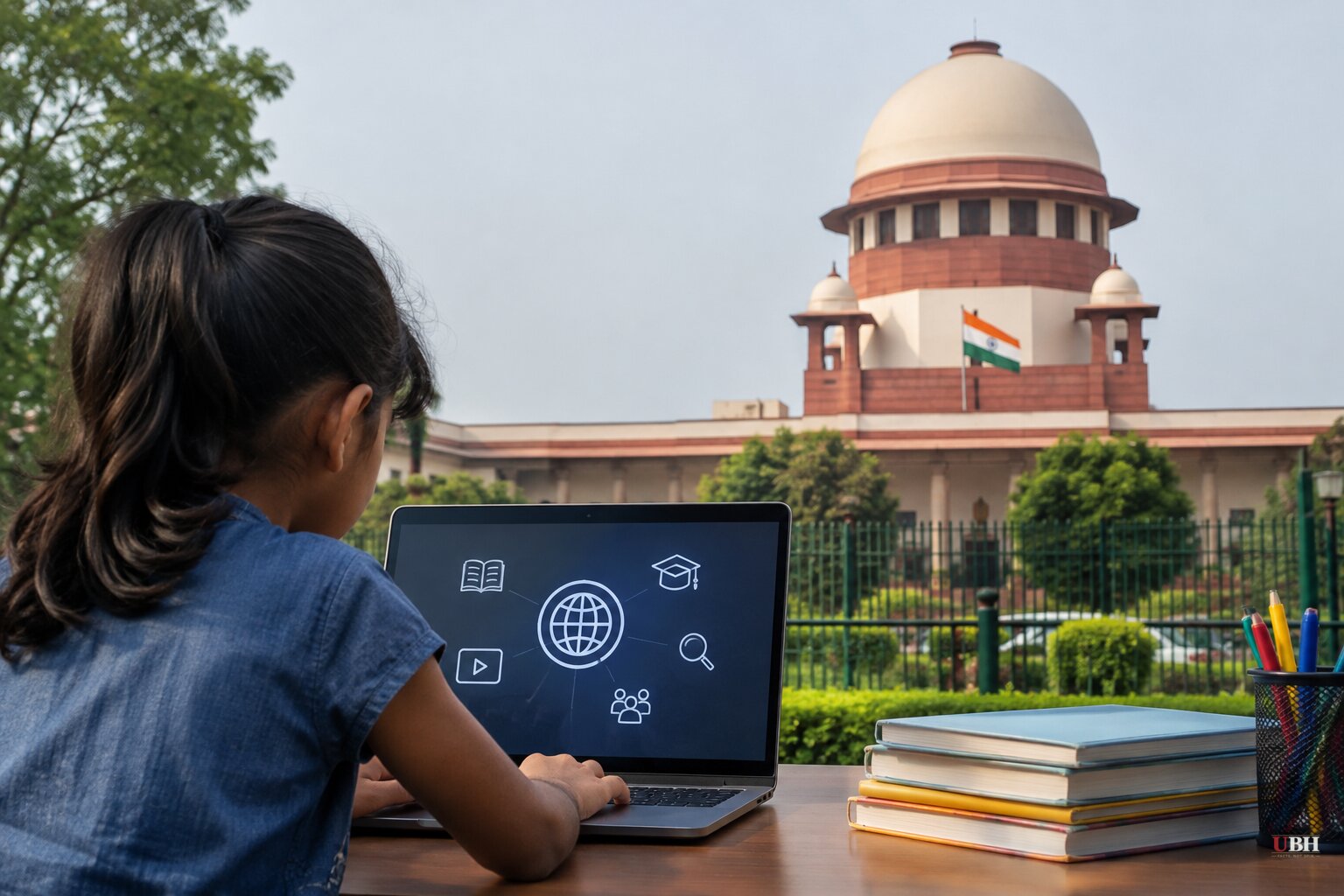
India's Supreme Court has ruled that the right to access and use the internet is a fundamental right of every individual, and that children do not lose it because of their age.
The order, dated October 15 and uploaded October 17, runs 137 pages. It was written by a bench of Justices J B Pardiwala and K Vinod Chandran.
What the court held
The bench grounded the right in Article 21 (life and liberty) read with Article 19(1)(a) (freedom of speech and expression). In its words: "We have no hesitation in saying that the right to access and use the internet is a fundamental right of every individual."
It then applied that to minors. "Our children, irrespective of their age, enjoy the same rights, and to deny the same altogether would be as absurd as saying children below a certain age do not have a conscience worth protecting or a freedom of speech worth expressing."
The ruling closes a gap left by the court's 2020 decision in Anuradha Bhasin v. Union of India. That case protected speech and trade exercised through the internet but left open whether access itself is a fundamental right.
The bench called a blanket restriction "nothing more than unproven measures of proven disproportionality." It said no jurisdiction has so far demonstrated that children are safer because of such measures.
The court's reasoning on safety
The judges did not pretend the internet is safe for kids. They said plainly that it is not. But they argued that keeping children offline because platforms fail to find and remove harmful material would amount to "mistaking the victim for the problem."
Two practical arguments carried the opinion. Children barred from mainstream platforms may migrate to unregulated sites that are potentially more dangerous. And a child who is being enticed or threatened online may stay silent for fear of being punished for breaking an age rule.
The court also stressed access. For many children in remote areas, it said, the internet is often the only source of learning and information. For children with special needs, it is often the only place to find others like them.
Safeguards the court left open
The order does not rule out age-based rules. The bench said some safeguards are necessary and floated a system built around parental consent, guidance and oversight of social media use, with a dedicated "child mode" for such accounts and measures proportionate to the goal of safety.
It also said nothing in the ruling stops the Union government from restricting children's access to specific categories of content or services that are inherently harmful, such as adult websites.
For readers who believe parents, not the state, should decide how kids use technology, the parental-consent framing is the key element.
Orders on child abuse material
The case began as a public interest petition by the NGO Just Rights for Children Alliance, a network of more than 300 organizations working against child sexual exploitation, trafficking and child marriage. It was argued by senior advocate H S Phoolka. The petition pointed to continued failures by online intermediaries to tackle child sexual exploitation and abuse material, despite the court's 2024 judgment on the subject.
The court directed the Centre to frame guidelines for a National Hash and URL List Database. Every entry must pass multiple tiers of verification, with final screening by at least three trained human analysts who independently decide whether the material qualifies.
Intermediaries must use the database to cross-check their platforms and remove matching content. Law enforcement agencies are to use the same process. The court also required safeguards against wrongful deletion, stronger reporting mechanisms and school-level awareness programs.
The bench criticized regulatory authorities and social media intermediaries for failing to take earnest steps to protect victims.
Collision with the Centre's plans
The government is heading in a different direction. About two weeks ago, the Centre told the Supreme Court it intended to revise the IT intermediary rules so that access could be limited for those under 18. In the days before that hearing, the court itself had asked the Centre whether under-18s should be barred from opening social media accounts without parental consent.
That is the Centre's stated position: tighter limits for minors, written into the intermediary rules. The court's answer, delivered October 15, is that a blanket version of that approach would not survive constitutional scrutiny, while a targeted one built on parental consent and content categories might.
The bench also acknowledged that the debate is international, with growing calls from governments for minimum-age requirements on social media. It judged such prohibitions to be of questionable efficacy.
What comes next
The Centre now has to draft the hash and URL database guidelines. The court did not set a timeline in any of the order's passages made public so far.
The larger open question is the IT rules revision. The Centre has not said whether it will narrow its plan for under-18 restrictions in light of a ruling that treats internet access as a constitutional right, or whether it will draft a version built on parental consent and content categories, the route the court left open.
Sources used for this briefing
7 links from 7 independent newsrooms (syndicated copies of the same report count once)
These are the sources it draws on, linked so you can verify.


