
Unbiased headlines. Facts, not spin.
Unbiased Headlines is an independently owned news organization. We bring you the facts, not opinions, written fresh from 110+ named sources. Sources linked so you can verify it yourself.
 tech
Notable (6/10)
tech
Notable (6/10)
Sam Altman Says OpenAI Will Build a Humanoid Robot, Targets a Demo in 2027
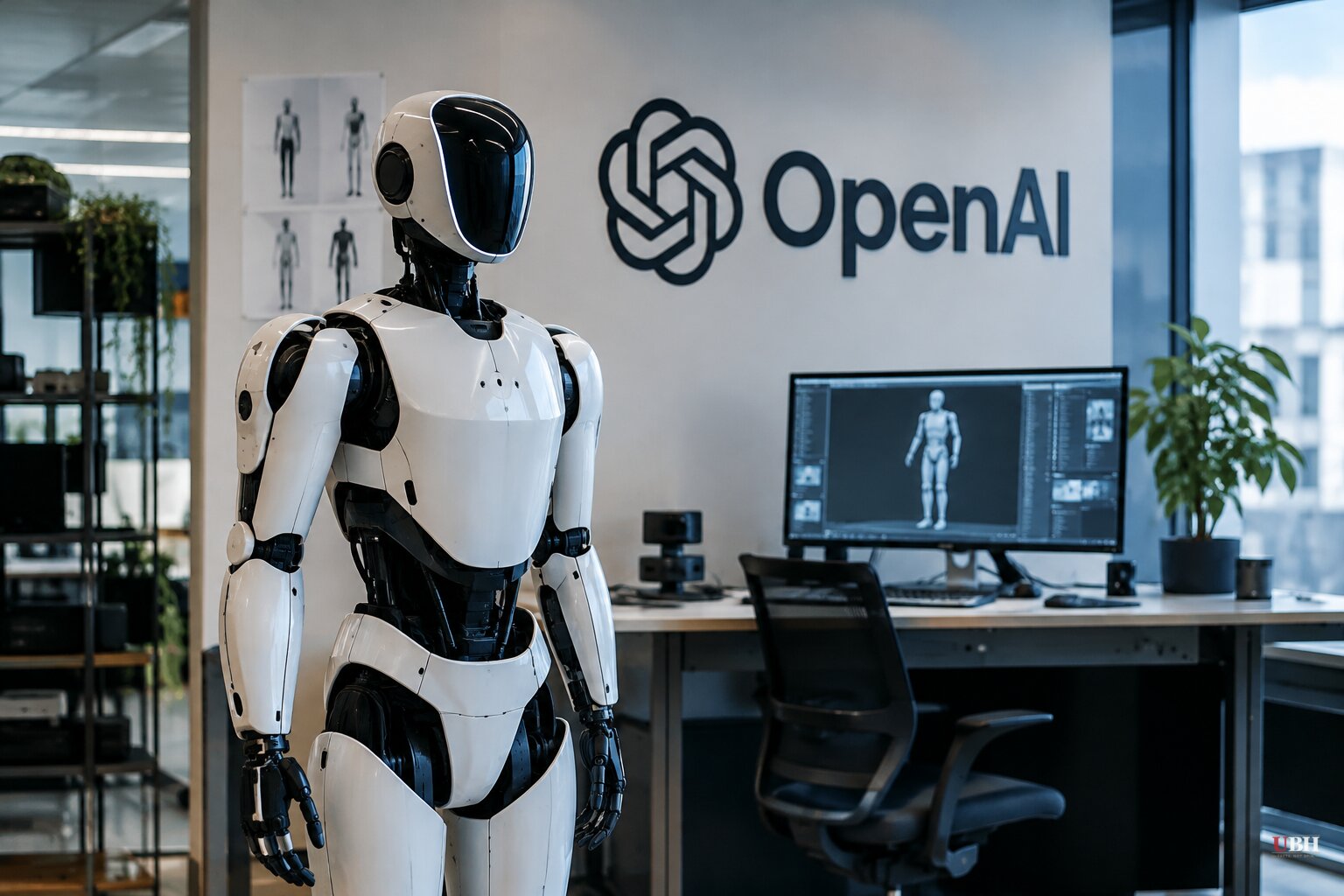
OpenAI is going to build a humanoid robot. CEO Sam Altman has said so on the record, and he has put a rough date on the first public look: 2027.
The remarks came on the Sources podcast in early September. Asked whether OpenAI's hardware push meant a humanoid or a data-center machine, Altman answered "Both." He added: "We will definitely do a humanoid. We will do other form factors as well."
Asked directly whether OpenAI would actually build one, he said: "We will."
The 2027 target
Altman gave the timeline to Fortune. "I think we'll have a cool demo in 2027," he said. "I don't think there will be robots walking the streets for a few years longer."
That is a CEO's target, not a product plan. OpenAI has not said what the demo will show, what the machine will look like, or when anyone outside the company will get near one. Nobody has announced a manufacturing partner or a release date.
Why a human shape
Altman's argument for the humanoid form is practical. "The world is very much designed for people," he said. Doors, keyboards and tools assume a human body, so "matching that form factor seems good."
He was less interested in the looks. Those questions, he said, are "less important than really figuring out ... the brain that makes the robot work."
The brain problem
A useful humanoid has to read camera and sensor data, interpret an instruction, plan the task, coordinate its limbs and recover when something goes wrong. Picking up a mug means identifying it, finding the handle, judging the grip and applying the right force. Get it wrong and you have a spill.
OpenAI has been here before. Its Dactyl project taught a robotic hand to manipulate real objects, trained entirely in simulation. The company later applied the approach to a Rubik's Cube. The lesson from that era still holds for the whole industry: software can learn the right move, but physics decides whether it works.
What OpenAI is hiring for
Altman's software-first framing does not mean the hardware is an afterthought. OpenAI's robotics job listings cover motion control, state estimation, actuator control, whole-robot behavior and the machine-learning infrastructure to train physical AI systems.
The postings also point to custom electromechanical actuators, including motors, transmissions, sensing and thermal systems, plus manufacturing and supply-chain roles needed to build hardware at scale. Engadget counted 27 robotics openings on OpenAI's careers page.
One posting names the short-term goal: general-purpose robots that help skilled workers build infrastructure. The long-term goal is a personal robot that handles a wider range of tasks. Altman has also said everyone should eventually have a personal robot. Neither stage has a date.
A home machine would carry cameras and microphones in private spaces. OpenAI has not said how it would handle that data.
A crowded field
OpenAI is arriving late to a field with a head start. Tesla has worked on its Optimus humanoid for years. XPENG recently had its IRON humanoid walk off a production line on its own after assembly. Both show how hard it is to get a complex set of motors and joints to behave, even with capable software behind them.
Demand signals are also showing up, according to a September industry newsletter from Polish physical-AI firm xBerry. It reported that Toyota said its global manufacturing would need roughly 400,000 robots and $6.4 billion a year in capital spending from 2028. It also reported that Hyundai confirmed Atlas deployment at its Savannah, Georgia, Metaplant starting in 2028. Those figures come from that single account, not from filings reviewed here.
xBerry's own argument is that OpenAI's strength is the model, and that robotics companies depending on someone else's software stack now face a competitor that could also make hardware. That is the newsletter's analysis, and nothing from OpenAI confirms it.
What comes next
The next checkpoint is Altman's own: the 2027 demo. Until then, OpenAI has shown nothing physical. It has a stated intention, a hiring pipeline in San Francisco and a CEO who admits the hard part is the software, not the steel.
Sources used for this briefing
7 links from 7 independent newsrooms (syndicated copies of the same report count once)
These are the sources it draws on, linked so you can verify.


