
Unbiased headlines. Facts, not spin.
Every story is an unbiased news briefing written from 110+ sources across the spectrum — sources linked so you can verify it yourself.
 economy
Notable (6/10)
August 4, 2026 at 03:47 PM
economy
Notable (6/10)
August 4, 2026 at 03:47 PM
Core Factory Orders Fell 0.4% in June, the Biggest Drop Since April 2025
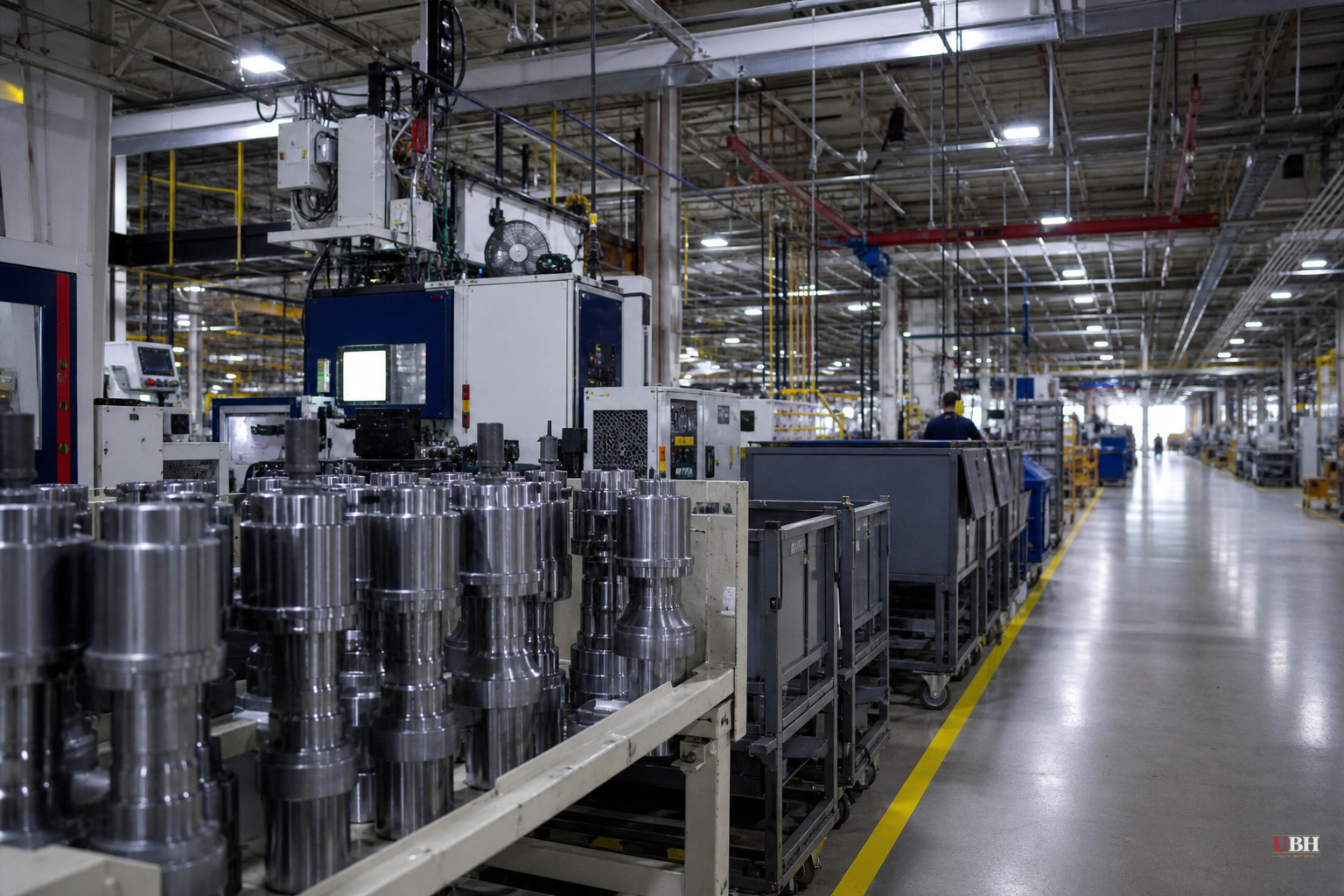
US factory orders fell 0.3% in June, according to Commerce Department data reported by Bloomberg, marking the second straight monthly decline in the headline number. Economists had forecast a 0.2% increase. Orders are still up 7.4% year-over-year, so this isn't a collapse. It's a stumble.
The uglier number is buried in the details. Core factory orders, which exclude transportation because plane and defense-equipment orders swing wildly month to month, fell 0.4%. Economists surveyed by Bloomberg had expected a 0.4% increase. That's a full percentage point miss from consensus, and it's the biggest monthly drop in core orders since April 2025. It's also the first decline since October.
Orders excluding defense spending told a similar story, down 0.4% for the second consecutive month.
The ISM Manufacturing PMI, a widely watched sentiment gauge based on surveys of purchasing managers, recently surged to a four-year high. That's the kind of number that normally signals manufacturers are optimistic and ramping up. Instead, actual hard orders data went the other direction.
The gap isn't random. It tracks a split that's shown up repeatedly in ISM's own survey commentary from manufacturers. Firms in AI-adjacent industries, semiconductors, electronics, and machinery are reporting strong demand tied to AI data center buildout and defense contracts. Meanwhile, firms in metals, transportation, chemicals, and consumer goods are describing a very different environment: weak demand, tariff-driven cost increases, geopolitical uncertainty, and what ISM respondents have described as pricing chaos.
In short, the AI and defense supply chain is running hot. Most of the rest of American manufacturing is not.
That distinction matters for anyone trying to read the overall health of the economy off a single number. If you only quote the survey-based PMI hitting four-year highs, you'd conclude manufacturing is booming. If you only quote the 0.4% drop in core orders, you'd think it's contracting. Both are true, for different slices of the industrial base. The economy right now is genuinely bifurcated, not uniformly strong or weak.
There's a reasonable case for caution here before overreacting to one month of data. Factory orders are noisy and get revised. A single 0.4% miss doesn't establish a trend, and the year-over-year headline number, up 7.4%, is still solidly positive. Anyone calling this a recession signal is getting ahead of the data.
But dismissing the miss entirely misses something too. This is the second straight monthly decline in headline orders and the sharpest core-order drop in over a year. Tariff costs, higher input prices, and geopolitical risk aren't abstractions in these numbers. They're showing up directly in what manufacturers outside the AI and defense corridor are telling ISM survey-takers about their order books.
The unresolved question is whether the AI-and-defense boom is big enough to keep pulling the broader manufacturing sector along, or whether it's masking real weakness everywhere else that eventually catches up with the headline numbers. The next factory orders release, along with the next ISM PMI report, will show whether June's core-order drop was a blip or the start of a pattern. Until then, the honest read is that American manufacturing has two very different stories running at once, and the government's own hard data and the industry's own survey data are currently pointing in opposite directions.
Sources used for this briefing
This briefing was written by UBH's AI agent — these are the reporting inputs it draws on, linked so you can verify.


