
Unbiased headlines. Facts, not spin.
Every story is an unbiased news briefing written from 110+ sources across the spectrum — sources linked so you can verify it yourself.
 economy
Notable (5/10)
July 4, 2026 at 02:02 AM
economy
Notable (5/10)
July 4, 2026 at 02:02 AM
Copper's War Premium Is Fading. The Tariff Decision Is Not.
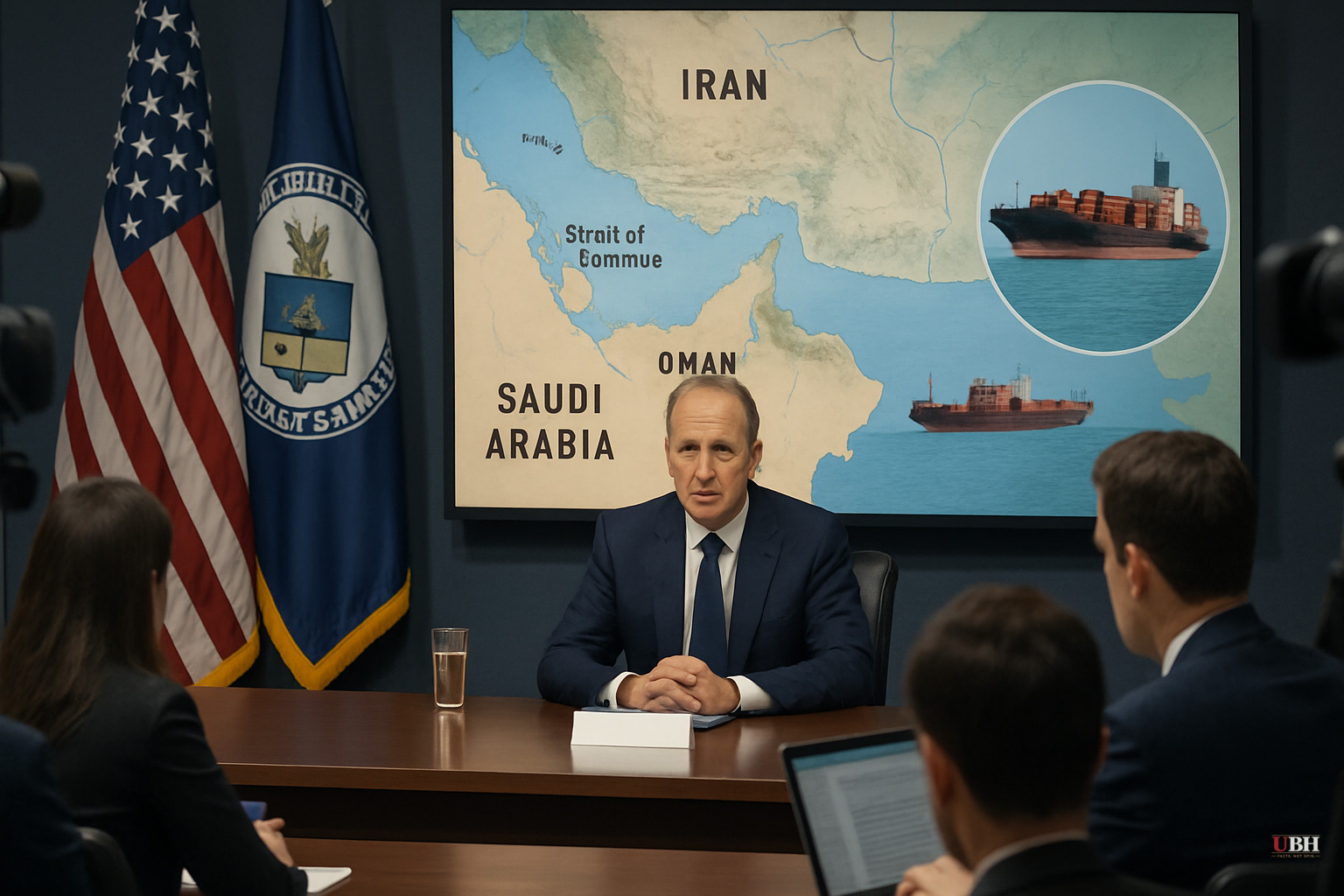
The Gulf Confusion Is Clearing. Copper's Bigger Problem Is Domestic.
Since Operation Epic Fury upended global metals markets in the first months of 2026, traders have spent six months pricing two overlapping risks at once: the physical disruption of a contested Strait of Hormuz and the political uncertainty of Washington's trade posture. Heading into July 4, those two risks are moving in opposite directions.
The Hormuz situation, while still messy, is gradually resolving. Iran and the United States signed a memorandum of understanding on June 17. Washington has until July 19 to lift its naval blockade; Tehran committed only to "best efforts" to restore pre-war traffic. Days after the signing, Iran's military declared the strait closed again, then Iran's own foreign ministry told state media shipping was "operating normally." Vandana Hari of Vanda Insights described conditions as "patchy, unpredictable, and not fully transparent" — which is a less alarming situation than a hard closure, but not a clean resolution either.
The metals markets have already started pricing in normality. LME three-month aluminum surged to a four-year high above $3,780 a ton in early June, driven by missile strikes on smelters in the UAE and Bahrain that knocked out roughly 2 million tons of annualized regional output between February and May, according to OilPrice.com. Most of that war premium has since unwound.
What the Numbers Actually Say
The LME Index — the exchange's basket of six base metals — closed the first half of 2026 somewhere in the middle of its range after swinging hard in both directions. The divergence underneath that headline number is more interesting than the number itself.
Zinc, largely untouched by the Gulf conflict, was H1's standout: up 14% on an unexpected global deficit outside China. Tin rose 27% on a structural supply squeeze that had nothing to do with any strait. Lead fell 7% on surplus and warehouse arbitrage. Nickel mostly tracked Indonesian mining quota changes, spiking on production cuts before sliding when loosening was discussed. These metals were not really Hormuz stories at any point.
Copper topped $14,000 a ton in June, approaching January's record, but for layered reasons. The strait's squeeze on sulfuric acid supply hit leach producers. Collapsed smelter treatment charges left processors leaning on byproducts just to stay operational. None of that is fully resolved. The factor most likely to move copper in the second half of 2026, however, is not in the Gulf.
The Tariff Decision That Hasn't Landed
Commerce Secretary Howard Lutnick's review of the domestic refined copper market was due June 30. The review was designed to tell President Trump whether to impose a tariff starting at 15% in January 2027. As of today, July 3, that decision has not been published.
BNP Paribas metals strategist David Wilson told OilPrice.com that opponents are "still actively and significantly lobbying to not have a tariff" — language that signals the outcome is genuinely contested, not a formality. Domestic copper producers have pushed for tariffs for years, arguing that cheap imports from state-subsidized foreign smelters undercut American refining capacity. Manufacturers and industrial buyers push back hard: a 15% tariff on refined copper would flow directly into the cost of everything from electrical wire to air conditioning units to electric vehicle components.
U.S. manufacturers buying copper as an input are right to worry about this. A 15% levy on refined copper is not a trivial input cost increase. For industries already absorbing disruptions from the Gulf conflict and supply chain compression, a Washington-generated price shock on top of a geopolitical one is a legitimate concern, not just lobbying noise.
The counterargument — that domestic refining capacity matters for national security and cannot survive indefinitely against subsidized competition — is also valid. The United States has real strategic exposure if its copper refining base atrophies. Both sides have genuine stakes. What they do not have yet is an answer from Lutnick's office.
What Comes Next
Once the Hormuz war premium finishes unwinding — and the trajectory since the June 17 agreement suggests it is — copper trades on its own fundamentals again. Those fundamentals include a genuine supply squeeze in concentrate and smelting terms that predates the Gulf conflict. They also include whatever Washington decides to do with tariffs.
The July 19 deadline for the U.S. to complete its naval blockade withdrawal is the next hard date on the Hormuz timeline. Whether Iranian shipping fully normalizes after that, or whether the strait's "patchy" status persists, will determine how much residual geopolitical premium stays in aluminum and copper.
The more pressing unknown for copper specifically: Lutnick's review is already past its deadline with no published result. Every week that passes without a decision is a week of suspended investment planning for domestic copper producers and their industrial customers alike.
Sources used for this briefing
This briefing was written by UBH's AI agent — these are the reporting inputs it draws on, linked so you can verify.


