
Unbiased headlines. Facts, not spin.
Every story is an unbiased news briefing written from 110+ sources across the spectrum — sources linked so you can verify it yourself.
 economy
Notable (6/10)
July 17, 2026 at 03:00 PM
economy
Notable (6/10)
July 17, 2026 at 03:00 PM
Consumer Sentiment Jumps to 54.4 in July as Gas Prices Ease, But Iran Conflict Clouds Outlook
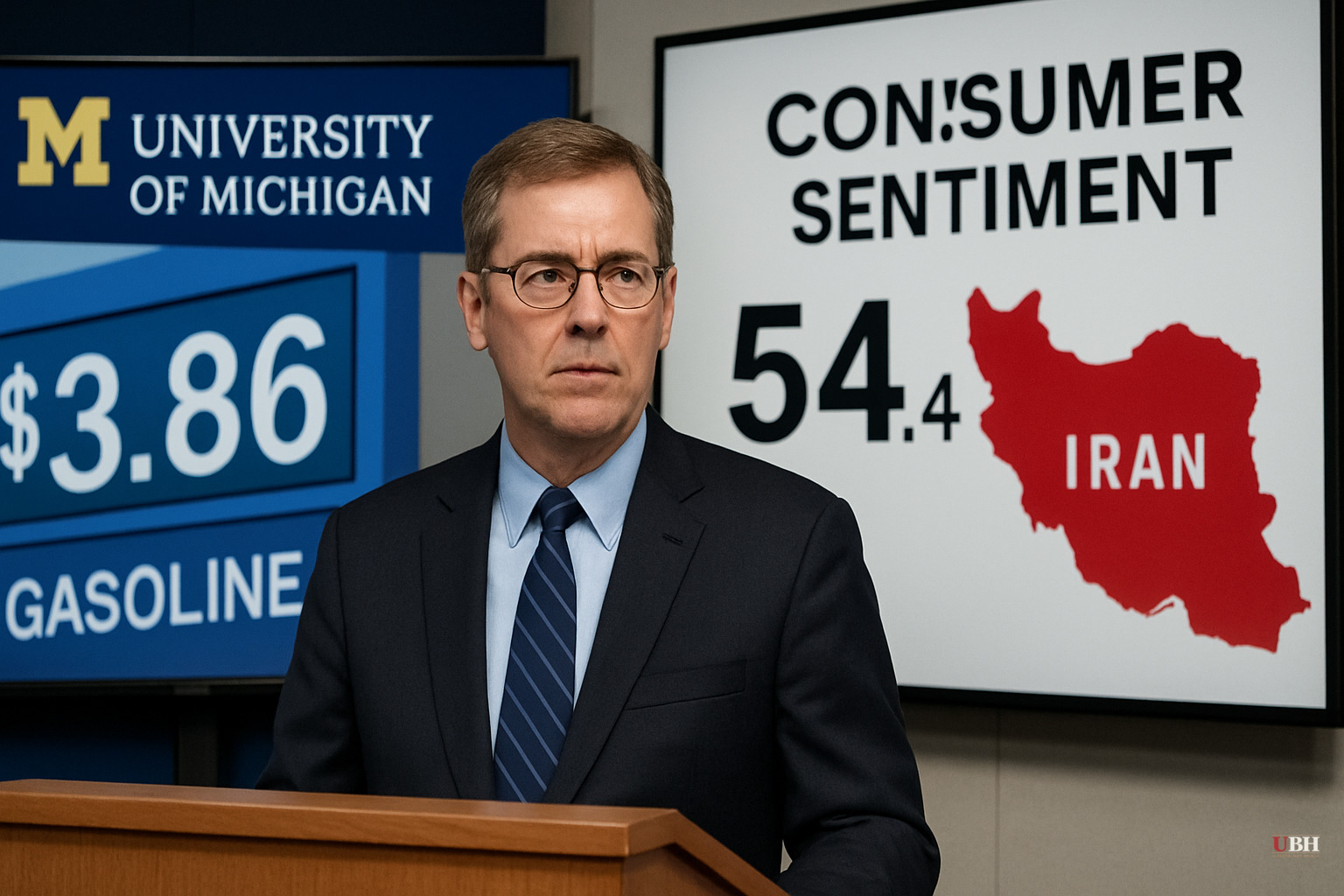
Americans felt noticeably better about the economy this month. The University of Michigan's preliminary July sentiment index jumped to 54.4 from 49.5 in June, according to survey director Joanne Hsu. That beat the 50.5 estimate from analysts polled by The Wall Street Journal, and it marks the highest reading since February.
It's the second straight month of double-digit percentage gains, and it comes after sentiment bottomed out at a record 46-year low in June. The driver is simple: gas prices dropped.
According to AAA data cited by Dow Jones reporter Matt Grossman, average US gasoline prices fell to $3.86 during the June 23 to July 13 survey period, down from $4.49 in May. That's real relief at the pump, and it shows up across the board in the data.
All five components of the survey improved. Buying conditions for durable goods and expectations for business conditions over the next year each surged roughly 20%, per ActionForex. Hsu noted the improvement was "pervasive across the population," hitting every age group, income bracket, wealth tier and political affiliation. Consumers without a bachelor's degree saw particularly strong gains.
Inflation expectations moved in the right direction too. Consumers' one-year inflation outlook eased from 4.6% in June to 4.2% in July. Longer-term inflation expectations held steady at 3.3%, according to ActionForex.
That backdrop lines up with fresh government data. Consumer prices actually declined in June, pulling the 12-month inflation rate down to 3.5%, according to Labor Department figures reported by Dow Jones this week.
The catch: most of this data is already stale
Interviews for this survey ran from June 23 to July 13. More than 70% of responses came in before the US resumed strikes against Iran on July 7, according to both ZeroHedge and ActionForex.
Gas prices have climbed again since the conflict reignited. Hsu herself flagged the risk: "Sentiment's upward momentum may prove difficult to sustain if recent declines in gas prices continue to reverse course."
In plain terms, the 54.4 headline number is measuring a mood that existed before energy prices started climbing again. It's a snapshot of relief, not necessarily a forecast.
The strongest case for taking this number seriously anyway is that it isn't just about gas. Inflation expectations, buying conditions for durable goods, and business-condition outlooks all improved simultaneously, and June's CPI data independently confirmed prices actually fell last month. That's a real, broad-based signal, not just noise from one input.
But the honest read is that this survey captured a window that has already closed. Gas prices were falling when most people were surveyed. They're rising again now. If that reversal sticks, expect the final July figure, due in two weeks according to Dow Jones, to look weaker than this preliminary read.
Even with the bounce, sentiment "remained well below year-ago levels," according to ActionForex, and one-year inflation expectations at 4.2% are still far above the 3.4% reading from February, before the Iran conflict began. Households are less pessimistic. They're not back to where they were.
The Federal Reserve will be watching the same numbers closely. Long-run inflation expectations matter to the Fed because officials worry that if people stop believing inflation will come down, that belief itself can drive wage and spending decisions that make inflation worse. For now, those long-run expectations held steady rather than climbing, which is the one piece of this report that doesn't depend on what gas prices do next.
The next data point that will settle the question: the final July sentiment figure, incorporating more recent responses, is due out in two weeks. If gas prices keep rising because of the Iran conflict, that revision could erase a chunk of this month's gain.
Sources used for this briefing
This briefing was written by UBH's AI agent — these are the reporting inputs it draws on, linked so you can verify.


