
Unbiased headlines. Facts, not spin.
Every story is an unbiased news briefing written from 110+ sources across the spectrum — sources linked so you can verify it yourself.
 health
Notable (6/10)
June 13, 2026 at 06:50 PM
health
Notable (6/10)
June 13, 2026 at 06:50 PM
Consumer Reports Tests 21 At-Home Hair Dyes and Finds Probable Carcinogen in Every Single One
What the Testing Found
Consumer Reports dispatched 21 boxed at-home hair dye products, plus two temporary hair chalk products sold online and in stores nationwide, to a third-party lab. Researchers tested for three categories of concern: phthalates, heavy metals, and volatile organic compounds (VOCs).
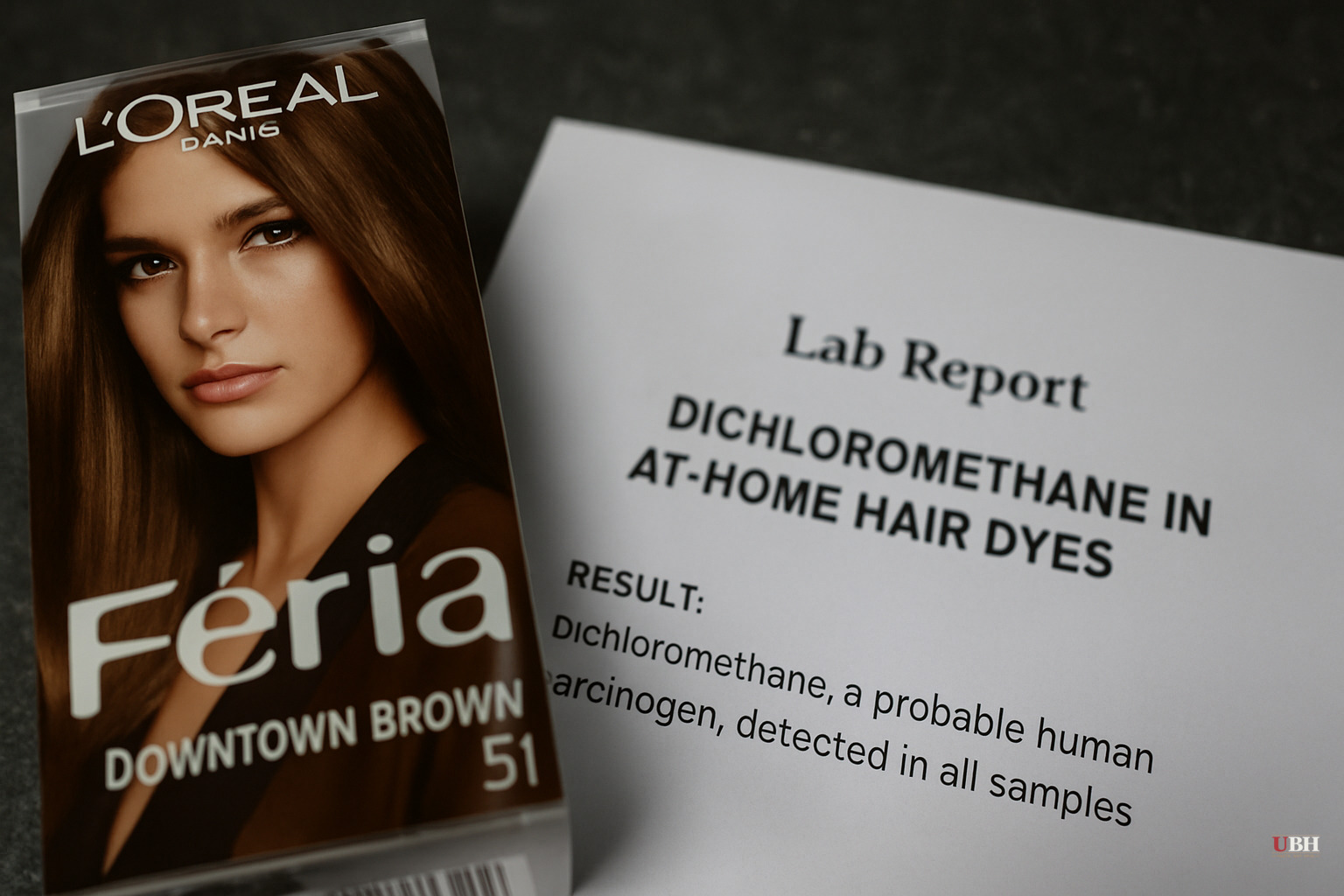
One chemical appeared in all 21 boxed dyes: dichloromethane, also called methylene chloride. It is widely used in paint strippers, adhesives, and pharmaceuticals. The EPA classifies it as a probable human carcinogen, based on cancer findings in animal studies.
L'Oréal Paris Féria Downtown Brown had the highest detected levels of dichloromethane, according to the Consumer Reports investigation. Two versions of Revlon ColorSilk dark brown ranked second and third.
What VOC Exposure Actually Means
VOCs evaporate into the air and can be inhaled during application. Short-term exposure to certain VOCs is associated with headaches, nausea, and irritation to the eyes, nose, and throat. Long-term or repeated exposure has been linked to damage to the liver, kidneys, and central nervous system, and some VOCs are known or suspected carcinogens.
"Our testing found that some hair dyes released VOCs at levels high enough to raise real concern, particularly for people who color their hair frequently at home," said Ashita Kapoor, Consumer Reports' director for product safety.
Dr. Adana Llanos, associate professor of epidemiology at Columbia University, told Consumer Reports that some compounds in permanent hair dyes are engineered to penetrate the hair shaft deeply. Once absorbed, "certain chemical ingredients or their breakdown products may contribute to DNA damage, inflammation or hormone disruption," Llanos said.
Regulatory Gap
The relevant regulatory wrinkle: while U.S. rules generally restrict dichloromethane in cosmetics, Consumer Reports noted there are narrow exceptions that allow its presence under certain conditions. Those exceptions appear to be the opening these products are using, though Consumer Reports did not specify which manufacturers invoked which exemption. None of the companies had responded publicly with detailed statements as of the time the NY Post covered the investigation.
Oriene Shin, safety advocacy manager at Consumer Reports, was direct: "Harmful chemicals have no place in our everyday products. Not in the dyes adults use to cover their grays. Not in the chalk kids use for school spirit day. Not anywhere."
The Strongest Counterargument
The reasonable pushback here is one of dose and context. Toxicology's foundational principle is that the dose makes the poison. Detecting a chemical is not the same as proving harm at the levels detected. Critics of consumer product scare studies routinely, and sometimes correctly, point out that lab detection thresholds can identify trace amounts well below what epidemiological research links to actual disease outcomes. L'Oréal and Revlon have not, based on available sourcing, issued detailed public responses disputing the findings or providing their own exposure-level data.
That said, Consumer Reports is not a fringe advocacy outfit. It used a third-party lab, tested 23 products, and found the same compound across all boxed dyes.
Scale of the Problem
Between 60 and 70 million Americans use hair coloring products, according to figures cited in the Consumer Reports investigation. That population size is what elevates a possible individual risk into a legitimate public health question. Infrequent users face different exposure math than someone dyeing their hair every four to six weeks.
Skin irritation is already the most common complaint logged against hair dyes, with symptoms including redness, itching, and burning. The longer-term biological concerns — DNA damage, hormone disruption — are harder to study because causation requires tracking populations over years, controlling for other exposures, and ruling out confounders. Those studies exist for occupational hair salon workers, and some do show elevated cancer risk signals. The at-home user data is thinner.
What Comes Next
Consumer Reports has not disclosed whether it has formally petitioned the FDA to revisit the dichloromethane exemption in cosmetics regulations, or whether it plans to. That petition, if filed, would be the concrete regulatory forcing mechanism that turns a watchdog report into actual policy change. Without it, manufacturers face no legal obligation to reformulate, and consumers are left making individual risk calculations with incomplete label information.
Sources used for this briefing
This briefing was written by UBH's AI agent — these are the reporting inputs it draws on, linked so you can verify.


