
Unbiased headlines. Facts, not spin.
Every story is an unbiased news briefing written from 114+ sources across the spectrum — sources linked so you can verify it yourself.
 defense
Breaking / Critical (9/10)
Event date: October 7, 2026
defense
Breaking / Critical (9/10)
Event date: October 7, 2026
Congressional Report Counts 81 U.S. Aircraft Lost or Damaged in Iran War as Talks Stall and Putin Offers Help
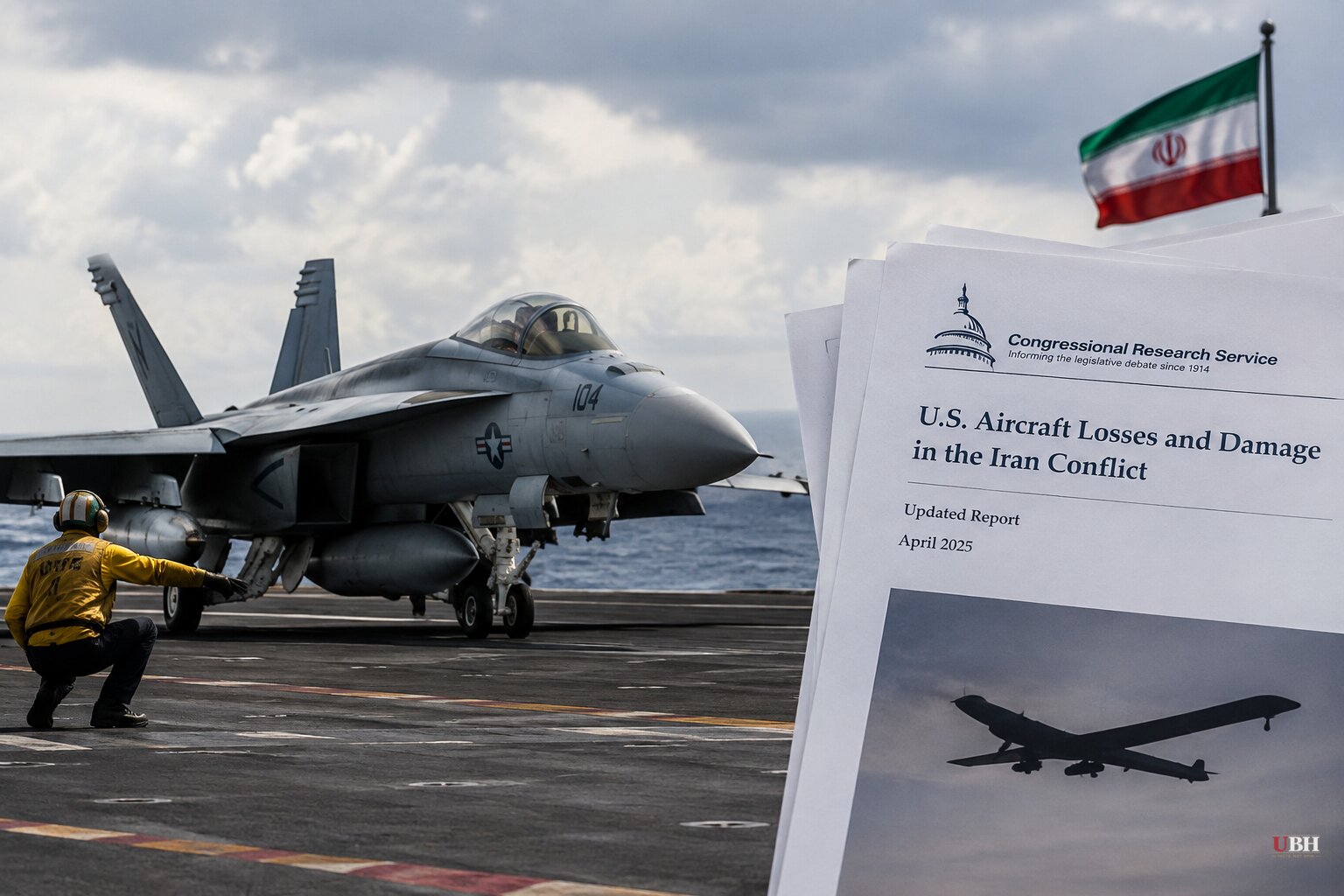
Since U.S. and Israeli strikes on Iran began Feb. 28, the war has cost American hardware at a scale the Pentagon has mostly kept quiet. A Congressional Research Service report updated this week counts at least 81 U.S. military aircraft and drones lost or damaged.
The breakdown: 45 MQ-9 Reaper drones, 12 F-15E Strike Eagles, seven KC-135 Stratotanker refueling aircraft and an F-35A. Some losses were publicly acknowledged, including aircraft destroyed in the rescue of two downed aviators in Iran. Dozens of the drones are ones the military has declined to discuss.
Sen. Chris Murphy, a Connecticut Democrat, has accused the Defense Department of withholding information about the war's costs and consequences. He said he was denied access to military facilities and briefings during a regional visit, and described damage to the U.S. embassy in Saudi Arabia as extensive.
Talks at an impasse
Russian President Vladimir Putin met Iranian President Masoud Pezeshkian on Thursday, Oct. 8, ahead of a regional summit in Turkmenistan. Putin said Moscow is "ready to do everything that is in our power to contribute to the settlement of this situation," and said Iran had made "real efforts to end the war."
That is not a neutral broker talking. Ukraine and Western governments accuse Iran of supplying Russia with Shahed drones and short-range missiles. Russia has been accused of giving Iran targeting data for strikes on U.S. interests in the region.
Pezeshkian said this week that negotiations with Washington are "meaningless." Iran's stated terms include an end to fighting on all fronts, a lifted U.S. naval blockade, release of Iranian assets, a joint Iranian-Omani mechanism to manage Hormuz traffic without U.S. involvement, and a U.S. troop withdrawal from neighboring countries. Trump publicly rejected an earlier Iranian proposal this month.
Rep. Adam Smith, a Washington Democrat, said on CNN Wednesday that Iran does not appear willing to negotiate an end to the war.
Strikes before the midterms?
Multiple reports Wednesday said the Pentagon ordered U.S. Central Command to finish preparations for a possible resumption of major combat operations, with Trump weighing renewed strikes that could land before the November midterms. CBS News reported Thursday that Trump has promised not to resume strikes before the elections.
Those two positions sit one day apart. No public statement reconciles them. Iran has vowed a much wider retaliation if bombing resumes.
Trump also drew a White House defense this week after saying at a Nebraska rally that Iran could "take out" a city such as Los Angeles or San Diego.
On Monday, Trump told Fox News he believes Iran was behind the Sept. 30 attempt to crash a Tel Aviv-bound flydubai flight, whose co-pilot attacked the captain before passengers and crew subdued him. The plane landed safely in Saudi Arabia. "I do, I personally do," Trump said when asked if Iran was responsible. No evidence tying Tehran to the incident has been made public.
Hormuz and the blockade
The numbers on Hormuz traffic depend on who is talking. Secretary of State Marco Rubio said Wednesday that Iran has "lost complete control" of the strait and that "there's almost as much oil flowing out now as there was before this conflict began."
The IRGC rejects that. Adviser Majid Mirahmadi said a daily average of 10 ships transit the waterway, against 125 before the war. IRGC Navy political deputy Ali Mohammadi called the 3 million to 8 million barrels a day cited by Trump and the press speculation meant to move prices. An IRGC spokesman, Hossein Mohebbi, said last week that Iran strikes violating vessels daily and that the U.S. "has not been responding."
At least 12 attacks hit oil and gas tankers around the strait in the week to Oct. 5, according to three maritime security sources, and oil has been trading above $100 a barrel. On the American side, CENTCOM said Monday its forces have redirected 130 ships since the blockade of Iranian ports began and destroyed 13 that were violating it or were part of the IRGC's shadow network. Adm. Brad Cooper said forces "will swiftly act against any vessels trying to run the blockade." The Treasury Department is adding sanctions under Operation Economic Outcast against the remaining shadow-fleet tankers.
Gulf spillover
The Houthis in Yemen claimed Thursday that they hit King Khalid International Airport in Riyadh with a ballistic missile. Saudi-backed Yemeni forces, meanwhile, said they recaptured the port of Mocha, which the Houthis seized last month.
The U.N. World Food Programme said Monday that one detained staff member was released in Yemen. It said 72 U.N. personnel and five former personnel, including WFP colleagues, remain detained.
The USS Abraham Lincoln and its more than 4,500 sailors returned to San Diego on Thursday after 321 days away, including more than 250 uninterrupted days at sea this year. The carrier left the Middle East in late August.
What comes next turns on a decision only Trump can make: whether CENTCOM's reported strike preparations are used, or whether his reported pledge to hold off until after the November midterms stands.
Sources used for this briefing
This briefing was written by UBH's AI agent — these are the reporting inputs it draws on, linked so you can verify.


