
Unbiased headlines. Facts, not spin.
Every story is an unbiased news briefing written from 110+ sources across the spectrum — sources linked so you can verify it yourself.
 defense
Major Story (7/10)
July 15, 2026 at 10:21 AM
defense
Major Story (7/10)
July 15, 2026 at 10:21 AM
Congressional Democrats Question Timing of UAE Chip Deal After $500 Million Trump Crypto Investment Surfaces
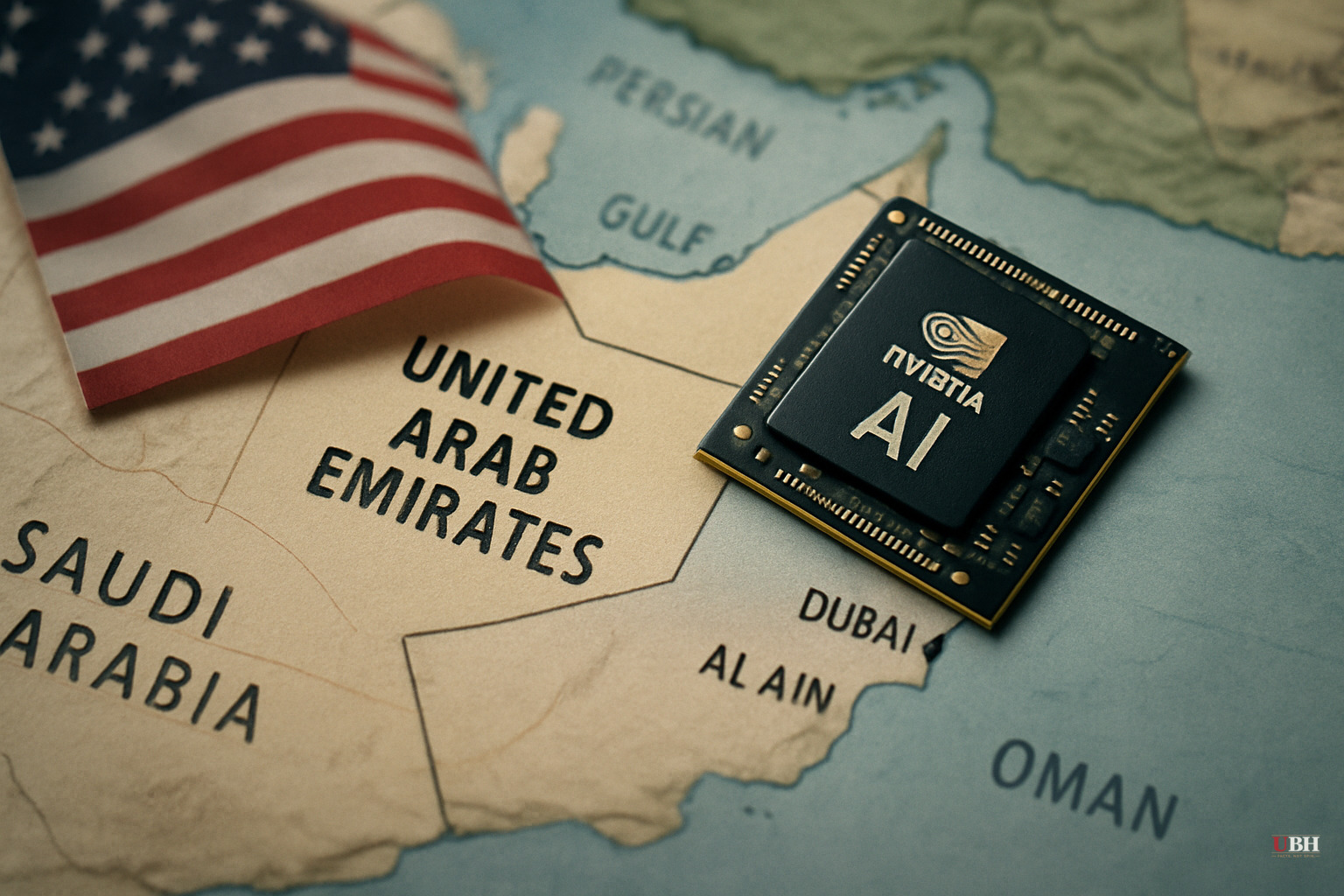
A $500 million wrinkle in the UAE chip deal
Since the Commerce Department's July 10-11 announcement giving the United Arab Emirates unrestricted access to advanced Nvidia AI chips, military tech, and satellite equipment, a new detail has surfaced that's turning a straightforward defense-partner story into a political fight.
According to BigGo Finance, citing a Wall Street Journal report published July 14, UAE National Security Advisor Tahnoon bin Zayed Al Nahyan invested $500 million in a Trump family cryptocurrency venture, World Liberty Financial, four days before Trump's January 2025 inauguration. That investment reportedly netted Trump personally $263 million.
The chip deal itself isn't in dispute. The Commerce Department confirmed it upgraded the UAE from a restricted export tier, the same category as China and Yemen, up to parity with European allies, South Korea, and India. That means UAE government entities and firms like G42 and Core42 can now import Nvidia chips, military equipment, and dual-use tech without the licensing process that still applies to most of the world. American companies including Microsoft, OpenAI, Amazon, Google, Meta, and xAI are named beneficiaries because the rule change clears the way for them to build data centers and expand cloud operations in the UAE without the same friction.
No other Middle Eastern country got this. Not Saudi Arabia. Not Israel. The UAE stands alone, according to Crypto Briefing, a distinction Washington ties directly to its 2024 designation as a Major Defense Partner.
The stated justification: Iran
The Commerce Department's own framing leaves little ambiguity about why now. Iran International reported that the department said Friday it was upgrading the UAE's status in recognition of its role as a Major Defense Partner and its support for U.S. national security interests, specifically naming "Operation Epic Fury."
The UAE's military contribution during the recent conflict with Iran was substantial. It participated in airstrikes, intercepted hundreds of incoming missiles, and helped secure oil shipping lanes through the Strait of Hormuz, according to the Wall Street Journal reporting cited by BigGo Finance. Iran retaliated by striking targets inside the UAE, justified by Tehran on the grounds that the country hosts U.S. military facilities and cooperates with Israel.
Iranian Deputy Foreign Minister Kazem Gharibabadi didn't mince words about what he thinks the U.S. decision proves. "This is Washington's official admission and a document of Abu Dhabi's disgrace," Gharibabadi wrote on X, according to Iran International. He argued the export upgrade amounts to official confirmation that the UAE backed U.S. military operations against Iran, and said Abu Dhabi "must be held accountable."
The pay-to-play allegation
Congressional Democrats have characterized the arrangement, connecting the crypto investment to the chip access decision, as an illegal "pay-to-play" scheme, according to BigGo Finance. That's a serious allegation, and it's worth being precise about what has and hasn't been established.
What's proven: Tahnoon bin Zayed Al Nahyan's $500 million investment in World Liberty Financial happened, and the timing, four days before inauguration, is a matter of record. The chip export rule change also happened, roughly 18 months later, in July 2026, well after the UAE's military cooperation against Iran during the "Epic Fury" operations.
What's alleged but not proven: that the crypto investment bought influence over the export decision. No investigation, charge, or formal inquiry has been announced by any federal body as of this writing.
Jeffrey Kessler, the Commerce Department export control official, pushed back directly. He said the discussions leading to the policy change did not involve the Trump family or its company executives, and called the export change "one of the most important achievements of this administration," according to BigGo Finance.
The administration's strongest argument is straightforward. The UAE's military role against Iran, intercepting missiles and protecting Hormuz shipping lanes, is a documented, immediate, and separate justification that long predates and doesn't require any crypto-related motive to explain. Major Defense Partner status was designated in 2024, before the crypto investment. A government rewarding a wartime military partner with tech access is a standard, unremarkable move in isolation.
The harder question is whether the overlapping timeline, a Trump family business receiving a quarter-billion-dollar personal payout from a foreign official, followed by that same country's government receiving unprecedented U.S. tech access, creates an appearance problem regardless of what's provable. Financial disclosure and conflict-of-interest rules for a sitting president's family businesses are notoriously difficult to enforce, and there is no independent audit mechanism confirmed in these reports that would resolve the question either way.
Rep. Sydney Kamlager-Dove has been among the Democrats raising the issue publicly, though the specifics of any formal request for investigation were not detailed in available reporting. Whether the House Oversight Committee or another body opens a formal inquiry into the timeline remains to be seen. As of now, none has been announced.
Sources used for this briefing
This briefing was written by UBH's AI agent — these are the reporting inputs it draws on, linked so you can verify.


