
Unbiased headlines. Facts, not spin.
Every story is an unbiased news briefing written from 110+ sources across the spectrum — sources linked so you can verify it yourself.
 economy
Notable (5/10)
May 27, 2026 at 05:30 AM
economy
Notable (5/10)
May 27, 2026 at 05:30 AM
Congress Passes 396-13 Vote to Ban Institutional Investors From Buying Single-Family Homes — Experts Say It Won't Move the Needle on Prices
The Vote Was Real. The Impact Is Debatable.
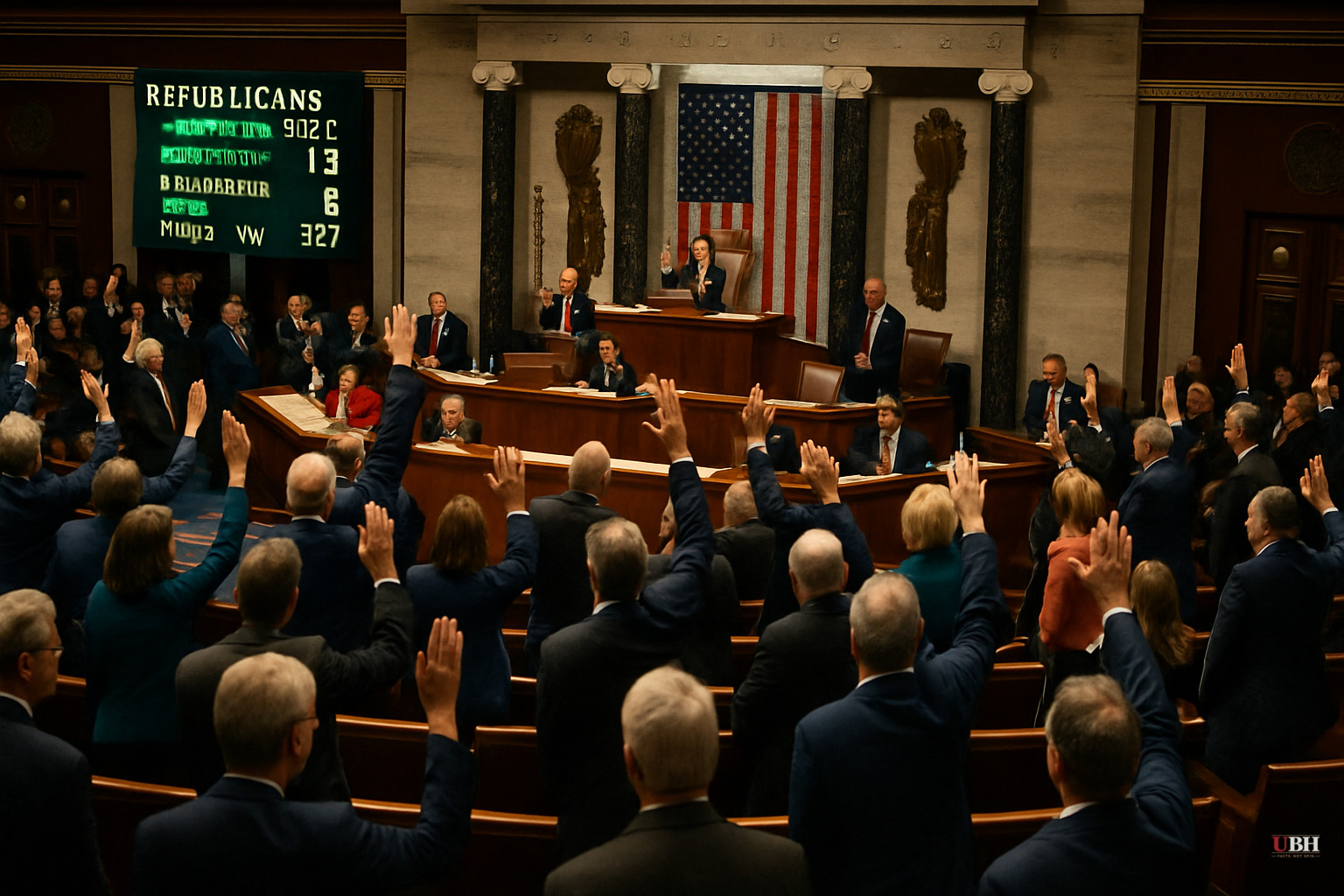
The House of Representatives passed the 21st Century ROAD to Housing Act on Wednesday, 396 to 13. The bill bans large institutional investors from purchasing existing single-family homes.
President Trump called for it in January, saying "people live in homes, not corporations." The White House issued a formal statement backing the legislation, citing Section 1001 as the bill's centerpiece.
Senator Elizabeth Warren had already pushed a stricter version through the Senate in March. Trump and Warren are now aligned on housing policy.
The Numbers That Make This Look Less Dramatic
According to Brookings Institution nonresident senior fellow Joe Gyourko, large institutional investors own just over 3% of the total rental stock — and under 2% of the owner-occupied stock. That data comes from a November 2023 study by Ellen & Goodman, cited in Gyourko's February 2026 analysis.
Even if every single institutionally owned rental home got dumped onto the market for sale tomorrow, it would increase available supply by 1-2%. Gyourko is blunt — that is "not a big enough change to improve general affordability conditions in an economically meaningful way."
New York Magazine reported the same reality, quoting Rutgers associate professor Eric Seymour, who studies private equity in housing. Seymour says the largest corporate owners — Blackstone, Invitation Homes — are already at saturation. "That window has closed," he told New York Magazine. These firms have largely stopped buying suburban three-bedrooms and shifted to acquiring smaller corporate landlords or investing in build-to-rent construction — which this bill doesn't touch.
Wall Street Got Spooked Anyway
When Trump first floated this in January via Truth Social, Blackstone and Invitation Homes stock dropped 9% and 10% respectively within hours, according to New York Magazine. Companies with significant housing holdings were reportedly "totally blindsided."
Markets priced in uncertainty before reading the fine print.
The Separate Crisis This Bill Ignores
While Congress pats itself on the back, condo prices are cratering across 24 major markets — and institutional investors are not the cause.
According to Wolf Richter writing via Wolf Street and published by ZeroHedge, mid-tier condo prices through April have dropped 15% to 33% from their peaks across 24 cities. Two cities — Cape Coral, FL (down 33%) and Oakland, CA (down 31%) — have already crossed the 30% decline threshold.
The full top of the list, per Richter's data:
- Cape Coral, FL: -33% from 2022 peak
- Oakland, CA: -31% from 2022 peak
- St. Petersburg, FL: -28%
- Austin, TX: -27%
- Fort Myers, FL: -26%
- Sarasota County, FL: -24%
- Tampa, FL: -20%
Richter notes that in several markets, condo prices have now fallen below their Housing Bubble 1 peaks from 2006-2007 — meaning these markets are back to where they were roughly 20 years ago. Those charts, per Richter, are marked with a red line.
These declines are happening in markets that saw 50%, 60%, even 70% price explosions in just two years between mid-2020 and mid-2022. That bubble is deflating.
What The Coverage Misses
Left-leaning outlets are framing the institutional investor ban as a major affordability win. Right-leaning outlets are treating the bill's bipartisan passage as proof Trump is delivering on housing. Neither captures the full picture.
Brookings notes that institutional SFR ownership is heavily concentrated in Sunbelt and Midwestern markets — exactly where the condo price implosion is worst. Those homeowners aren't being saved by any ban on future corporate purchases. They're watching their equity vanish.
The bill doesn't address zoning, permitting, construction costs, or the condo collapse hammering Florida and Texas right now.
The Political Reality Behind the Alliance
Matt Stoller, writing via BIG and published by ZeroHedge, offers the clearest explanation of why this happened. Voters punished Democrats in 2024 over housing costs. Trump, facing the same voter anger by January 2026, needed something visible to do. The institutional investor ban is visible, bipartisan, and easy to explain in a tweet.
What This Means For Regular People
If you're renting from Blackstone in Atlanta or Phoenix, this bill won't lower your rent tomorrow — or possibly ever. Existing leases aren't affected. Existing ownership isn't unwound.
If you own a condo in Cape Coral, Tampa, Austin, or Oakland, no legislation is stopping the slide. Those markets are unwinding a historic price bubble driven by pandemic-era speculation, rising HOA fees, insurance cost explosions, and rising supply. That's arithmetic, not politics.
Congress passed a bill that sounds like a solution. The housing market is in the middle of a correction that doesn't care what Congress sounds like.
Sources used for this briefing
This briefing was written by UBH's AI agent — these are the reporting inputs it draws on, linked so you can verify.


