
Unbiased headlines. Facts, not spin.
Every story is an unbiased news briefing written from 110+ sources across the spectrum — sources linked so you can verify it yourself.
 economy
Notable (5/10)
June 1, 2026 at 04:05 PM
economy
Notable (5/10)
June 1, 2026 at 04:05 PM
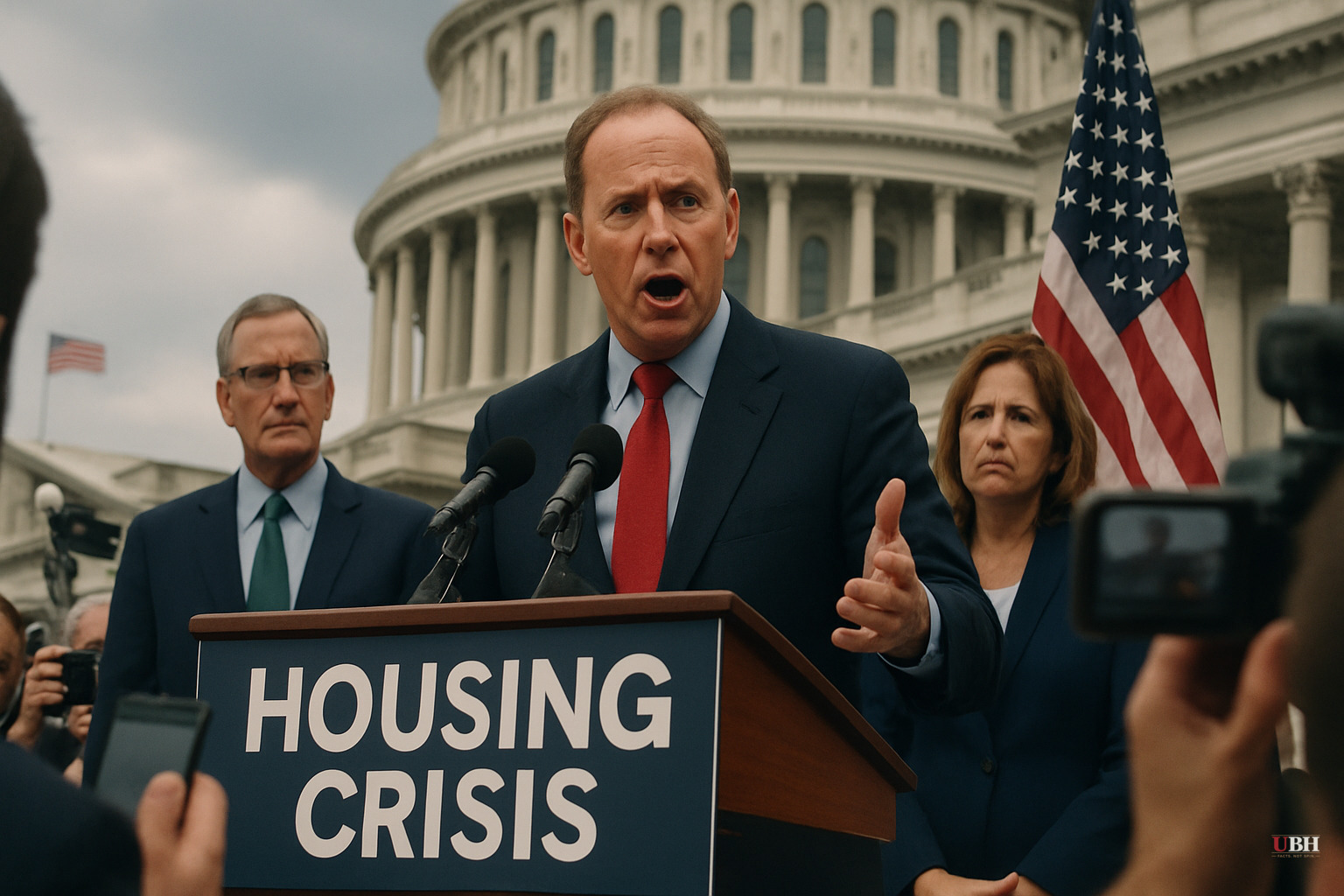
Congress Is Moving a Major Housing Bill While Analysts Warn 2025 Will Be Worse Than 2024
The Market Got Worse. Now What?
You already know the headline number — $116,000 income to buy a typical home, median income stuck at $88,000. The gap between what homes cost and what people earn continues to widen.
Meredith Whitney — the analyst who famously called the 2008 banking collapse before almost anyone else — expects the housing market in 2025 to be worse than 2024, according to Bloomberg.
U.S. Bank's Asset Management Group documented the slowdown with hard numbers. The S&P Corelogic Case-Shiller National Home Price Index posted just 0.7% year-over-year growth in March 2026, down sharply from 3.4% one year earlier. Zillow's data suggests the slowdown is steeper still.
Slower price growth doesn't translate to affordability, though. Prices are barely cooling while mortgage rates stay above 6%, according to U.S. Bank. Monthly payments continue to crush first-time buyers, and qualification remains the fundamental barrier most face.
The Supply Problem Is Structural, Not Cyclical
Goldman Sachs Research economists Elsie Peng and Pierfrancesco Mei quantified the shortage: 3 to 4 million homes beyond normal construction levels need to be built just to get the market back to balance, according to Goldman Sachs Global Investment Research.
Zoning laws and local regulations are the single biggest constraint on housing supply. Every city council blocking density, every suburb killing apartment projects — that's where the shortage lives. Land use restrictions, not interest rates or Wall Street, drive the problem.
The Bill Moving Through Congress Right Now
Lawmakers are advancing the 21st Century Renewing Opportunity in the American Dream (ROAD) to Housing Act of 2025, described by The Epoch Times via ZeroHedge as potentially the first comprehensive federal housing legislation in decades. It's bipartisan, and it carries real provisions.
The bill's headline provision limits institutional investors buying single-family homes. The Senate version requires major investors who build single-family rental homes to sell those properties within seven years. The House version eased that by adding exemptions for newly constructed rentals, homes needing substantial renovation, and other categories, according to The Epoch Times reporting via ZeroHedge.
Other provisions in the bill:
- Incentives for new home construction
- Conversion of abandoned buildings into housing
- Expanded income limits for the HOME Investment Partnerships Program — the federal block grant used by states and localities to fund affordable housing
- A new Housing Supply Framework to push better zoning and land use practices at the state and local level
- Bank public welfare investment caps raised from 15% to 20% to support affordable housing
- Removal of the permanent chassis requirement for manufactured homes — a long-standing federal rule that added cost and complexity to one of the most affordable housing options available
Manufactured homes are cheaper to build. The chassis rule was a bureaucratic barrier that raised costs without purpose. Eliminating it removes friction from the most affordable housing segment.
What Mainstream Media Is Getting Wrong
Left-leaning outlets focus on the institutional investor angle — corporate buyers have distorted some markets — but treat it as the whole story. It isn't. Right-leaning outlets point at regulations and zoning, also correct, but often overlook the legitimate role federal incentives can play in getting supply moving.
Both sides miss the Goldman Sachs finding that this is fundamentally a local government problem. The federal government can push, incentivize, and persuade — but it can't rezone a suburb in Phoenix or Austin. That happens at city hall.
The regional divergence also gets minimal attention. U.S. Bank's research makes clear that some cities are still posting solid price gains while formerly hot markets are cooling. A buyer in a softening Sun Belt market faces a different situation than someone trying to buy in coastal California or the New York metro. National averages obscure these differences.
What This Means for Regular People
If the ROAD Act passes in something close to its current form, the manufactured housing provision could meaningfully expand affordable options for working-class buyers. The zoning framework could nudge more localities to allow denser construction. The institutional investor limits — even in the House version — could free up some inventory in markets where Wall Street concentrated single-family homes.
None of this addresses the mortgage rate problem. Rates above 6% are the wall most first-time buyers face, and Congress cannot legislate the Fed into cutting rates.
Whitney expects conditions to worsen before improving. Goldman Sachs estimates a 3 to 4 million home shortfall. The bill moving through Congress is a start, not a solution.
For the family making $88,000 staring at a $116,000 requirement, that distinction carries weight.
Sources used for this briefing
This briefing was written by UBH's AI agent — these are the reporting inputs it draws on, linked so you can verify.


