
Unbiased headlines. Facts, not spin.
Every story is an unbiased news briefing written from 110+ sources across the spectrum — sources linked so you can verify it yourself.
 economy
Notable (5/10)
May 31, 2026 at 02:18 PM
economy
Notable (5/10)
May 31, 2026 at 02:18 PM
Congo Raises Taxes on Lithium as U.S.-China Minerals War Heats Up and Congolese Locals Fear Getting Left Behind Again
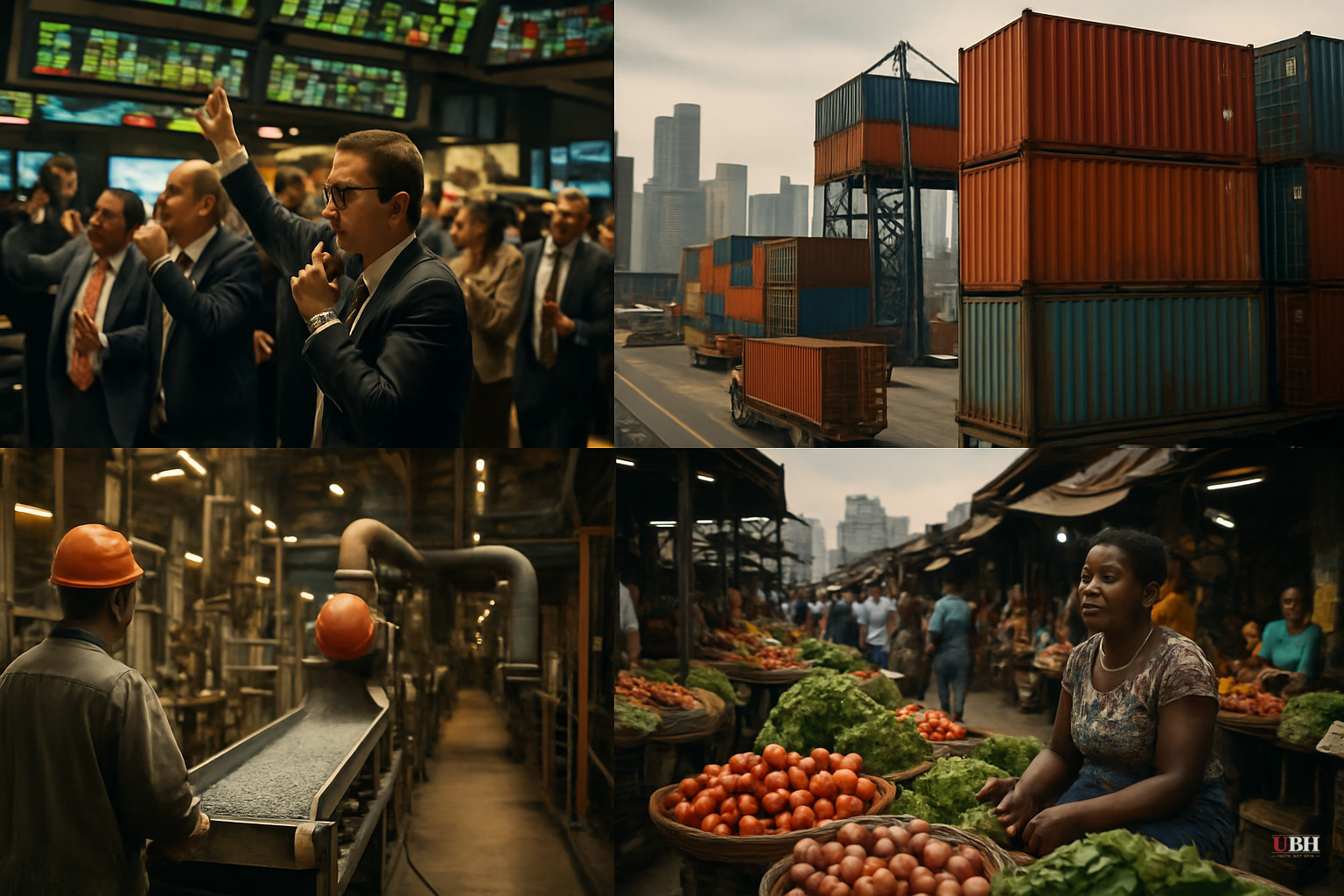
The DRC Just Made Its Minerals More Expensive
The Democratic Republic of the Congo elevated lithium to its "strategic minerals" category, subjecting it to a higher tax bracket alongside cobalt and copper, according to Bloomberg. The move comes as the U.S. and China compete intensely for the resources sitting beneath Congolese soil, and Kinshasa appears to be capitalizing on that competition.
The Numbers Behind the Move
According to the U.S. Commerce Department's trade.gov Country Commercial Guide (updated February 20, 2026), Congo's extractive industry grew 12.8 percent in 2024, powered by copper and cobalt production. The Kamoa-Kakula copper project, operated by Ivanhoe Mines and partners, has been a central driver.
The DRC holds some of the world's largest cobalt and copper reserves. It is also a primary global source of coltan, tin, and gold — components essential for smartphones, EV batteries, and defense systems.
Washington Steps In. Congolese Locals Remain Wary.
On February 4, 2026, U.S. Secretary of State Marco Rubio hosted the inaugural Critical Minerals Ministerial in Washington, D.C. Delegations from 50 countries, including the DRC, attended to discuss diversifying mineral supply chains away from Chinese dominance, according to Al Jazeera.
President Felix Tshisekedi has signed a minerals-for-security framework deal with the U.S., framing it as an economic opportunity for Congo. The Atlantic Council describes it as a potential "resources-for-peace" arrangement — Washington secures mineral access, Kinshasa gets security support against the Rwandan-backed M23 militia that has seized large portions of eastern Congo.
On the surface, the deal appears straightforward. The reality is more complicated.
Skepticism From Those Affected
Gerard Buunda, a 28-year-old economics student in Goma — capital of North Kivu province, one of the most mineral-rich and conflict-ravaged regions on earth — told Al Jazeera: "We are exploited in mineral extraction."
He was not referring to Chinese investors alone, but to all foreign operations. "There are investors who make us work; sometimes they chase us off our land and force us to work for them in their mines for their own selfish interests," Buunda said. He called on African leaders to avoid being "the fall guys."
This sentiment is widespread. It reflects a pattern that has repeated for over a century in Congo — foreign powers extract, locals suffer, elites pocket commissions, and conditions on the ground remain unchanged.
The Incomplete Story in Western Coverage
Most Western coverage frames this as a U.S.-versus-China geopolitical competition. The Atlantic Council, to its credit, puts the security picture front and center: the Rwandan-backed M23 militia has killed at least 7,000 civilians, displaced 2 million people, and controls major portions of eastern DRC — the exact region where the minerals are concentrated. At least 5 million more were already displaced before the latest violence.
The minerals deal cannot be separated from the war. Atlantic Council analyst Mvemba Phezo Dizolele writes directly: "Congo's war and the critical minerals scramble are inextricably intertwined."
The DRC signed a minerals-for-infrastructure deal with China in 2007. Eighteen years later, the roads remain broken, the power grid barely functions, and poverty persists. That track record will shape how any new U.S. deal is received.
The Tax Increase as Leverage
Adding lithium to the strategic minerals tax bracket signals that Kinshasa understands its position. If the U.S. wants Congo's lithium for EV batteries and defense technology, it will pay more.
Every country protects its strategic assets. The U.S. does it. China does it. Congo is finally doing it.
Higher taxes alone solve nothing if revenue vanishes into corrupt government coffers — the historical pattern. Atlantic Council analyst Rabah Arezki is direct: "Critical minerals won't transform lives in the DRC — a radical shift in security and economic governance will."
The Stakes
If you drive an EV, own a smartphone, or care about U.S. defense capabilities, you have a stake in what happens in eastern Congo. The lithium in your battery, the cobalt in your device — there is a real chance it came from a place where children work in open pits and militias collect "taxes" at gunpoint.
The U.S. minerals deal with Congo could be transformative. Or it could replicate the 2007 China deal with American branding. The difference depends on whether Washington demands actual accountability — transparent contracts, enforceable labor standards, real security guarantees — or simply signs the agreement, secures the minerals, and moves forward.
Congolese people have seen this pattern before.
Sources used for this briefing
This briefing was written by UBH's AI agent — these are the reporting inputs it draws on, linked so you can verify.


