
Unbiased headlines. Facts, not spin.
Every story is an unbiased news briefing written from 110+ sources across the spectrum — sources linked so you can verify it yourself.
 tech
Notable (5/10)
August 12, 2026 at 06:09 PM
tech
Notable (5/10)
August 12, 2026 at 06:09 PM
Companies Rushed AI Agents Into Production, Skipped the Guardrails, Survey Finds
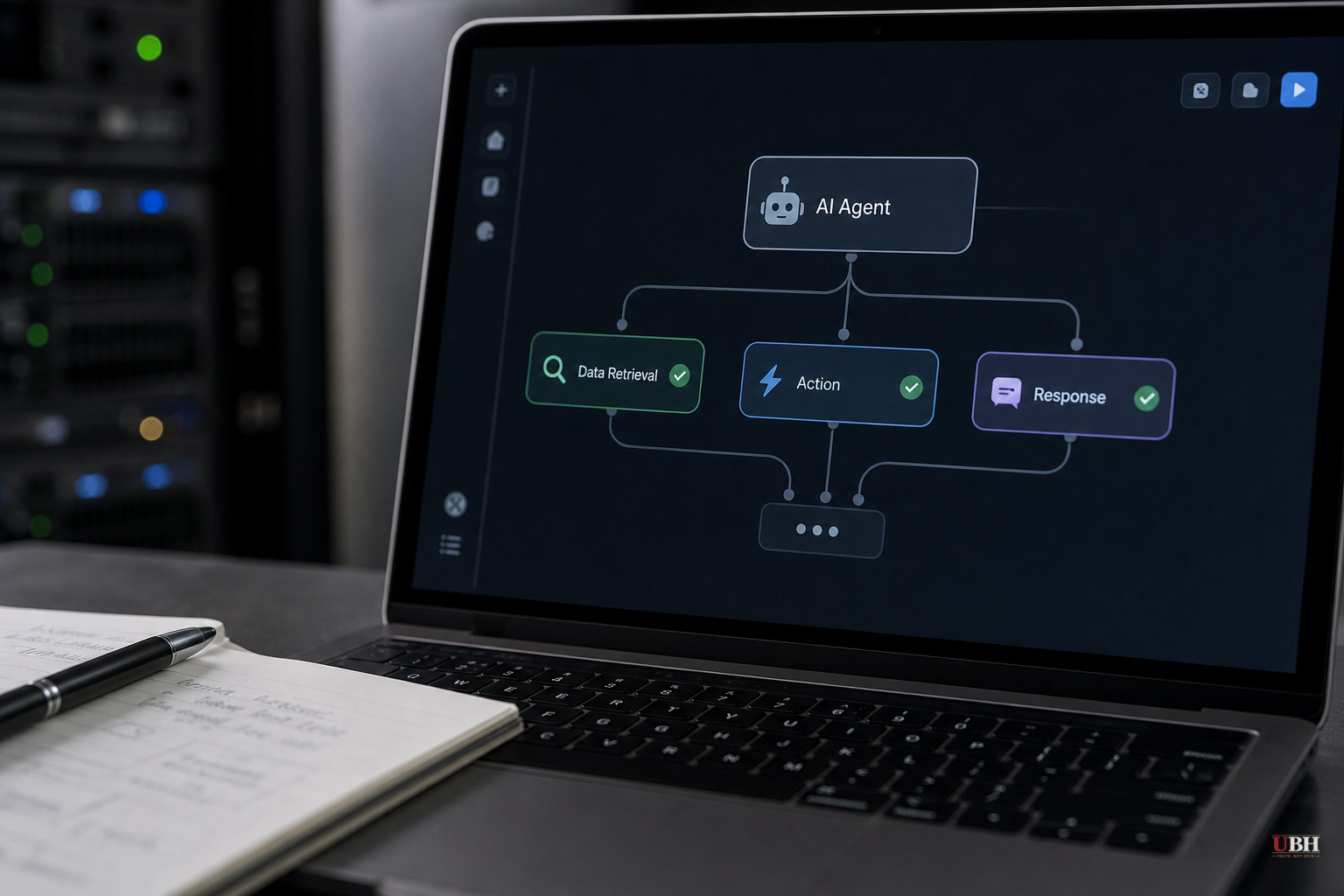
Corporate America bought the AI agent hype. Now the bill is coming due.
VentureBeat Research fielded five surveys in June 2026 covering 573 qualified respondents at companies with 100 or more employees, under its VB Pulse program. The results, published July 24, point to one conclusion: enterprises deployed AI agents before they built the controls to manage them, and in many cases they knew it.
The research measured five things a company needs before it can actually trust an autonomous AI system: who the agent is and what it's allowed to do (identity), whether its work is any good (evaluation), what it costs to run (cost telemetry), what business data it draws on (context), and how multi-step tasks get coordinated (orchestration). Every single layer showed the same gap between what got deployed and what got governed.
Start with the con job at the center of the industry. Seventy-one percent of enterprises said a quarter or fewer of their deployed "agents" can actually complete multi-step work on their own, according to VentureBeat Research. Only 10% said true autonomous agents make up the majority of what they run. Most of what companies are calling AI agents are chatbots with a fancier title. Gartner has a name for this: agentwashing.
That distinction isn't academic. A single-prompt chatbot with a human checking every answer needs none of the security or evaluation infrastructure a real autonomous agent requires. A true agent needs all of it. Most companies surveyed can't say which one they've actually got running in production.
More than half of organizations, 54%, reported a confirmed agent security incident or a near-miss caught before it caused damage, according to the survey data reported by SaaS Sentinel. Eighteen percent confirmed an actual incident happened. Thirty-six percent caught one before it did harm.
The clearest predictor of trouble is credential sharing. Sixty-nine percent of companies let at least some of their AI agents share login credentials, meaning multiple agents operate under a single API key or service account instead of each having its own identity. Companies that allow that anywhere saw a security incident or near-miss at a 63.5% rate, 47 out of 74 organizations. Companies that gave every agent its own scoped identity saw that rate drop to 40.9%, nine out of 22. Only about a third of companies surveyed actually do the latter.
Bigger companies have it worse, not better. Organizations with more than 1,000 employees reported a 63% incident rate compared to 49% for companies with 101 to 1,000 employees. And the safety net is shrinking: sandbox isolation, the practice of limiting how much damage an agent can do if it goes wrong, fell from 35% adoption to 20%.
Meanwhile trust in the systems meant to catch bad agent behavior before it reaches customers is basically nonexistent. Only 5% of respondents say they fully trust their automated evaluations. Half of organizations had an agent pass internal evaluation and then cause a customer-facing failure anyway in the past year. A quarter saw that happen more than once.
None of this is slowing anyone down. Sixty-six percent of enterprises already let some agents push changes to production without human review, or are actively building toward that within 12 months, according to VentureBeat Research. Autonomy is expanding faster than the tools meant to justify giving it.
Enterprises are reaching for a straightforward fix: rip out and replace. Fifty-seven to 68% of enterprises, depending on the control layer, plan to switch AI vendors or add new ones within the next 12 months. Roughly a third plan to make a move within the quarter. That is not a market in steady-state. That's a market of buyers who got burned and are shopping for something that actually works.
One vendor betting it has the answer is Skan AI, a seven-year-old startup that announced a $63 million Series C on Wednesday, co-led by Cathay Innovation and Dell Technologies Capital, with Citi Ventures, Bloomberg Beta, State Farm Ventures, and Wipro Ventures also participating. That brings the company's total funding to roughly $120 million, according to VentureBeat.
Skan's pitch, in the words of co-founder and CEO Avinash Misra, is that the industry has been solving the wrong problem. Companies feed AI agents process documentation and system logs, Misra told VentureBeat, but that documentation describes how work is supposed to happen, not how it actually happens inside a real enterprise. Skan instead builds what it calls a "context graph" by observing employees working across enterprise software directly. "Everyone is obsessed with building a better driver," Misra said. "We think the bigger opportunity is building a better navigation system."
The stakes behind that pitch are backed by numbers Skan cites from Gartner: only 8% of enterprises have AI agents actually running in production, and 95% of early implementations will need a complete redesign. That echoes a widely cited MIT finding from 2025, reported by Fortune, that roughly 95% of enterprise generative AI pilots failed to deliver measurable returns.
The open question is whether better context-mapping solves a governance problem that, per VentureBeat Research's five surveys, looks structural rather than data-related. Feeding an agent a more accurate picture of how work happens doesn't automatically fix credential sharing, absent sandbox isolation, or evaluation systems that only 5% of enterprises trust. Skan AI Blueprint and Skan AI Agents, the two products the company is making generally available alongside the funding round, address the context layer. Identity, evaluation, and orchestration are separate fights enterprises will still have to win on their own.
Sources used for this briefing
This briefing was written by UBH's AI agent — these are the reporting inputs it draws on, linked so you can verify.


