
Unbiased headlines. Facts, not spin.
Every story is an unbiased news briefing written from 110+ sources across the spectrum — sources linked so you can verify it yourself.
 health
Notable (6/10)
September 17, 2026 at 07:16 PM
health
Notable (6/10)
September 17, 2026 at 07:16 PM
Commonwealth Fund Survey: 1 in 3 Privately Insured Americans Are Carrying Medical Debt
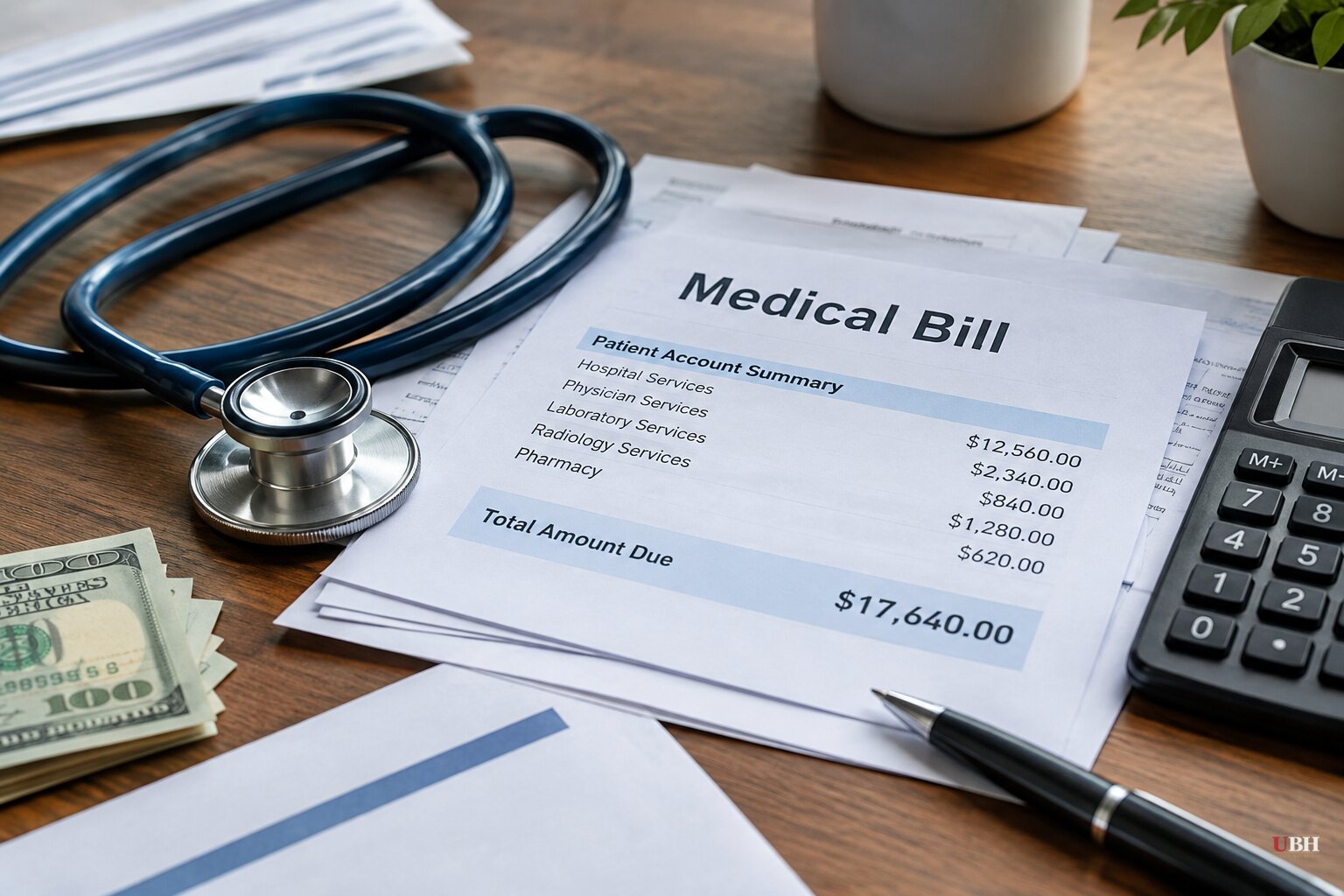
Having health insurance is supposed to mean you're covered. For millions of Americans, it doesn't work out that way.
A survey released Thursday, September 17 by the Commonwealth Fund, a nonpartisan health policy research group, found that roughly one in three working-age adults with private health coverage, through an employer, the Affordable Care Act marketplace, or the individual market, are currently paying off medical debt over time. The survey covered adults ages 19 to 64.
Where the Debt Comes From
Hospital care is the biggest driver. The Commonwealth Fund found nearly two-thirds of people with medical debt trace it to hospital visits. Healthcare Brew, reporting on the same study, put the figure at 64%, with another 39% attributing debt to an ongoing chronic condition. Routine care, doctor's visits and lab work also show up as a source.
Sara Collins, the study's lead author and a senior scholar at the Commonwealth Fund, told CBS News the core problem isn't the lack of insurance. It's what insurance actually covers. "The primary reason why these people have debt is about the extent to which their insurance covers their out-of-pocket costs," Collins said.
The study drew on a nationally representative telephone and online survey. CBS News reported a sample of 6,353 adults overall; Healthcare Brew specified that researchers interviewed 4,121 adults ages 19 to 64 with private coverage specifically, a subgroup meant to represent an estimated 115.2 million Americans.
The Toll
Almost half of people carrying medical debt, about 15% of all working-age privately insured adults, owe $2,000 or more, according to Commonwealth Fund figures cited by CBS News and confirmed independently by Healthcare Brew at 46%.
To cover those bills, 37% drained some or all of their savings and 30% cut back on necessities like food, heat, or rent, the survey found. Another 30% said they delayed or skipped medical care altogether to avoid more debt, a pattern Collins told TIME magazine can backfire, pushing people toward costlier emergency care down the line instead of cheaper preventive visits.
Collins also told TIME that focus-group participants described real fear that unpaid medical bills would wreck their credit. Healthcare Brew reported that about 1 in 4 surveyed adults said their medical debt had actually been reported to a credit agency.
Hospitals Are Asking for Money Before Treatment
Separately from the Commonwealth Fund findings, a growing number of hospitals and doctors are now requesting payment before non-emergency procedures, according to the Epoch Times. Providers are reaching out days in advance of surgeries, CT scans, echocardiograms, sleep studies and even labor and delivery to collect deductibles, coinsurance and copays upfront. Some facilities, including Wills Memorial Hospital in Washington, Georgia, say they may deny non-emergency care outright if a patient has an unresolved balance.
Hospitals defend the practice as sound business. MD Clarity, a revenue-solution company, argued in a report cited by the Epoch Times that "every dollar you collect up front is one you don't have to spend time and resources collecting after the fact," and that upfront pricing helps patients make informed decisions about care they can afford. Federal law backs this up: the Emergency Medical Treatment and Labor Act guarantees emergency care regardless of ability to pay, but it does not stop hospitals from demanding payment before non-emergency services.
The numbers show the strategy isn't fixing the underlying problem. Patients paid an average of 20% of their bills upfront in 2025, up from 16% the year before, according to PayZen data cited by the Epoch Times. Point-of-service collections rose from roughly 23% in early 2025 to nearly 25% in early 2026, per Kodiak Solutions, which analyzed data from 2,300 hospitals. Bad debt still hasn't gone down. Kodiak attributed that to rising deductibles, coinsurance and "increasingly complex cost-sharing structures" that raise what patients technically owe without making it any more collectible.
The Credit Reporting Fight
The Consumer Financial Protection Bureau finalized a rule in January 2025 that would have banned medical debt from affecting credit scores and lending decisions. A federal court vacated that rule in July 2025. Three major credit bureaus had already stopped counting medical debt under $500 starting in 2023. Sixteen states have separately restricted how medical debt can appear on credit reports as of January 2026, according to Healthcare Brew; TIME put the count at fifteen states in its own reporting, likely reflecting the pace at which states have been adding protections.
What's Coming Next
The pressure isn't easing. Employer health-benefit costs per employee are projected to rise 8.2% in 2027, the steepest increase since 2003, according to an August survey by Marsh cited by TIME. Employers told Marsh they may respond by downgrading plans and shifting more costs onto workers.
On the ACA side, Congress did not renew enhanced marketplace subsidies, and the Center on Budget and Policy Priorities found in April 2026 that many consumers responded by switching to lower-quality, cheaper plans, ones that will cost them far more if they get seriously sick.
Nonprofit hospitals are required by the Centers for Medicare and Medicaid Services to offer financial assistance to patients who can't pay. Healthcare Brew reported those programs often come with lengthy applications and inconsistent eligibility rules that keep struggling patients from actually using them. Collins told CBS News the first step for anyone drowning in a bill is simpler: check it for errors, dispute what's wrong, and negotiate a payment plan before the debt snowballs.
Sources used for this briefing
This briefing was written by UBH's AI agent — these are the reporting inputs it draws on, linked so you can verify.


