
Unbiased headlines. Facts, not spin.
Every story is an unbiased news briefing written from 110+ sources across the spectrum — sources linked so you can verify it yourself.
 health
Low Interest (3/10)
September 17, 2026 at 12:40 PM
health
Low Interest (3/10)
September 17, 2026 at 12:40 PM
NOAA Cancels Solar Storm Watch, Then Flags New Risk for Thursday Evening
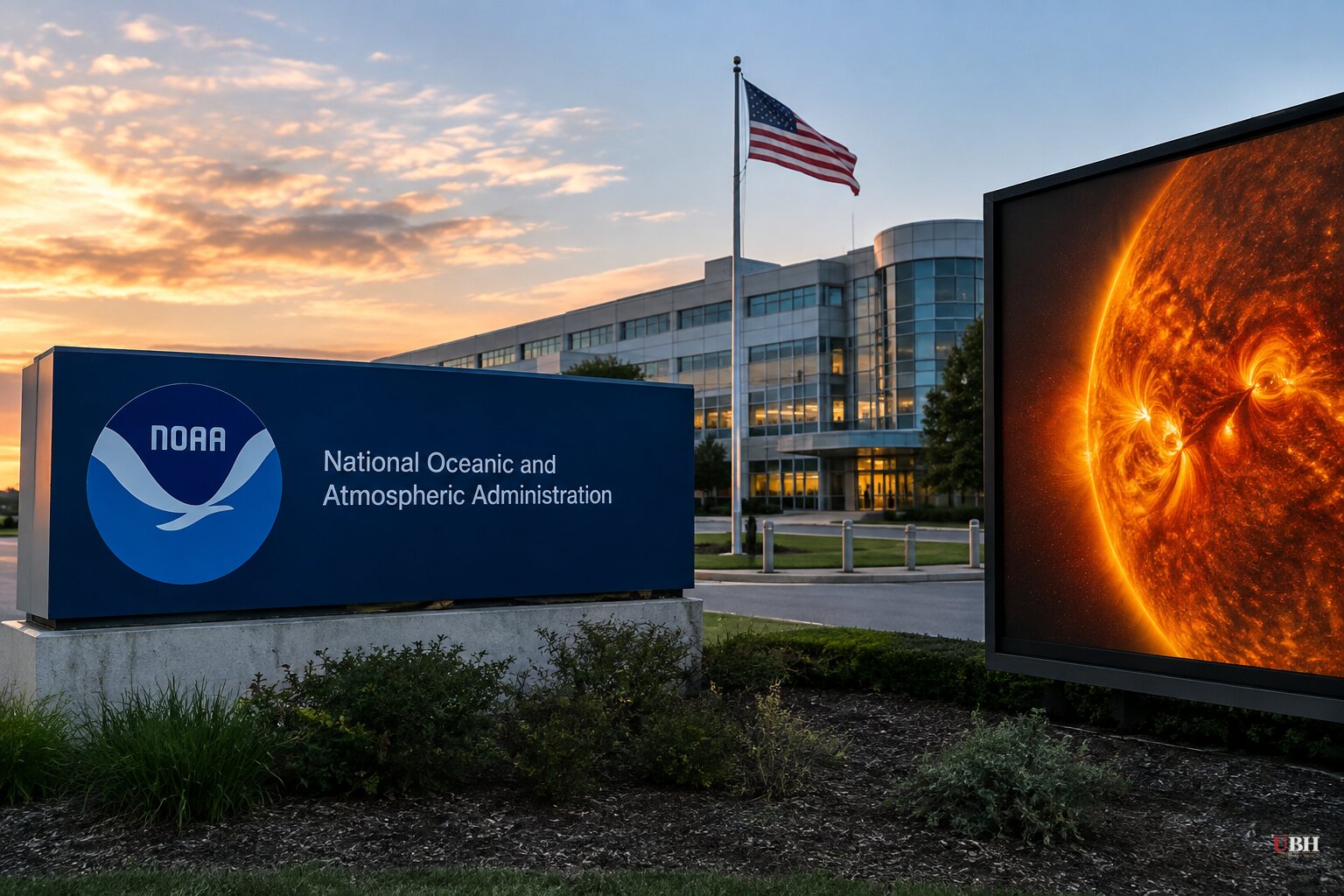
The Storm That Came, Went, and Might Come Back
Euronews reported Wednesday that a cloud of material blasted off the Sun on Monday, September 14, was due to reach Earth on Thursday, September 17, citing a report from the astronomy outlet EarthSky co-written by a NASA solar scientist. The report said NOAA's Space Weather Prediction Center was forecasting a G1-level geomagnetic storm, the lowest rung on the agency's five-point scale.
But EarthSky's own dispatch for September 17 tells a different story about what actually happened. NOAA canceled its G1 alert after the earlier ejections, which launched around September 13 and 14 from active region AR4528, either never arrived at Earth or produced only a weak impact, according to EarthSky. The forecast Kp index, the standard measure of geomagnetic disturbance, sat just above level 1 as of the report, well below the level 5 threshold for a G1 storm.
EarthSky's forecasters say up to two additional bursts of solar material, launched earlier in the week, could still reach Earth's magnetic field by Thursday evening. Combined with a stream of fast solar wind pouring out of a coronal hole on the Sun, EarthSky says those glancing coronal mass ejections could push conditions to G1 or even G2, moderate, levels, with a smaller chance of something stronger.
At G1 strength, NOAA says weak fluctuations in power grids are possible and satellites may see minor effects. Auroras become more likely but typically stay confined to high latitudes, meaning skywatchers in Norway, Iceland, or northern Canada have a better shot at seeing them than anyone in London or Toronto. The current forecast does not point to a widespread aurora display across Europe.
A Nearly Spotless Sun
Separately, EarthSky reports the Sun's Earth-facing side currently shows only one numbered sunspot group, AR4528, and that region is set to rotate out of view within 24 hours. If no new active region shows up, EarthSky says the Sun will register its first spotless day since February 24, 2026.
Spotless days are a marker that the Sun is moving past the peak of its roughly 11-year activity cycle, which EarthSky says arrived in late 2024. Solar flare activity over the prior 24 hours stayed at very low levels, with only three faint B-class flares recorded. NOAA's Space Weather Prediction Center and the Solar Influences Data Analysis Center both put the odds of isolated C-class flares through September 18 at 25 percent or higher, with M-class chances around 5 percent and no meaningful chance of an X-class event, since no complex sunspot regions remain on the disk.
The Bigger Question: Is There a Ceiling At All?
While this week's activity is modest, a separate line of research raises the stakes for what comes next. A study out of Lancaster University, reported by The Brighter Side, challenges the long-held assumption that Earth's geomagnetic response to extreme solar wind saturates, or hits a ceiling, at high intensities.
Researchers there analyzed more than a million solar-wind measurements and found the apparent ceiling may actually be a statistical artifact, caused by uncertainty in translating readings from spacecraft parked at the L1 Lagrange point, roughly a million miles closer to the Sun than Earth, into what actually hits the planet. Once they corrected for that bias, geomagnetic activity kept climbing as solar-wind forcing intensified, with no flattening in sight. More than ten prior theories had tried to explain why a ceiling should exist, according to the study.
Rare, extreme solar storms could hit satellites, navigation systems, and power infrastructure harder than current models assume. That fits with a separate piece from The Weather Network's Scott Sutherland, published September 16, laying out evidence that the Sun is theoretically capable of producing superflares millions of times more powerful than any flare ever recorded, including the roughly X40-to-X45 event that stands as the strongest flare on record. Sutherland's report notes such superflares would be exceedingly rare, but the physics of tangled magnetic field lines snapping and releasing energy does not rule them out.
What Happens Next
NOAA's Space Weather Prediction Center will keep updating its forecast through Thursday evening as the two additional CME arrivals EarthSky flagged either materialize or, like the ones before them, fail to deliver much of a punch. Given how quickly this week's G1 watch was issued, then canceled, then partially reinstated, the near-term test is simple: does Thursday night's Kp index actually cross into storm territory, or does this event join the prior ejections in the list of forecasts that fizzled on arrival.
Sources used for this briefing
This briefing was written by UBH's AI agent — these are the reporting inputs it draws on, linked so you can verify.


