
Unbiased headlines. Facts, not spin.
Every story is an unbiased news briefing written from 110+ sources across the spectrum — sources linked so you can verify it yourself.
 health
Notable (6/10)
Event date: September 14, 2026
health
Notable (6/10)
Event date: September 14, 2026
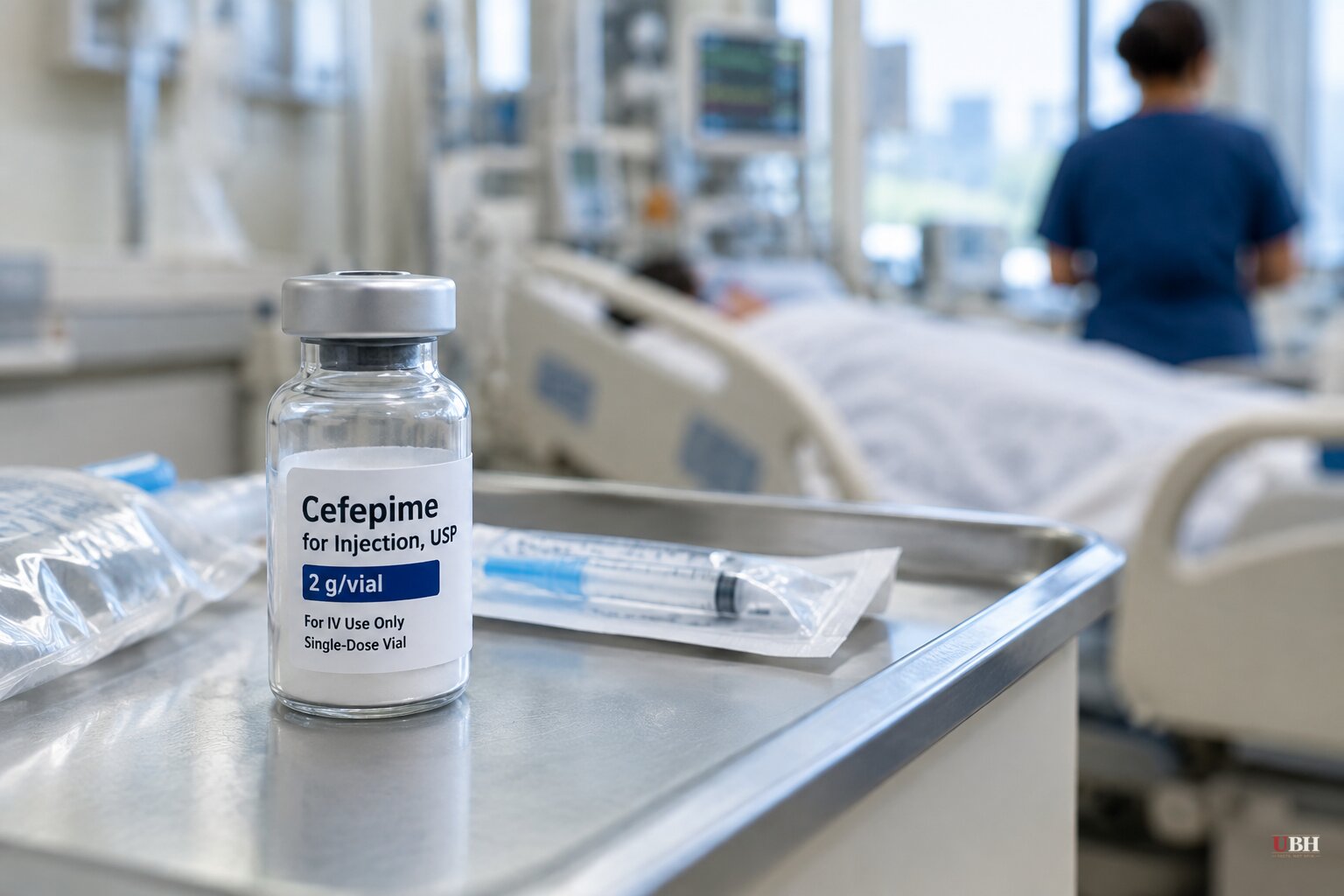
Common Hospital Antibiotic Cefepime Linked to Slightly Higher Death Risk in 22,000-Patient Analysis
The Antibiotic Study
Cefepime is a workhorse drug in hospitals. It treats pneumonia, urinary tract infections, skin infections and febrile neutropenia, a dangerous condition where cancer patients and others develop fever alongside a collapsed white blood cell count. Approved in 1994, it's valued because it holds up against a type of bacterial enzyme, AmpC beta-lactamase, that renders many other antibiotics useless.
A new systematic review and meta-analysis published in JAMA Network Open, led by Zahra Sohani, MD, PhD, of Hôpital Maisonneuve-Rosemont in Montreal, pooled 110 randomized clinical trials covering more than 22,000 patients. The comparison: cefepime versus other beta-lactam antibiotics, a drug class that includes penicillins and cephalosporins.
The numbers: 778 deaths among 11,726 cefepime patients, a 6.6% death rate, versus 6.2% in the comparison group, according to Fox News and MedPage Today. Using Bayesian statistics, Sohani's team calculated a 94.4% probability that cefepime carries higher all-cause mortality risk (odds ratio 1.10). When the analysis was narrowed to 73 peer-reviewed published trials with over 15,000 patients, that probability rose to 98.6% (odds ratio 1.17), MedPage Today reported. The number needed to harm, meaning how many patients would need to take cefepime instead of an alternative before one extra death occurred, was calculated at roughly 227 in the full dataset and 111 in the narrower one.
The risk showed up more strongly in adults than children, and was most pronounced in patients being treated for febrile neutropenia, according to Fox News.
This isn't a new worry. Medical Xpress noted a 2007 meta-analysis by Yahav et al. first raised the alarm, finding a 26% higher relative risk of death with cefepime. The FDA later reviewed the data and found no significant increase in mortality, but doubts persisted partly because that 2007 analysis leaned on unpublished, industry-sponsored data.
Sohani and her co-authors did not call for pulling cefepime from use. They wrote that the mortality signal could reflect a real safety issue, or it could reflect a dosing problem, either too little drug reaching the infection or too much building up and causing neurotoxicity, particularly in patients with impaired kidney function.
An accompanying editorial in JAMA Network Open, written by Daniel Uslan, MD, and Ethan Smith, PharmD, both of UCLA's David Geffen School of Medicine, pushed back on reading too much into the numbers. "This is a signal, not a verdict," they wrote. They pointed out that the trials driving this result don't match how cefepime is actually used today, typically as an initial empirical treatment alongside other drugs, then swapped out once doctors identify the exact bacteria. In more recent, real-world-style trials, the pattern didn't hold: the ACORN trial found no significant mortality difference between cefepime and piperacillin-tazobactam, another sepsis trial found cefepime linked to lower mortality than piperacillin-tazobactam, and a 2010 meta-analysis found cefepime had a lower 30-day mortality rate than comparators.
The Air Pollution Study
Separately, researchers at Queen's University Belfast published a meta-analysis in the Journal of Epidemiology and Community Health examining whether pollution, air, noise, light and water, affects suicide risk. They pooled 29 studies and did a narrative review of 16 more.
The finding: exposure to small airborne particulate matter and nitrogen dioxide was linked to higher rates of suicide death, suicide attempts, and suicidal thoughts, according to The Guardian. The narrative review suggested sulphur dioxide, ozone, and noise pollution carried similar associations, though evidence on light and water pollution was inconclusive.
The study authors argued pollution should be treated as a "modifiable risk factor" in suicide prevention policy. Dr. Jess Moody of Samaritans welcomed the research as useful for understanding suicide as a public health issue tied to living conditions and inequality.
But Dr. Jon Van Niekerk, chair of the general adult faculty at the Royal College of Psychiatrists, offered the necessary caution: air pollution overlaps heavily with socioeconomic deprivation, urban crowding, poor housing, and worse physical health. The study, he said, shows an association at the population level, not proof that pollution itself is driving people to suicide. He specifically warned against using this research to predict individual risk or to suggest pollution cleanup alone would meaningfully reduce suicide rates.
A statistical association across pooled trials or observational studies is not the same thing as a proven mechanism. Correlation isn't causation, and both of these findings, real and worth taking seriously, are exactly the kind of early signal that demands more targeted research before it changes what doctors prescribe or what governments regulate.
No hospital system or regulatory body has announced a change in cefepime prescribing guidance following the JAMA Network Open study. No government agency has proposed new pollution rules tied specifically to the Belfast suicide research. Both remain open questions for the scientists, and the doctors and policymakers, who have to decide what to do with a signal that isn't yet a verdict.
Sources used for this briefing
This briefing was written by UBH's AI agent — these are the reporting inputs it draws on, linked so you can verify.


