
Unbiased headlines. Facts, not spin.
Every story is an unbiased news briefing written from 110+ sources across the spectrum — sources linked so you can verify it yourself.
 economy
Major Story (8/10)
July 30, 2026 at 07:12 PM
economy
Major Story (8/10)
July 30, 2026 at 07:12 PM
Commerce Department Adds Six More Companies to Federal Equity Portfolio, Bringing Total to 30
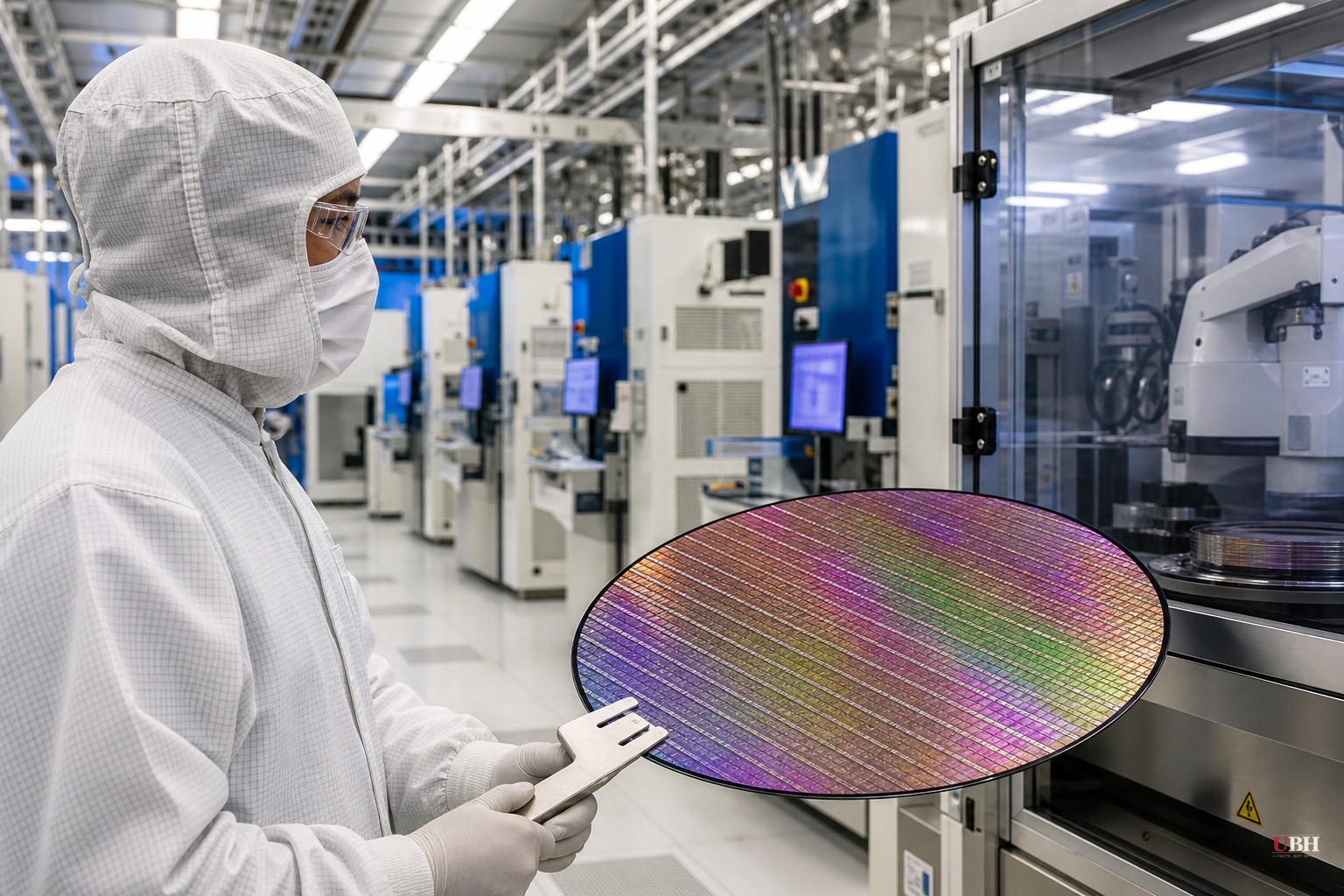
The federal government just added six more companies to its stock portfolio. This isn't a bailout. It's the new normal for how the Trump administration hands out CHIPS Act money.
The Commerce Department announced this week that seven nonbinding letters of intent will provide up to $874 million in CHIPS and Science Act research and development incentives, according to Cato Institute analysis of the announcement. Six of the seven companies are new to the government's books. The seventh, GlobalFoundries, already has a Commerce equity stake tied to a separate $375 million quantum foundry award.
Commerce says a minority, noncontrolling equity stake in each company will be a required condition before any final funding goes out.
By Cato's count, that brings the government's total corporate holdings to roughly 30 companies. Since December 2025, the CHIPS Research and Development Office has announced 19 final or proposed awards worth up to $3.8 billion, covering 18 companies. Three of those deals are final. Sixteen are still letters of intent. Every single one comes with an equity stake attached.
A Deliberate Policy Choice, Not an Accident
This is not how the CHIPS Act money moved under the previous administration. The Biden administration used the same CHIPS R&D appropriation to fund private companies through competitive awards without taking ownership stakes, according to Cato. The Trump administration's insistence on equity, warrants, royalties, or revenue-sharing as a funding condition is a deliberate departure.
The CHIPS Act authorizes Commerce to issue grants, cooperative agreements, and "other transactions." It does not explicitly authorize the department to acquire stock. Commerce is doing it anyway, and nobody in Congress has moved to stop it.
Commerce's stated rationale is straightforward: generate a return for taxpayers on money that's going out the door regardless. If the semiconductor and critical-minerals companies succeed, the government's stake pays off, and that money theoretically flows back to the public rather than just being a pure grant with nothing to show for it.
That's a fair pitch. Nobody wants Washington writing checks and getting stiffed if a company hits it big five years later.
The Critical Minerals Piece
The equity strategy isn't confined to semiconductors. It's showing up hard in critical minerals, where the national security argument is even more direct.
China refines 91% of the world's rare earths and dominates lithium, cobalt, and manganese production, according to the International Energy Agency. China surpassed the U.S. in rare earth production back in 1986 through heavy state subsidies, and it has used that leverage as a trade weapon, imposing export controls on gallium and germanium in 2023, according to Cronkite News.
Mike Kuiken, vice chair of the U.S.-China Economic and Security Review Commission, put the stakes bluntly to Cronkite News: "Every weapon system and platform we have, from submarines to fighters to missiles, carries anywhere from tens to thousands of pounds of critical minerals and rare earths." His point: relying on America's primary adversary for the materials that build Tomahawk missiles and stealth coatings isn't a business risk. It's a national security risk.
Trump signed an executive order on July 20 restricting defense contractors from sourcing materials from adversary nations and ordering the Pentagon to identify and mitigate supply chain risks, according to Cronkite News.
The money is already flowing. From January 2025 through June 30, 2026, the federal government invested $10 billion in the critical minerals sector, according to the Council on Foreign Relations U.S. Government Deal Tracker. Assistant Secretary of Defense Michael Cadenazzi told the Senate Armed Services Committee in February that the Pentagon is "actively seeking new opportunities to invest in everything from antimony and tungsten to manganese and beryllium."
Mining executives aren't complaining. USA Rare Earth CEO Barbara Humpton told investors in May, "I am very bullish on the demand signal being strong. The only question we have to our team is, 'How fast can we move?'"
The Conflict Nobody's Talking About
The federal government is now simultaneously the regulator, the customer, the financier, and the shareholder for the same companies. That creates a genuine conflict of interest.
Every decision Washington makes on trade restrictions, permits, contracts, or additional subsidies can move the value of its own equity stakes. If Commerce owns a piece of a chipmaker, and Commerce also decides whether that chipmaker's Chinese competitor faces tariffs, the incentives are no longer neutral.
Competitors that didn't take government money have reason to ask whether they're now competing against a company that has Washington's thumb on the scale. And if a portfolio company stumbles, the government has a built-in incentive to prop it up with more taxpayer money rather than let it fail, since failure now means the government loses its own investment too.
Calling the stakes "minority" and "noncontrolling," as Commerce does, doesn't make those conflicts disappear. It just means Washington owns less of the problem while still owning the incentive.
There's also a longer-term wrinkle nobody's really grappled with: this tool doesn't expire when Trump leaves office. Whoever holds Commerce next inherits the same authority and the same 30-plus-company portfolio, and can start assembling stakes reflecting a completely different set of political priorities. Congress has not weighed in on whether Commerce should have this power at all, let alone how it should be governed once a company's stock is on the federal balance sheet.
Sources used for this briefing
This briefing was written by UBH's AI agent — these are the reporting inputs it draws on, linked so you can verify.


