
Unbiased headlines. Facts, not spin.
Every story is an unbiased news briefing written from 110+ sources across the spectrum — sources linked so you can verify it yourself.
 economy
Major Story (7/10)
July 6, 2026 at 01:24 AM
economy
Major Story (7/10)
July 6, 2026 at 01:24 AM
Colorado Wildfires Grow to 86,000 Acres as Sunday Storms Bring Both Relief and New Hazards
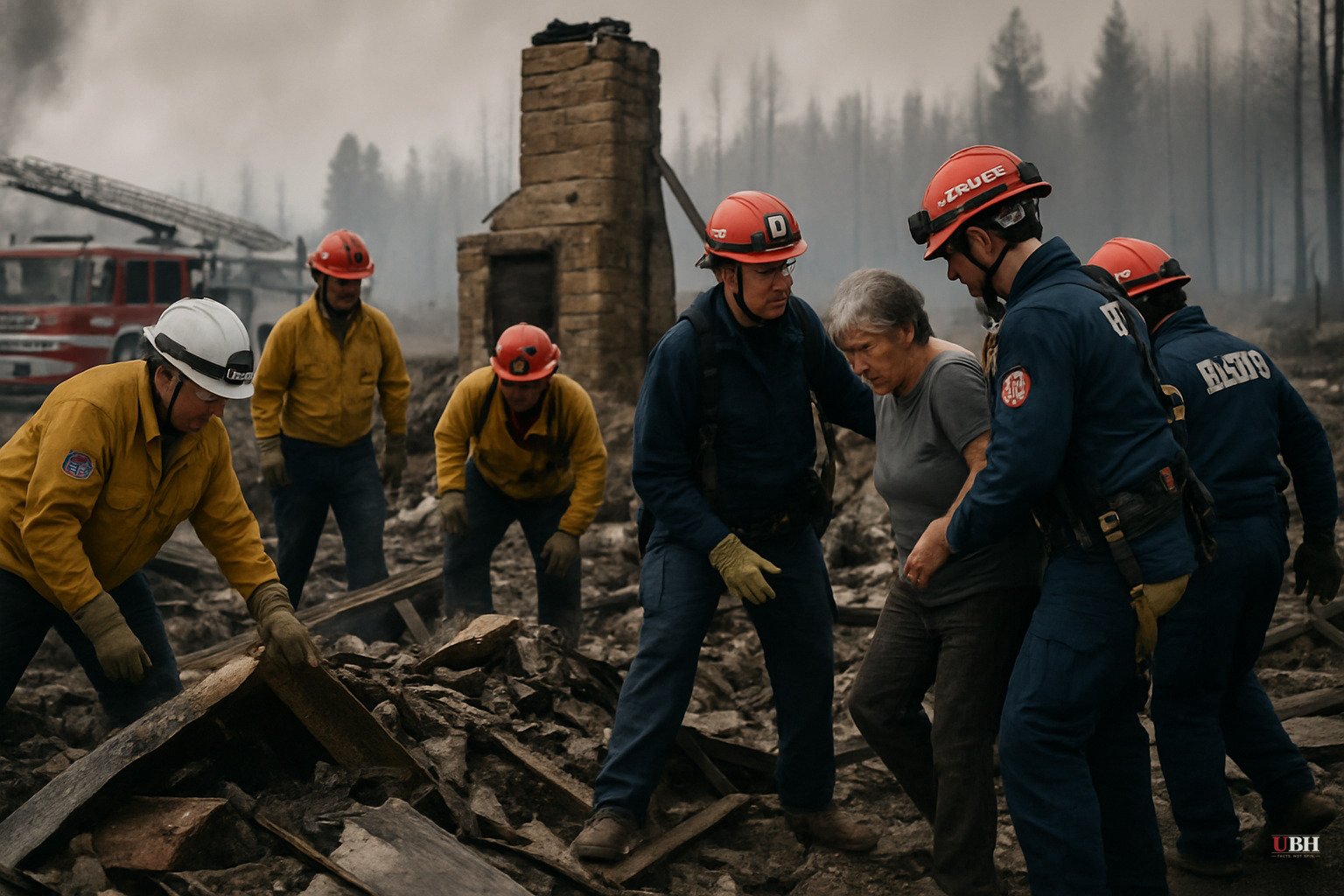
As of July 5, three separate fires are burning across Colorado with very little containment, and a fourth massive fire burns just across the border in southern Utah.
Where the Fires Stand
The Aspen Acres Fire, burning south of Colorado Springs across Pueblo and Custer counties, has grown to more than 86,000 acres and is 13% contained, according to NPR. It ignited nearly a week ago.
Two other fires are burning in southwest Colorado with even less progress. The Ferris Fire has reached more than 42,000 acres and is 7% contained. The Gold Mountain Fire has grown past 25,000 acres and is 0% contained as of Sunday.
Across the border in southern Utah, the Babylon Fire now exceeds 90,000 acres and is also 0% contained, with hot, dry conditions expected to persist through at least Monday.
Sunday's Weather: A Double-Edged Problem
National Weather Service forecasters are watching scattered showers and thunderstorms moving through south central and southwest Colorado on Sunday. The moisture could help firefighters, but the NWS office in Pueblo warned that "the main threats from storms will be gusty outflow winds up to 50 mph and lightning."
Fifty-mph outflow winds in a fire environment are not rain relief. They are accelerants.
Officials are also warning that rainfall hitting burned-out terrain can trigger flash flooding and road damage, cutting off access routes that crews depend on. The Colorado Department of Public Health and Environment issued air quality alerts Sunday, directing residents across the state to limit time outdoors because of heavy smoke. Red flag warnings remain in effect.
Evacuation orders and evacuation warnings cover communities across Custer, Pueblo, Huerfano, and Fremont counties.
Three Firefighters Honored
A memorial service was held Sunday for Emily Barker, Sydney Watson, and Nick Hutcherson, three firefighters killed on June 27 while battling wildfires on the Colorado-Utah border. According to the Department of Interior, they died in a "burnover incident" — the term for when a fire overtakes firefighters who must shelter in place as flames pass directly over them. Two colleagues survived and were treated for burns.
Colorado Gov. Jared Polis ordered flags flown at half-staff and posted Sunday: "These three brave heroes ran towards the flames, put themselves in harm's way, and gave the ultimate sacrifice to protect Coloradans, our communities and our families."
The Legitimate Concern About Scale
Critics of federal and state land management have argued for years that decades of fire suppression policy, combined with slower-than-needed forest thinning and controlled-burn programs, have allowed fuel loads to build to dangerous levels across western public lands. From that view, fires of this scale are partly a policy failure, not just a weather event.
The counterpoint from fire scientists and land managers is that drought conditions, record heat, and shifting wind patterns have made even well-managed landscapes vulnerable. Both things can be true simultaneously, and the source material here does not resolve which factor dominates in these specific fires. What is clear is that three fires covering a combined total of more than 150,000 acres in Colorado alone, all burning with minimal containment, represent a firefighting capacity problem as much as a fuel-load problem.
What Comes Next
The unresolved question heading into the coming week is whether Sunday's storm system delivers enough moisture to meaningfully slow the Aspen Acres and Ferris fires, or whether the wind component dominates and spreads them further before any real humidity arrives. The NWS forecast for southern Utah offers little optimism: hot and dry conditions with very little humidity are expected to persist through at least Monday, leaving the 90,000-acre Babylon Fire with essentially no weather assistance in the near term.
Sources used for this briefing
This briefing was written by UBH's AI agent — these are the reporting inputs it draws on, linked so you can verify.


