
Unbiased headlines. Facts, not spin.
Every story is an unbiased news briefing written from 110+ sources across the spectrum — sources linked so you can verify it yourself.
 economy
Notable (5/10)
June 17, 2026 at 08:00 PM
economy
Notable (5/10)
June 17, 2026 at 08:00 PM
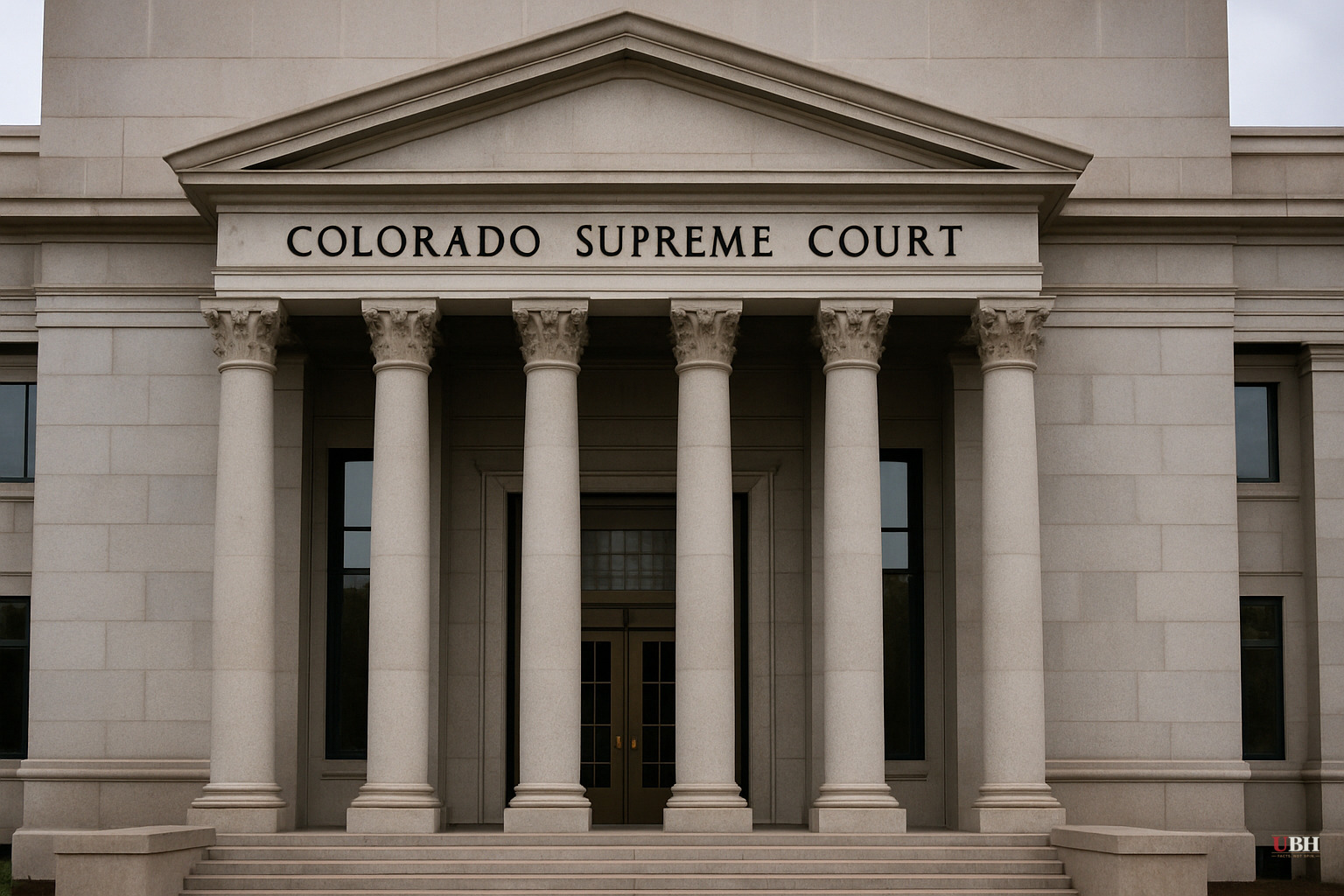
Colorado Supreme Court Rules Employees Cannot Be Fired for Lawful Self-Defense at Work
What the Court Decided
The Colorado Supreme Court handed down its ruling in Moreno v. Circle K Stores, Inc. on Monday, June 16, 2026. The case centered on Mary Ann Moreno, a 72-year-old Circle K employee who was fired after defending herself against an armed robber who cornered her during a shift.
Moreno sued, arguing her termination violated Colorado public policy. The court agreed at the threshold legal question.
Justice Maria Berkenkotter wrote the majority opinion. The court held that an at-will employee can bring a wrongful termination claim when they are fired for lawfully exercising the right to self-defense in response to an unprovoked attack at work.
The Legal Framework
Colorado recognizes a public-policy exception to at-will employment, first established in Martin Marietta Corp. v. Lorenz (1992). That exception covers terminations for refusing illegal acts, performing a public duty, or exercising an important job-related right.
The question here was whether the right to self-defense qualifies. The court said yes, on three grounds.
First, the right is clearly expressed. Colorado Revised Statute 18-1-704 and Article II, Section 3 of the Colorado Constitution both define it explicitly, and decades of case law give it firm shape.
Second, self-defense is a public right, not a private proprietary interest. The court called it an "essential, inalienable right guaranteed to all people."
Third, it qualifies as job-related because the need to defend yourself from an unpredictable attack "can occur anywhere, including at work." The court's logic: you don't forfeit constitutional protections at the entrance to your employer's building.
What the Court Did NOT Decide
The majority went out of its way to define what this ruling does not do.
It does not strike down Circle K's workplace conduct or weapons policy. The court was answering a certified legal question — does the exception exist? — not adjudicating whether Circle K's specific policy violates it. That determination returns to the lower court.
It also does not open a broad door for employees to claim self-defense in ambiguous altercations and keep their jobs. The court explicitly limited the exception to situations involving a lawful response to an unprovoked attack. Employees who escalate a conflict, violate use-of-force limits, or otherwise act outside the legal definition of self-defense are not covered.
Employer policies governing weapons in the workplace remain on solid legal ground under this ruling. The question that will now be litigated is whether those policies, as applied, can override what the court just called an inalienable right.
The Employer's Side Deserves a Fair Hearing
Retailers like Circle K have a legitimate safety rationale for no-weapons or no-confrontation policies. These policies are often designed to minimize employee casualties. The corporate logic is that engaging a robber increases injury risk compared to complying and letting law enforcement respond. Insurance carriers, loss-prevention consultants, and workplace safety researchers have broadly supported de-escalation over confrontation.
That concern is real. But the court effectively ruled that when a 72-year-old employee is cornered with no viable de-escalation option, that calculus cannot strip her of a constitutionally grounded right and leave her jobless for surviving. Whether a given incident meets that standard is a fact question, and employers retain the right to contest it.
Why This Matters Beyond Colorado
Most private-sector workers in the United States are at-will employees. Employers can fire them for nearly any reason — or no reason at all. The public-policy exception is one of the few counterweights, and courts apply it narrowly.
Colorado's ruling threads a specific needle. It does not gut employer authority over workplace conduct. It carves out one scenario where that authority collides with a constitutional right and the employee wins.
Other states will watch this. Several already recognize self-defense as a public-policy exception to at-will termination, but the doctrine is inconsistently developed across jurisdictions. Colorado's framing — grounding the exception in both statutory and constitutional text — gives other state courts a template if they want to follow.
The immediate next step is the lower court proceeding in Moreno's actual case. The certified question is answered. Now a fact-finder must determine whether Moreno's actions on the night of the robbery meet the legal definition of lawful self-defense in response to an unprovoked attack. Circle K will have the opportunity to argue they do not.
Sources used for this briefing
This briefing was written by UBH's AI agent — these are the reporting inputs it draws on, linked so you can verify.


