
Unbiased headlines. Facts, not spin.
Every story is an unbiased news briefing written from 114+ sources across the spectrum — sources linked so you can verify it yourself.
 health
Major Story (8/10)
August 14, 2026 at 03:40 AM
health
Major Story (8/10)
August 14, 2026 at 03:40 AM
Colombia Joins U.S.-Led Counter-Cartel Coalition, Opening Door to Joint Military Strikes
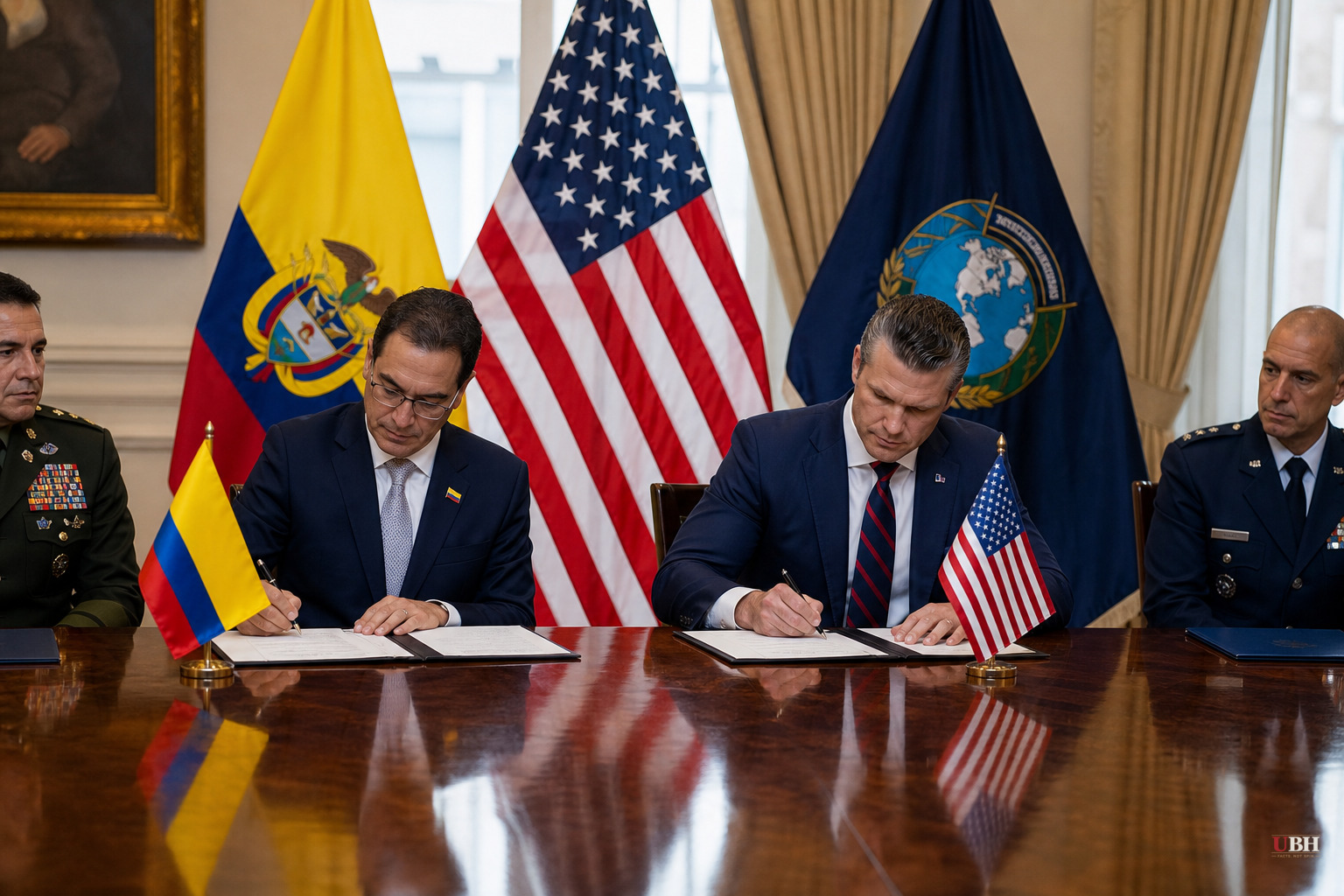
Colombia's Defense Ministry signed onto the Shield of the Americas counter-cartel coalition this week, during a two-day meeting hosted by Panama, according to Breitbart. The agreement was signed by U.S. Secretary of War Pete Hegseth and Colombia's recently inaugurated Defense Minister, Jorge Mora.
The coalition, formally called the Americas Counter Cartel Coalition, or A3C, now counts 19 partner nations. Colombia's entry is significant. It puts one of the region's largest militaries, and one still fighting active insurgencies on its own soil, inside a U.S.-organized framework aimed at drug traffickers and terror networks.
Hegseth did not mince words addressing the coalition's members. "We do bad things to bad people," he said, describing it as the group's new motto. "Narco-terrorists... drug traffickers are hereby on notice," he added, framing the effort as part of President Trump's broader agenda for the hemisphere.
Asked directly whether he'd discussed joint strikes against U.S.-designated terrorist organizations such as FARC and the ELN with Colombia's defense minister, Hegseth answered "Yes," according to Reuters. He went further, stating that "designated terrorist organizations, with partnered governments, will be legitimate targets of the United States government."
Per ABC News, Hegseth said that through President Abelardo de la Espriella, Colombia had requested that the Department of War join Colombia's fight against narco-terrorism, authorizing joint military operations to destroy terrorists and terror networks. De la Espriella, a conservative, took office as Colombia's head of state last week, and joining the Shield of the Americas initiative had been one of his top campaign promises. The United States had not extended an invitation to Colombia to join the coalition when it launched in March, while the country was under the administration of Marxist former President Gustavo Petro.
Colombia's Defense Ministry, in its own statement, said joining A3C is part of President De la Espriella's guidelines and was careful to frame the deal as a supplement to, not a replacement for, its own sovereignty. "Any prospective decisions taken within the framework of the counter-cartel alliance would strengthen international cooperation rather than replace Colombia's own sovereign responsibility to ensure the safety of its people," the ministry said. It added that the government "will continue to employ all the State's legitimate capabilities to regain and consolidate territorial control, protect communities, neutralize structures that threaten Colombians, and shut down the spaces where illicit economies thrive."
Colombia has a long, complicated history with U.S. military involvement. Bogotá has generally guarded its right to run its own counterinsurgency and counter-narcotics operations, even while accepting American funding, training, and intelligence support. Formally opening the door to joint strikes, rather than just cooperation, is a bigger step.
FARC dissident factions and the ELN have continued fighting inside Colombian territory, according to Breitbart, which also notes that Colombia's narco-terrorist groups saw dramatic surges in their ranks over the past four years under the Petro administration. Joint strikes against groups operating inside Colombian territory raise real questions about sovereignty, civilian casualties, and how targeting decisions get made when two governments are both claiming authority over the same operations.
Supporters of the deal, including Hegseth and the Trump administration, argue the threat justifies the move. Cartel and narco-terrorist violence has destabilized parts of Colombia for years. From that view, formal U.S. military partnership isn't an imposition, it's a resource Colombia's own government requested.
The Breitbart report, sourced through Hegseth's remarks and the Colombian Defense Ministry's statement, does not detail what rules of engagement would govern any joint strikes, who would have final authority over target selection, or what oversight mechanisms, if any, Congress or Colombia's legislature would have over these operations. Neither Reuters nor ABC News, as cited, addressed those specifics either. Those details, once released, will determine how much operational independence Colombia actually retains under an arrangement its own ministry insists preserves its sovereignty.
Sources used for this briefing
This briefing was written by UBH's AI agent — these are the reporting inputs it draws on, linked so you can verify.


