
Unbiased headlines. Facts, not spin.
Every story is an unbiased news briefing written from 110+ sources across the spectrum — sources linked so you can verify it yourself.
 economy
Major Story (7/10)
August 12, 2026 at 06:25 AM
economy
Major Story (7/10)
August 12, 2026 at 06:25 AM
Colombia Earthquake: Confirmed Dead Passes 180 But Civilian Records Put Missing Near 4,000
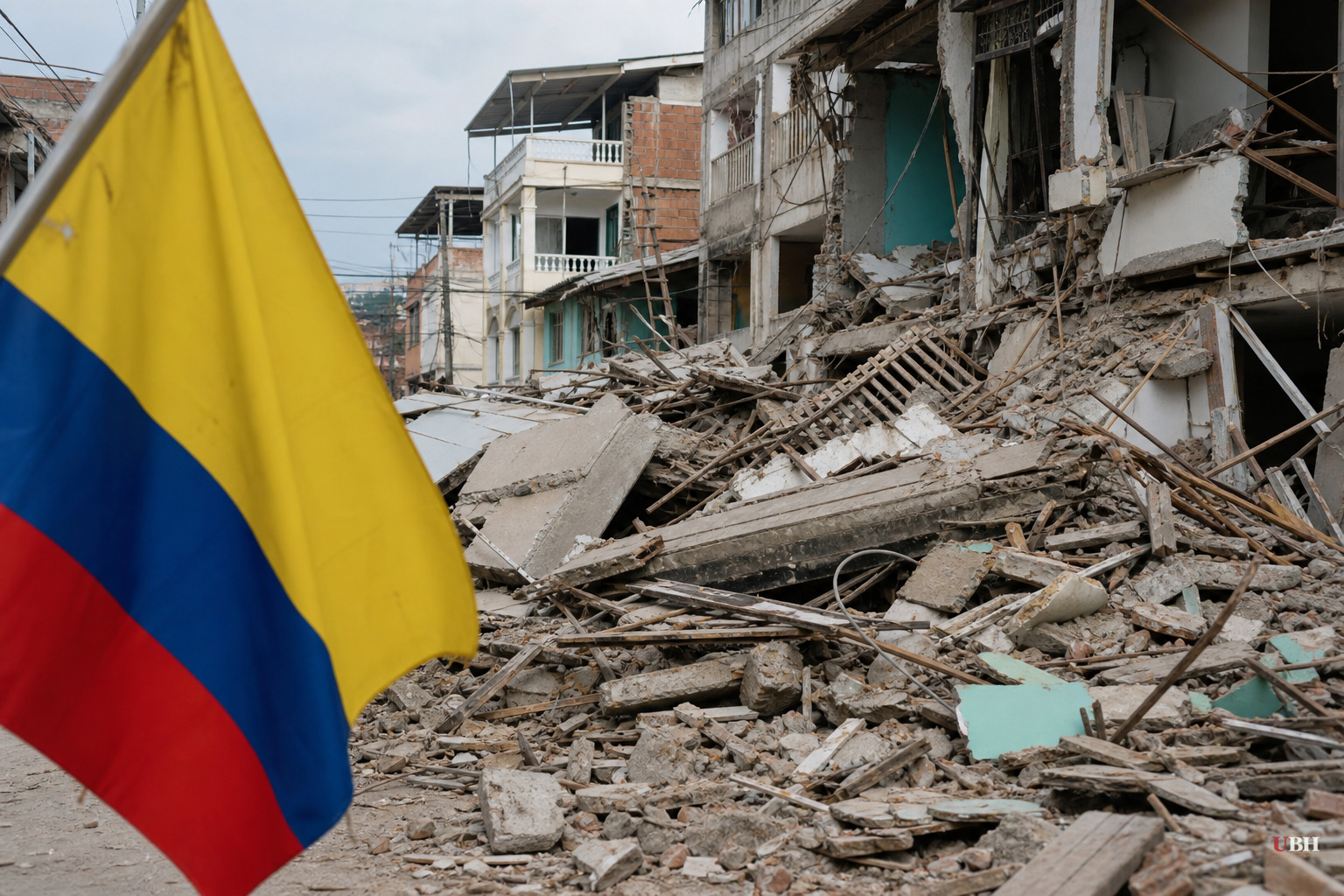
Since Monday's 7.4 magnitude earthquake struck western Colombia, the official confirmed death toll has climbed to 181, according to President Abelardo de la Espriella. But that number is already outdated on the ground. Civilian-run databases cited by both PBS and The Independent put the number of missing at closer to 3,900 to 4,000, roughly 20 times higher than the government's official missing count of 195.
De la Espriella, updating reporters from Pereira, said 2,595 people have been injured and more than 1,100 homes destroyed, with over 8,000 more damaged, according to the BBC. Aggregated local-official figures gathered by the BBC put the death toll potentially above 240, well above the government's official count.
The worst-hit cities remain Cali, Pereira, Manizales and Quibdo. In Cali, a city of 2.2 million, Mayor Alejandro Eder said Tuesday that 239 people remained trapped, with 949 injured and 45 buildings collapsed either fully or partially, per the BBC. Eder told local radio, in comments relayed by NPR, that the city's main public hospital, which serves the entire region, collapsed, and that 14 hospitals across Cali sustained damage while still trying to treat an overflow of patients.
In Calima, a Cali neighborhood, four children died when part of the Gimnasio Calima school collapsed, with 30 children referred to care centers, the BBC reported. Local officials there imposed an 8 p.m. to 6 a.m. curfew to deter looting.
Aftershocks have not stopped. Colombia's geological service recorded more than 70 tremors since Monday's quake, including two magnitude-3.6 aftershocks early Tuesday in San José del Palmar and Santander, according to the BBC.
A president four days into the job
De la Espriella was sworn in just four days before the earthquake hit, and he won the election by less than one percentage point, NPR reported. He has no prior experience in elected office. NPR's John Otis noted that Colombians are largely rallying around him for now, but that the earthquake will be "a very high-profile test" of his ability to govern a country he only narrowly won, while he simultaneously confronts a large fiscal deficit and promised budget cuts.
A leader with zero governing track record, a razor-thin mandate, and a budget crisis is now also the person responsible for coordinating rescue operations across a disaster zone stretching from the Pacific coast to the Andes.
The hardest-hit region outside the major cities is Chocó, near the quake's epicenter, described by The Independent and PBS as one of Colombia's poorest and most neglected departments, frequently affected by armed group conflict and reachable in many areas only by boat, jungle trail, or plane. Sterling Palacios, a religious and environmental leader in rural Chocó, told The Independent that the department's capital and smaller river communities along the Atrato River were devastated, with little information reaching the outside world.
Official casualty and missing-person numbers coming out of Bogotá and Pereira may simply not capture what happened in rural, harder-to-reach areas. When local leaders say they don't have information from their own communities two days after a 7.4 quake, it's a genuine data gap. Aid agencies consider the 48-to-72-hour window after a quake critical for finding survivors alive, according to PBS, a window that closes within hours of this reporting.
The United States has pledged more than $15 million in aid, according to NPR, with Mexico, Argentina and Brazil also offering assistance. Rescue crews using excavators and human chains of volunteers have continued pulling people from wreckage. PBS reported at least one woman was retrieved alive from rubble in Pereira.
What remains unresolved is basic and urgent: how many people are actually dead or missing. The government's figures and the civilian-tallied figures are not close, and until search teams reach Chocó's rural river communities and finish clearing Cali's 45 collapsed buildings, nobody, including President de la Espriella, can say with confidence which number is closer to the truth.
Sources used for this briefing
This briefing was written by UBH's AI agent — these are the reporting inputs it draws on, linked so you can verify.


