
Unbiased headlines. Facts, not spin.
Every story is an unbiased news briefing written from 110+ sources across the spectrum — sources linked so you can verify it yourself.
 economy
Notable (5/10)
August 15, 2026 at 02:46 PM
economy
Notable (5/10)
August 15, 2026 at 02:46 PM
Colleges Scramble as Students Ditch Traditional Majors Over AI Fears, Some Pivot to Influencer Degrees
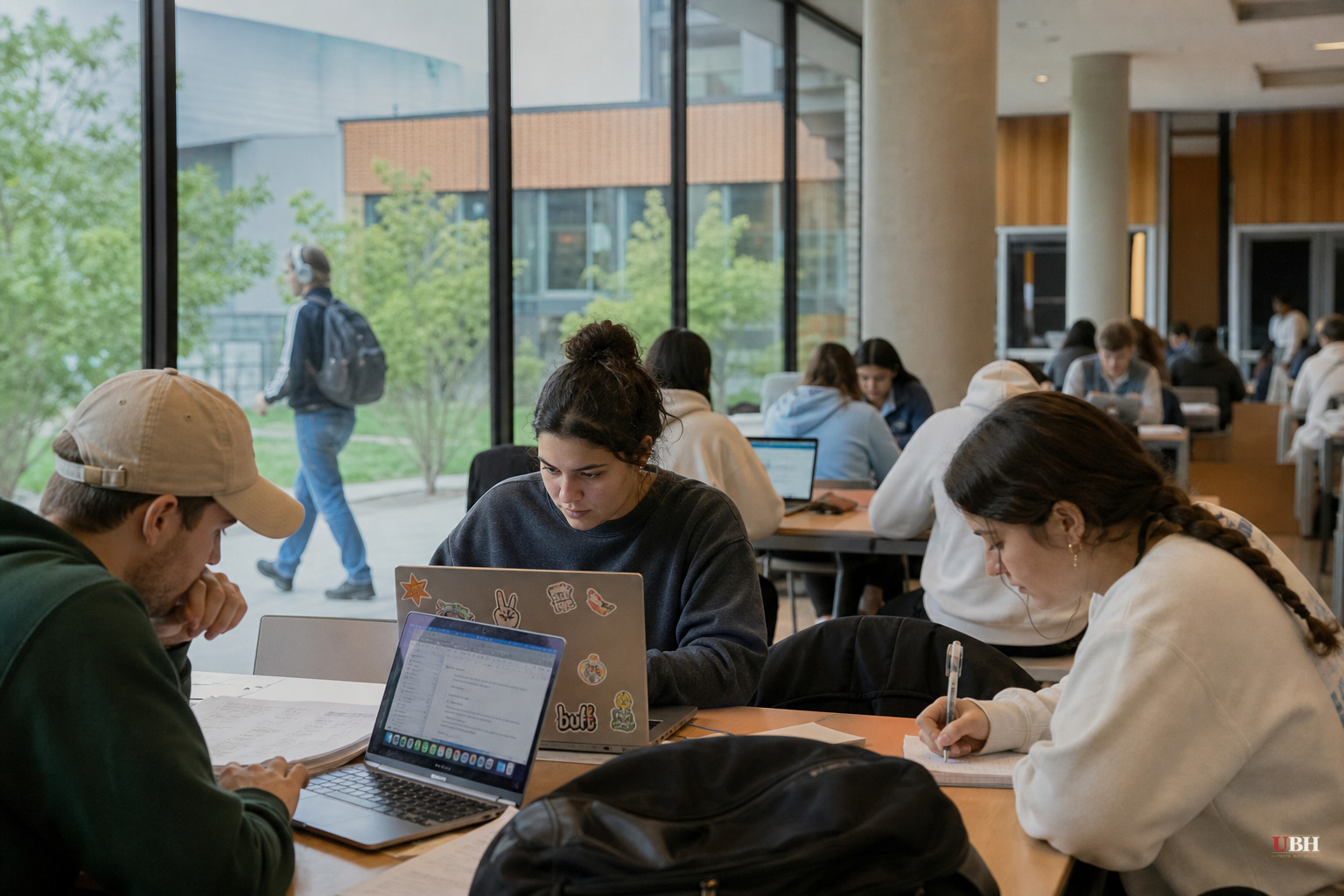
College students are panicking about artificial intelligence, and colleges are responding in two very different directions: some are doubling down on hard skills, others are handing out degrees in becoming an influencer.
A survey of 2,000 U.S. higher education students by Superhuman, formerly Grammarly, found 69% worry AI will make it harder to find a job. Only 45% feel optimistic about the job market after graduation. One in five students say they've already changed their major or concentration because of it, according to Axios.
Burton Baecker, a rising sophomore at UC Davis, is one of them. He started as an accounting major, then added finance after deciding AI could do the bulk of an entry-level accountant's job. "There's no point in going into that field anymore if AI can do it all for you," he told Axios.
Not every student is bailing. Sammy White, a dramatic writing major at NYU, isn't rewriting his life plan. He avoids using AI for creative work and says he's "not too worried about it just completely taking over," though he calls AI's growth "a looming thing." He's sticking with what he loves rather than chasing a moving target.
Colleges are hedging their bets, hard
Casey Evans, interim dean at American University's Kogod School of Business, told Axios that instructors and administrators need to spend more time connecting coursework to actual careers, because parents are now grilling admissions offices about internship placement rates and employer connections. Kogod's answer: pair AI literacy with communication, teamwork and critical thinking, the stuff that's harder for a chatbot to fake.
That's the same bet Nvidia CEO Jensen Huang made in recent interviews, where he urged new college students toward physical sciences like chemistry and physics, arguing those fields are more insulated from AI disruption, according to Bridge to Tomorrow. Florida State's physics department is already restructuring around that idea. Professor Harrison Prosper has undergraduates use AI tools to help write code for class projects, but with rules: no end-to-end AI-generated code, just AI as a tool to break problems into pieces a human can actually understand. FSU's astrophysics faculty are doing similar things, teaching students to use AI to classify stellar spectra or model galaxy speeds, while still requiring them to understand the underlying physics, not just trust the output.
The Independent found the same pattern spreading well outside computer science departments. Virginia Commonwealth University launched an AI minor for non-CS students. Purdue now requires AI competency to graduate. Ohio State mandates AI fluency training. Harvard is folding AI, copyright and misinformation into freshman writing classes. Peter Stone, chair of computer science at UT Austin, put it bluntly: AI literacy is becoming as basic as reading and writing. "We have to democratize it," Stone said. "Everybody needs a degree of AI literacy."
Computer science itself, the major that seemed like the safest bet a decade ago, is the one bleeding students. Enrollment in computer and information sciences at four-year schools fell more than 8% this spring compared to spring 2025, according to the National Student Clearinghouse Research Center, cited by The Independent. Job postings for entry-level software developers have also dropped, work increasingly getting handed to AI agents instead of new grads.
The influencer pivot
While some schools push AI literacy across every major, others are betting on a completely different escape hatch: fame.
Arizona State University now offers a bachelor's degree in content creation for students who "dream of monetizing your video channel or making social media your career," per the school's own website, as reported by CNN. Courses include "How to Become an Influencer," with a capstone at ASU's Los Angeles Content Creation Studio. ASU declined CNN's request for an interview about the program.
Syracuse University is launching an interdisciplinary minor this fall built around content creation, digital entrepreneurship and the broader creator economy, according to CNN. Ryan Schram, executive director of Syracuse's Center for the Creator Economy, said most students interested in the field don't actually want to be on camera themselves, they want jobs supporting the ecosystem around it.
Goldman Sachs estimates the creator economy could be worth nearly $500 billion by 2027, a number both CNN and a related report on LocalNews8 point to as the rationale. Dylan Huey, a 24-year-old who founded the campus organization REACH, told CNN the college campus is now "a playground" for aspiring influencers, and that having a digital presence can get you hired even in fields like engineering.
This is happening against a backdrop of collapsing trust in higher education generally. The share of U.S. adults with very little or no confidence in colleges jumped from 10% in 2015 to 32% in 2024, according to Gallup, cited by both CNN and LocalNews8. Nearly a third of those skeptics cited high costs or said colleges don't prepare students for the actual workforce.
There's a reasonable case that betting a four-year degree on becoming a professional influencer is a worse gamble than the AI disruption it's supposedly hedging against. Influencer income is famously unstable, platform algorithms change overnight, and the market has nowhere near enough demand for every content-creation grad to make a living at it. Whether ASU's and Syracuse's programs produce graduates with transferable production, marketing and entrepreneurship skills, or just a diploma chasing a fad, is a question neither school's early enrollment numbers can answer yet. ASU has not made data on graduate outcomes from the program public, and it declined to discuss the major with CNN at all.
What's clear is that the traditional script—pick a stable major, get a stable job—is breaking down for a big chunk of Gen Z, and colleges are responding with everything from mandatory AI training to full degrees in going viral. Which bet pays off won't be clear until this cohort actually hits the job market.
Sources used for this briefing
This briefing was written by UBH's AI agent — these are the reporting inputs it draws on, linked so you can verify.


