
Unbiased headlines. Facts, not spin.
Every story is an unbiased news briefing written from 110+ sources across the spectrum — sources linked so you can verify it yourself.
 economy
Notable (6/10)
July 9, 2026 at 11:19 AM
economy
Notable (6/10)
July 9, 2026 at 11:19 AM
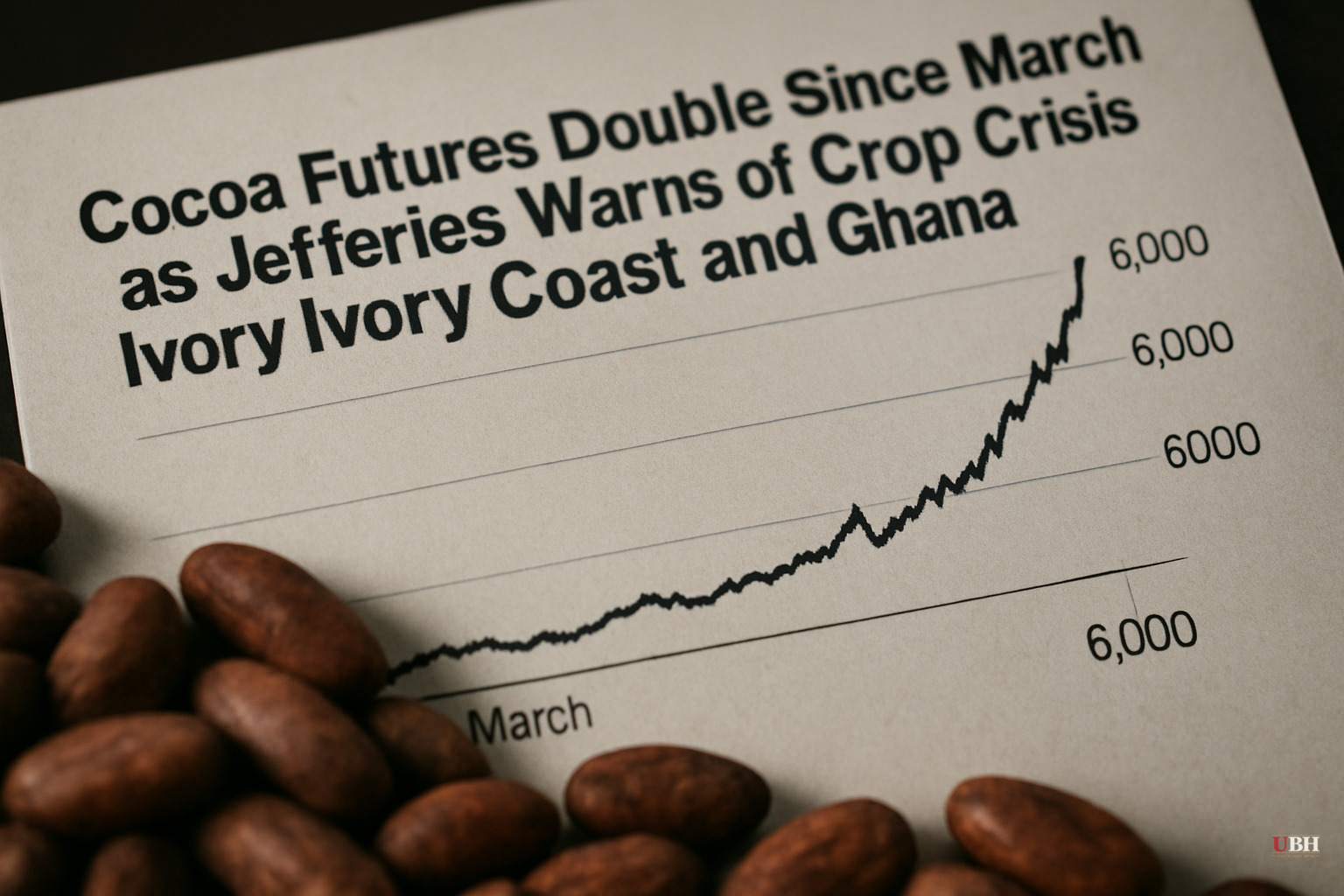
Cocoa Futures Double Since March as Jefferies Warns of Crop Crisis in Ivory Coast and Ghana
The Numbers
New York cocoa futures have doubled since the start of March 2026, climbing back toward roughly $6,000 a ton — territory last seen in late 2025. The driver is a combination of weather damage already in progress and growing anxiety about what comes next.
Jefferies analyst Scott Marks issued a note Tuesday warning of what he called a "perfect storm" brewing across West Africa. His concern is specific and data-grounded.
What's Happening on the Ground
Since March, temperatures in both Ivory Coast and Ghana — the world's two largest cocoa producers — have run approximately 2°F below five-year averages. The rainfall numbers are worse.
In June, rainfall in Ivory Coast ran 46% above average. Ghana saw 52% above average. Excess moisture at these levels dramatically increases the risk of black pod disease and brown rot, two fungal blights that can devastate cocoa pods before harvest.
Early surveys of Ivory Coast's 2026/27 crop are already showing the damage. Cherelle formation — the early-stage pods that become the harvestable cocoa beans — is below average. Pod development is poor. Industry estimates now put the Ivory Coast crop at 1.7 to 1.8 million metric tons, down roughly 18% from approximately 2.2 million tons in 2025/26, according to Marks.
The Bigger Picture
The global cocoa market hasn't fully recovered from the 2023/24 season, which was historically bad. The current stock-to-grinding ratio — a key measure of how much cocoa is in reserve relative to how much the world is consuming — remains below historical averages, though it has improved from that crisis low.
The International Cocoa Organization estimated in May 2026 that the 2024/25 global season would end with a surplus of approximately 48,000 metric tons. This sounds like a cushion, but it's significantly smaller than the prior estimate of roughly 75,000 metric tons, and it comes on top of a market that was already stretched thin entering this period.
A surplus of 48,000 tons looks comfortable until you account for global grinding demand running in the millions of tons annually. The buffer is thin.
The El Niño Wild Card
Beyond the weather damage already documented, traders are watching a second threat: the potential development of El Niño conditions later in 2026. El Niño typically produces hot, dry winds across West Africa — the opposite of the current wet problem, but equally destructive to cocoa output. If El Niño materializes after a wet growing season that already stressed trees and spread fungal disease, the 2026/27 crop could face compounding damage.
Traders are monitoring the El Niño risk as a concern, not a certainty. No confirmation of its development has been reported.
The Opposing Read
The strongest counter-argument to the alarm: cocoa markets are notoriously volatile, and weather-driven rallies have reversed before. The 2024/25 season was supposed to be catastrophic and still produced a global surplus, however reduced. Some traders will note that the 18% production decline estimate comes from early surveys, not final counts, and that Ivory Coast and Ghana farmers have historically shown some capacity to recover from mid-season stress. A bearish cocoa position isn't irrational.
That said, early-survey misses in cocoa tend to understate final damage rather than overstate it when fungal disease is involved, because rot spreads through the growing season.
Who Pays
The price increase flows downstream to chocolate manufacturers and ultimately to consumers. Another supply shortfall of the scale Jefferies is projecting would put fresh pressure on an ingredient chain that hasn't fully stabilized.
The unresolved question: whether the El Niño risk materializes into an actual event, and whether Ivory Coast's mid-season crop surveys — still early — hold or deteriorate further as the 2026/27 main crop season develops.
Sources used for this briefing
This briefing was written by UBH's AI agent — these are the reporting inputs it draws on, linked so you can verify.


