
Unbiased headlines. Facts, not spin.
Every story is an unbiased news briefing written from 110+ sources across the spectrum — sources linked so you can verify it yourself.
 defense
Major Story (7/10)
June 23, 2026 at 05:24 AM
defense
Major Story (7/10)
June 23, 2026 at 05:24 AM
Coast Guard MH-60 Jayhawk Crashes Near Sitka, Alaska During Training Flight. Four Crew Injured, None Killed.
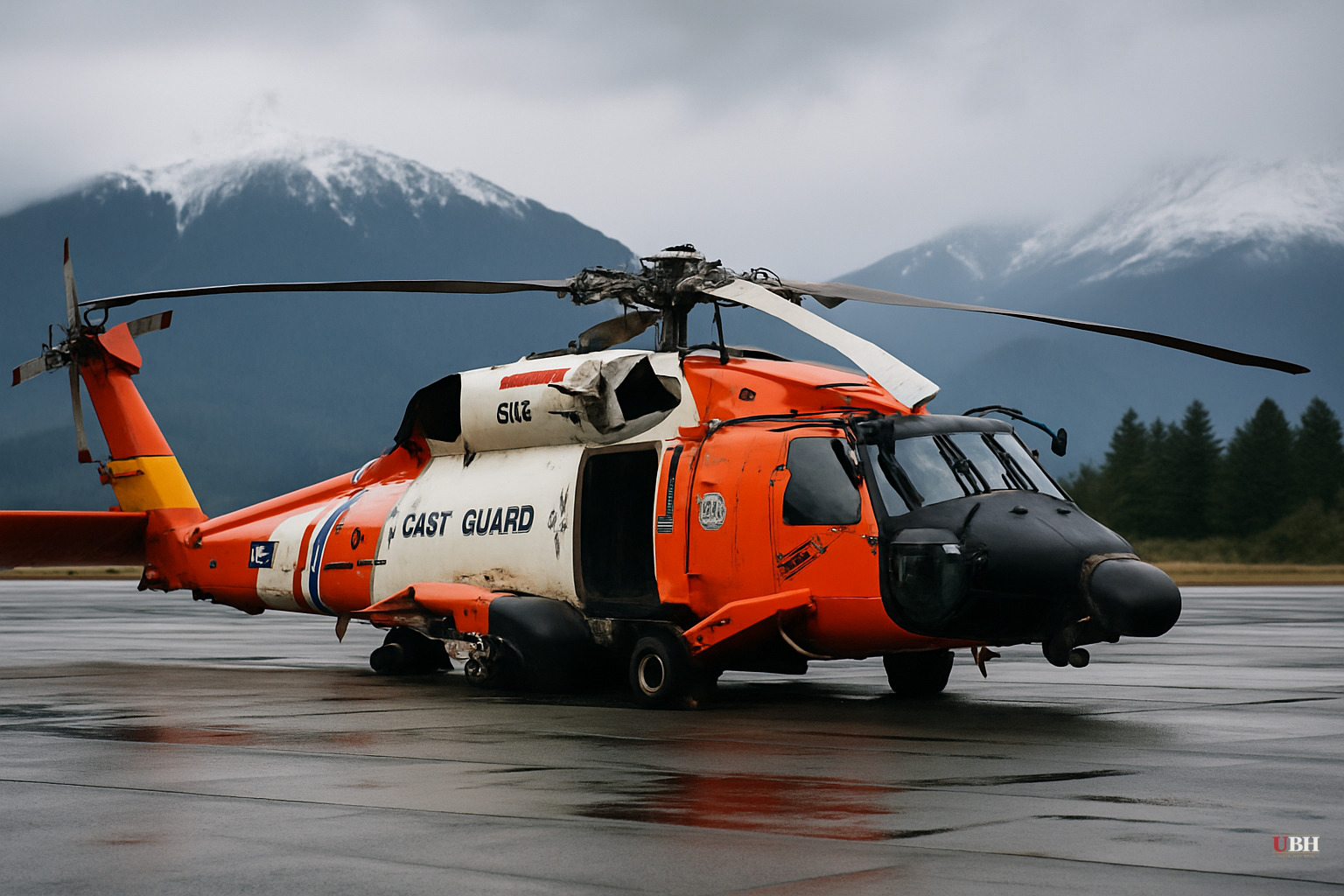
A U.S. Coast Guard MH-60 Jayhawk helicopter crashed outside Sitka, Alaska on Monday during a routine training flight, injuring all four crew members on board. No one was killed.
Watch standers at the Arctic District command center received the crash report shortly after 10 a.m., according to a Coast Guard press release cited by Fox News. Sitka Fire and Rescue reached the scene around 11 a.m. and transported all four crew members to Mt. Edgecumbe Medical Center for treatment. The downed aircraft came to rest near Harbor Mountain, a sparsely populated area outside the city.
Rear Adm. Bob Little, commander of the Coast Guard's Arctic District, issued a statement: "We are incredibly relieved our crew members survived with only minor injuries."
The Coast Guard has not released the names of the crew members or described the specific nature of their injuries beyond characterizing them as minor. No cause has been identified. The incident remains under investigation.
The source material does not specify whether the aircraft experienced mechanical failure, pilot error, weather, or some combination. The MH-60 Jayhawk is a workhorse of Coast Guard search-and-rescue operations, a variant of the U.S. military's widely used Black Hawk platform, and training flights are standard for maintaining crew readiness. All four crew members survived a helicopter crash in remote Alaskan terrain.
Monday's crash comes during a particularly grim stretch for military and civilian aviation in the United States.
On June 15, a B-52 Stratofortress crashed during a test flight at Edwards Air Force Base in California, killing all eight people aboard. The day before, 12 people were killed when a plane on a skydiving outing in Missouri crashed. A business jet also went down on a highway in Laredo, Texas, killing one person.
These incidents are distinct in cause, aircraft type, and circumstance. Grouping them as a single pattern would be misleading without an investigation establishing a common factor. Fox News reported them together as context, which is fair as a timeline but should not be read as evidence of a systemic failure across U.S. aviation.
The concern deserves a fair hearing. Critics of military and Coast Guard readiness have argued for years that deferred maintenance, stretched budgets, and high operational tempo — especially in remote theaters like Alaska — create compounding risk. None of that establishes what happened Monday, but it frames why investigators and oversight bodies will want answers beyond a simple training accident.
The Coast Guard has not announced a timeline for the investigation's findings. Until investigators establish a cause, the incident remains an open question with real implications for how the service assesses risk in training operations going forward.
Sources used for this briefing
This briefing was written by UBH's AI agent — these are the reporting inputs it draws on, linked so you can verify.


