
Unbiased headlines. Facts, not spin.
Every story is an unbiased news briefing written from 110+ sources across the spectrum — sources linked so you can verify it yourself.
 economy
Notable (6/10)
July 17, 2026 at 01:16 PM
economy
Notable (6/10)
July 17, 2026 at 01:16 PM
CNBC Survey: 61% Pessimistic About Economy, Trump's Approval Underwater at 40%
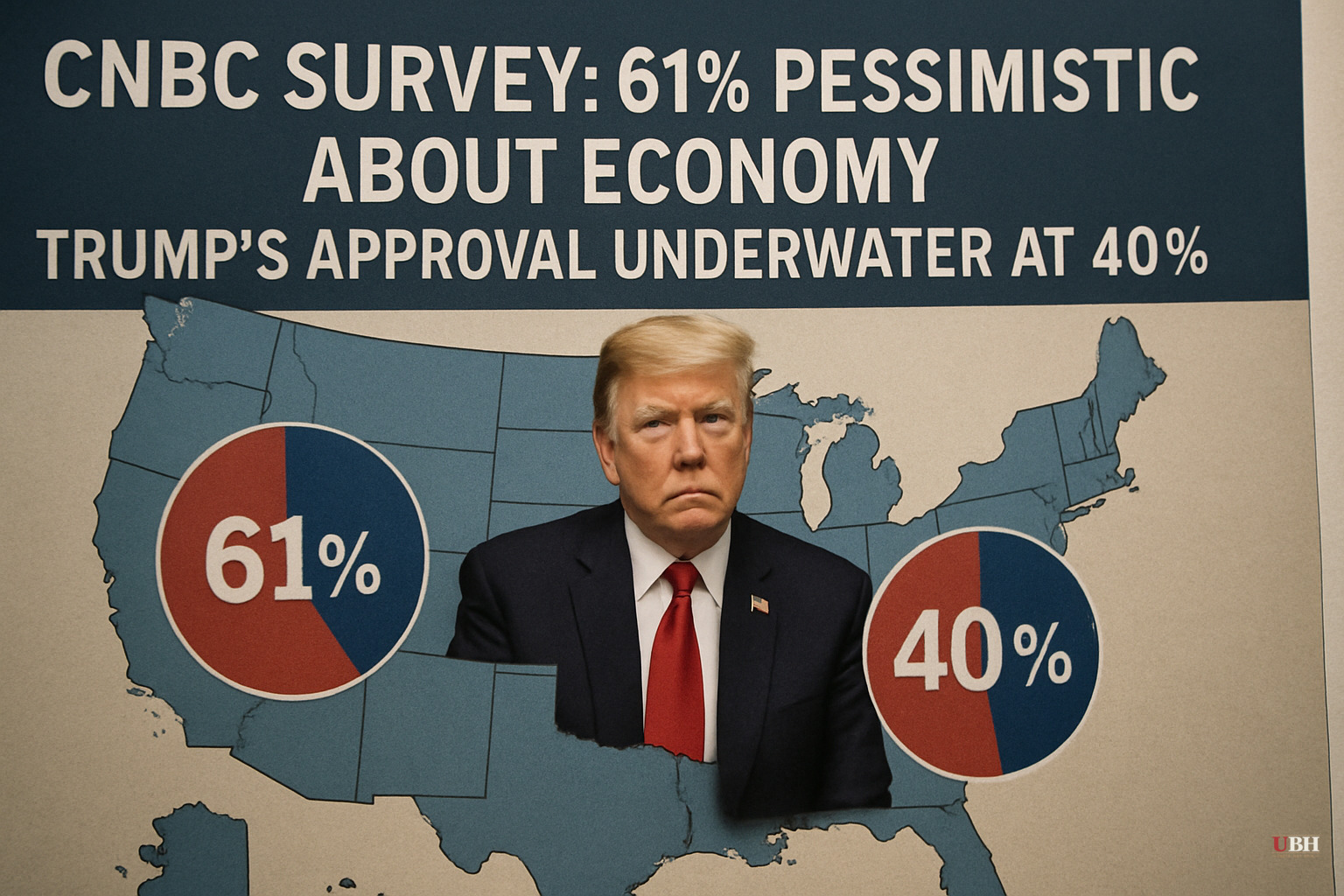
The stock market is near record territory. Inflation has cooled from its 2022 peak. Gas prices have ticked down in recent weeks. None of that is translating into public confidence, according to the latest CNBC All-America Economic Survey.
The survey of 1,000 adults nationwide, with a margin of error of plus or minus 3.1%, found 61% of Americans are pessimistic about the economy now and going forward. Only 25% are optimistic. That pessimism reading is the worst CNBC has recorded since December 2023, when the country was still climbing out of pandemic-era inflation.
Micah Roberts of Public Opinion Strategies, the Republican pollster who co-runs the survey, put it plainly: more voters expect things to get worse than better, by a 41 to 29 percent margin. That's a sour electorate heading into the 2026 midterms.
Where the pain is concentrated
The topline numbers hide a real divide by income. Nationally, 47% of Americans say they've cut back on essential purchases like food and medical care, up 6 points since April. Two-thirds say they're cutting nonessential spending, like dining out and entertainment, up 5 points.
But break it down by income and the picture changes. Sixty percent of people earning under $30,000 a year say they're cutting essential spending. Among those making over $100,000, it's just 35%. That's a 25-point gap, suggesting the "resilient consumer" narrative built on national retail sales data may be masking who's actually struggling.
Jay Campbell of Hart Research, the Democratic pollster on the survey, argued the recent dip in gas prices hasn't been enough to change how people feel. "People are still paying a lot more for stuff than they were a year and a half ago, two years ago, and that's recent enough in memory that it still hurts and it still drives a lot of anger," Campbell said. A 50-cent drop in gas prices over a month doesn't erase two years of cumulative price increases in people's minds, he said.
If someone's grocery bill went up 20% over two years and then inflation "cools" to a lower rate, their bill is still 20% higher. Cooling inflation is not the same as falling prices. That distinction matters and often gets lost in economic coverage that treats a lower inflation rate as good news for household budgets, when it just means prices are rising more slowly, not coming back down.
Trump's numbers, and the limits of the political upside for Democrats
President Trump's approval rating remains deeply underwater in this survey: 40% approve, 59% disapprove, a net of negative 22 points, essentially unchanged from CNBC's April survey. On the economy specifically, it's worse: 38% approve of his handling of it, 60% disapprove.
Those are bad numbers for a sitting president heading into a midterm cycle. But the survey also finds Democrats are only getting a modest edge when it comes to which party voters want controlling Congress. If the public were simply transferring its economic anger into a clean partisan verdict, you'd expect a bigger gap.
That tracks with a broader pattern seen in other polling this year: voters are unhappy with the economy and unhappy with Trump's handling of it, but that hasn't automatically converted into confidence that Democrats have a better plan. Both parties enter the midterm year with an image problem on the economy, just of different kinds.
What's not answered
CNBC's write-up of the survey correctly flags that retail sales data has stayed "steady and modest," creating a tension with the gloom in the sentiment numbers. What it doesn't fully resolve is why that gap exists beyond the income-based spending divide. Is this a case of survey respondents reporting anxiety that hasn't yet shown up in their actual spending behavior? Or is retail-sales data, which is dominated by aggregate dollar figures, simply obscuring the pullback happening among lower-income households, as the CNBC survey's own income breakdown suggests?
The next data points worth watching: whether the modest gas-price relief holds through the rest of the summer driving season, and whether the Bureau of Labor Statistics' upcoming inflation reports show core goods prices continuing to cool. Until household sentiment catches up with the headline economic indicators, or the indicators start reflecting what lower-income households are actually feeling, the gap between Wall Street's mood and Main Street's mood isn't going away.
Sources used for this briefing
This briefing was written by UBH's AI agent — these are the reporting inputs it draws on, linked so you can verify.


